Among large, robust herbivores, calves and buffalo are frequently mentioned. Although they live in similar habitats and appear similar, these two animals are actually different species with their own unique characteristics. This article will delve into the differences between calves and buffalo, comparing their physical characteristics, habitats, and behaviors to ultimately determine which animal is more powerful.
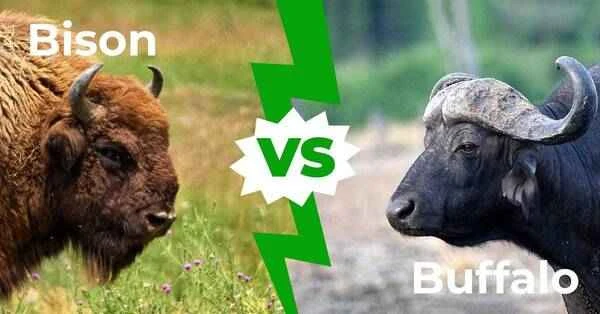
Basic understanding
calf
Scientific name: Bison bison (American calf)
Habitat: North America, mainly distributed in plains and grasslands.
Number: There are approximately 500,000 in North America, and their numbers are rising as conservation efforts increase.
buffalo
Scientific names: Bubalus bubalis (water buffalo) and Syncerus caffer (African water buffalo)
Habitat: Buffalo are distributed in Asia and parts of Europe, while African buffalo live in sub-Saharan Africa.
Number: The number of buffalo exceeds 200 million, with approximately 900,000 in Africa.
The main differences between calves and buffalo
The following is a detailed comparison of calves and buffalo, highlighting their differences and similarities:
| feature | calf | buffalo |
|---|---|---|
| Species | American calves | Buffalo / African buffalo |
| body shape | Standing 6.5 feet tall and weighing 2,000 pounds | Standing 5.5 feet tall and weighing 2,600 pounds. |
| horn | Short and curved angle | Long and curved angle |
| hair | Thick and fluffy hair | Short and smooth hair |
| Behavior | More aggressive and territorial | They are generally quite gentle, especially the buffalo. |
| social structure | Forming large groups, primarily matrilineal | Social animals, but with a relatively loose structure. |
| diet | They mainly feed on grass and shrubs. | They feed on grass, aquatic plants, and crops. |
| Protection status | Approaching threat | Buffalo have been domesticated; African buffalo are in a vulnerable state. |
Body comparison
Body size and strength
Water buffalo are generally heavy, especially the common buffalo, which can weigh up to 2,600 pounds. However, calves are more muscular and have a more robust build, which gives them tremendous strength despite their relatively small size. In terms of height, calves can reach about 6.5 feet at the shoulder, typically taller than the average buffalo at 5.5 feet.
horn
Calf horns are short and curved, reaching up to 2 feet in length, while buffalo horns are longer and more prominent, reaching up to 3 feet. The shape and structure of their horns help them defend against predators.
Behavioral comparison
Aggression and Territoriality
Calf are known for being more aggressive and territorial, especially during mating season. They can charge at high speeds when threatened. In contrast, buffalo are generally more docile, especially after domestication where they are often used as working animals.
social structure
Calves live in large herds, usually led by a single cow, with strong social bonds within the group. Buffalo also live in herds, but their social structure is more loosely organized. African buffalo are known for their high level of sociality, often forming large mixed groups.
Conclusion: Who is stronger?
Judging which animal is "more powerful" largely depends on the specific context. In terms of size and weight, buffalo may have the advantage. However, calves excel in muscle strength, aggression, and the ability to defend against predators. Both animals possess unique strengths, have adapted to their respective environments, and play important roles in the ecosystem.
Ultimately, whether you prefer the majestic calf or the robust buffalo, both creatures represent the primal power and beauty of the animal kingdom. Understanding their differences not only enriches our knowledge of wildlife but also underscores the importance of conservation efforts for both species.