Exploring the "world's loudest animal" can be approached from multiple angles, including which animals can produce powerful sounds, why they produce such loud sounds, and the function of these sounds. This article will focus on this theme, exploring the vocal characteristics of different animals, with a particular emphasis on analyzing the most prominent examples, especially the characteristics of the blue whale as the loudest animal, and supplementing this with information on other creatures capable of producing enormous sounds.
I. Introduction
In nature, sound is a vital means of communication. Many animals use sound to communicate with each other, find mates, protect their territory, and even transmit information over long distances. Among these creatures, some produce sounds so loud that they are deafening to human ears. What factors enable these animals to produce such enormous sounds? In this article, we will explore the mystery, discovering the loudest animals and the biological principles behind their sounds.
II. The Scientific Principles of Sound
To understand which animals can produce the loudest sounds, we must first understand the principles of sound production and propagation. Sound is a mechanical wave generated by the vibration of an object, which propagates through air, water, or other media. The frequency and amplitude of the vibration determine the pitch and loudness of the sound. Generally, the lower the frequency, the farther the sound travels, while the larger the amplitude, the louder the sound.
For some animals, the ability to produce loud sounds is not only a means of communication but may even be a survival strategy. The organs and mechanisms that produce loud sounds vary among different animal groups, such as mammals, birds, insects, and amphibians, which employ different physiological structures to produce sound.
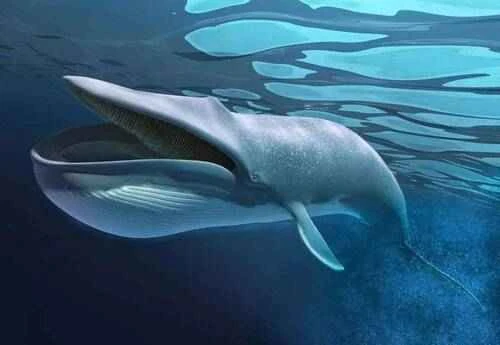
3. Blue whale: The loudest animal in the world
The blue whale (Balaenoptera musculus) is undoubtedly the loudest animal in the world. Their calls can reach 188 decibels, a value far exceeding the range of human hearing (the typical human pain threshold is 120-130 decibels). These enormous sounds can travel over 1,600 kilometers, enabling blue whales to communicate with other individuals over long distances.
1. The sound frequency and propagation of blue whales
The sounds emitted by blue whales are primarily in the low-frequency range, typically between 10 and 40 Hz. While these low-frequency sounds are difficult for the human ear to perceive, their propagation in water is extremely significant. The speed of sound in water is much faster than in air, allowing low-frequency sounds to travel much farther.
2. Why do blue whales need such a loud sound?
Blue whales live in vast oceans, often separated by hundreds of kilometers. Therefore, they need an effective way to communicate with other individuals, especially when foraging, courting, and navigating. Loud calls help blue whales find other whales, recognize echoes in their environment, and even detect the presence of prey.
3. The vocal organs of a blue whale
Blue whales vocalize through their throats, but unlike humans, whales do not have vocal cords. They rely on special structures in their nasal passages to generate sound by channeling airflow through these structures. Scientists also believe that the blue whale's enormous vocal power is closely related to its body size—its huge lung capacity allows it to generate sufficient air pressure to produce powerful sound waves.
IV. Other animals capable of making loud noises
While the blue whale is considered the loudest animal, it is not the only creature capable of producing extremely loud sounds. The following animals are also remarkably prolific in terms of sound intensity.
1. Walrus
The walrus (Odobenus rosmarus) is a marine mammal capable of producing very loud sounds. These sounds can reach up to 126 decibels, and their calls are often used for courtship displays. Male walruses emit low-frequency booming sounds to attract females and intimidate rivals. These sounds can travel long distances underwater, similar to the low-frequency communication methods of blue whales.
2. Elephant
One of the loudest land animals is the African elephant (Loxodonta africana). They can produce a loud roar, reaching up to 110 decibels in intensity. This sound can travel up to 16 kilometers and is also transmitted through ground vibrations. Herds use these sounds to find water, warn other animals of danger, and maintain communication within the group.
3. Howler monkey
Howler monkeys (Alouatta spp.) are among the noisiest primates on land. Their calls can reach up to 140 decibels and travel up to 16 kilometers, primarily used to mark territory. Howler monkeys possess a unique laryngeal structure that amplifies their sounds, allowing their roars to echo through tropical forests and convey clear signals.
4. Crickets and Cicadas
Despite their small size, some insects can produce sounds disproportionate to their size. Male crickets generate sound by rubbing their wings together to attract females. Cicadas, on the other hand, produce sound through specialized resonant organs, and their calls are particularly noticeable in summer, reaching sound pressure levels of over 100 decibels.
V. Biological Functions of Sound
The reasons why animals make loud noises can be attributed to the following functions:
1. Courtship
Many animals make loud noises primarily to attract mates. For example, blue whales, walruses, and howler monkeys often peak their vocalizations during the breeding season. Males typically produce louder, more powerful calls to demonstrate their strength and health, attracting females to choose them as mates.
2. Territory Defense
Sound is also a means for many animals to defend their territory. Howler monkeys, lions, wolves, and other animals use loud noises to warn intruders, thereby reducing direct confrontation. For some species, maintaining a show of force and projecting a threat may be more effective than actual physical confrontation.
3. Vigilance and Communication
Animals also use sound to transmit warning signals. For example, elephants emit specific sounds when they sense danger to alert other individuals in the group. Whale calls are sometimes also considered part of long-distance navigation; they use echolocation to perceive their surroundings.
4. Social Connections
Many social animals use sound to maintain group cohesion. Whether in elephant herds or wolf packs, sound plays a vital role in maintaining group structure and social relationships. For animals that migrate long distances, such as blue whales, sound is often the only means of long-distance communication.
VI. Summary and Outlook
By studying blue whales and other animals with loud voices, we can conclude that the ability of animals to produce loud sounds is not merely an evolutionary "show-off," but rather a result of adapting to complex environments. Whether in the ocean or on land, sound is a crucial survival tool in the animal kingdom.
However, as human activities increasingly impact the environment, many species capable of producing loud noise are facing threats such as habitat loss and environmental pollution. Marine noise pollution, especially from ships and industrial activities, has already negatively affected the communication and navigation of marine mammals, particularly blue whales. In the future, we need to take more measures to protect these loud creatures so that they can continue to play their vital roles in nature.
References
Cummings, WC, & Thompson, PO (1971). Underwater sounds from the blue whale, Balaenoptera musculus. The Journal of the Acoustical Society of America, 50(4), 1193-1198.
Payne, RS, & Webb, D. (1971). Orientation by means of long range acoustic signaling in baleen whales. Annals of the New York Academy of Sciences, 188(1), 110-141.
Bradbury, JW, & Vehrencamp, SL (1998). Principles of Animal Communication. Sinauer Associates, Inc.
Richardson, WJ, Greene Jr, CR, Malme, CI, & Thomson, DH (1995). Marine mammals and noise. Academic Press.
By exploring the mechanisms and functions of vocalization in these animals, this article showcases the rich diversity and evolutionary adaptations of animal sounds in nature. It is hoped that in the future we can gain a deeper understanding of these amazing natural phenomena and protect these magnificent creatures and their ecosystems.