Vision is a crucial sense for living organisms to obtain information about their surroundings. Different habitats and lifestyles have led to a diversity of animal eyes. Some animals are predators, some are prey, some are nocturnal, and some live in water. Which animals have the best eyesight? In this article, we will introduce animals renowned for their exceptional vision and the visual characteristics they have evolved to adapt to their environments.

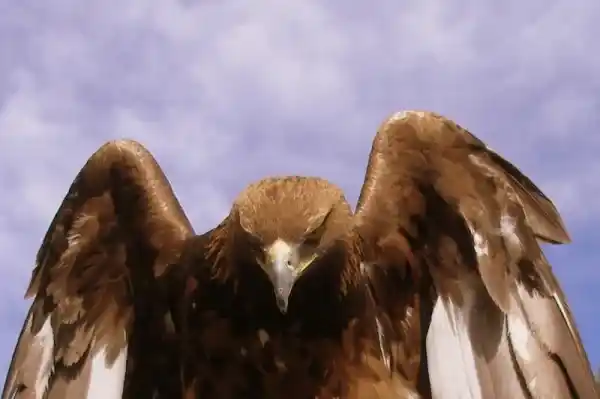
1. Golden Eagle (Aquila chrysaetos)
"Eagle eye" is not just a colloquial term, but a true reflection of the golden eagle's visual capabilities. They can accurately spot prey on the ground, such as small mice or hidden animals, from altitudes as high as 3,000 meters. Golden eagles have highly developed eye muscles that allow them to quickly switch focus, lock onto objects within multiple visual planes, and accurately predict the movement of their prey from the air.
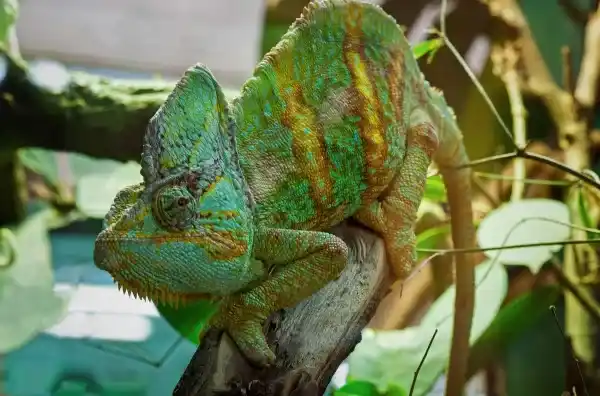
2. Chameleon (Chamaeleonidae)
Chameleons possess a unique eye structure, with each eye capable of independent rotation, allowing them to observe their surroundings 360° without blind spots. They can detect targets at varying distances without moving their bodies, and each eye can adjust its focus, thus constructing a comprehensive view of the environment. This visual mechanism makes them one of the animals with the most "panoramic vision."
3. Owls (Strigidae)
Owls are nocturnal birds of prey with large, oval eyes that are structurally similar to telescopes, making them extremely adapted to low-light environments. Their eyes cannot move, but they can rotate their heads up to 280 degrees to expand their field of vision. Owls have excellent long-distance vision but poor close-up vision.

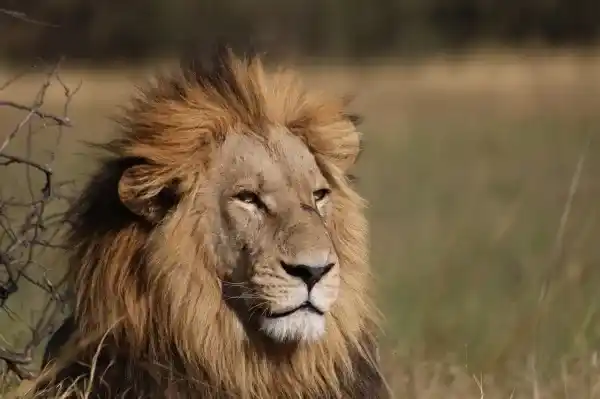
4. Lion (Panthera leo)
Lions have exceptional night vision. They possess a tapetum lucidum, which enhances visibility in low light, and white stripes below their eyes help reflect light. Furthermore, their retinas have a large number of rod cells, which are photoreceptor cells, giving them excellent night vision. It's worth noting that lions cannot distinguish red.
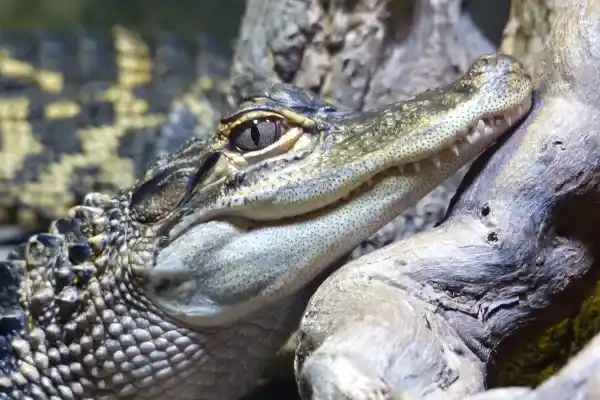
5. Crocodile (Crocodylidae)
Crocodiles possess excellent night vision and a keen hunting perspective. Their eyes are located on the top of their heads, allowing them to observe prey while submerged. Their eyes also contain a nictitating membrane and a vertical pupil, which helps them accurately estimate distances. When diving, they use a nictitating membrane to cover their eyes and protect their retina.
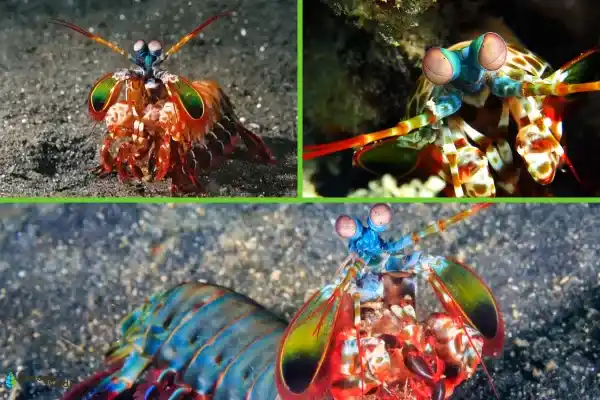
6. Mantis shrimp (Gonodactylus smithii)
Mantis shrimp possess visual abilities far surpassing those of humans. They can perceive a broad spectrum from infrared to ultraviolet light and can also distinguish polarized light. Each eye has independent three-dimensional vision and 12 types of cone cells, enabling them to distinguish extremely subtle color differences. Specialized "kidney-shaped structures" in their brains are responsible for processing complex visual information.
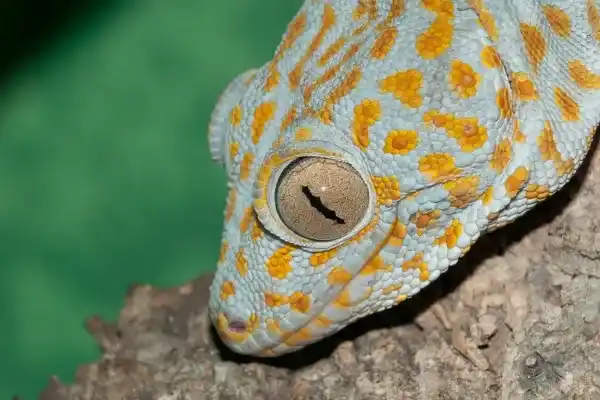
7. Gecko (Gekkota)
Geckos are among the few reptiles that can distinguish colors in the dark. They have only cone cells and no rod cells, which allows them to see colors even in low light. Geckos have no eyelids and rely on their tongues to moisten their eyes to keep them clean, and they can quickly adjust their focus to distinguish objects at different distances.
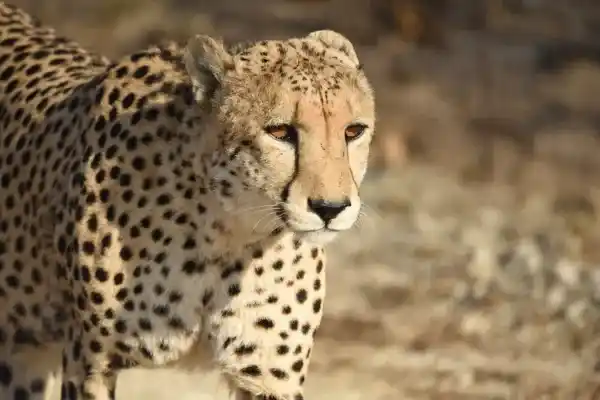
8. Cheetah (Acinonyx jubatus)
Cheetahs are diurnal felines with exceptional long-range vision. They can spot prey from 5 kilometers away and maintain eye contact to track the target even as it runs at high speed. Cheetahs have dark stripes under their eyes, similar to "eyeliner," which reduce sunlight interference and enhance visual accuracy.
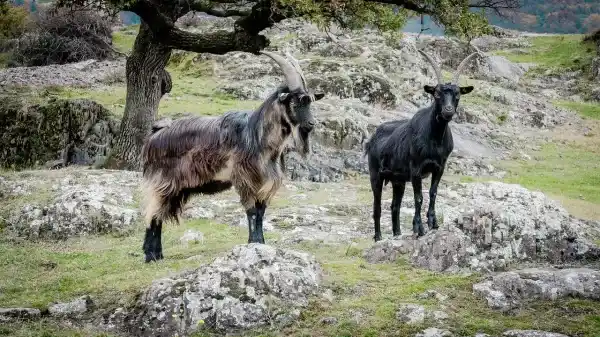
9. Goat (Capra aegagrus hircus)
Goats have rectangular pupils, a structure that helps them maintain visual balance in rugged terrain and better spot predators around them. Their eyes are located on the sides of their heads, giving them an almost 320-degree field of vision.
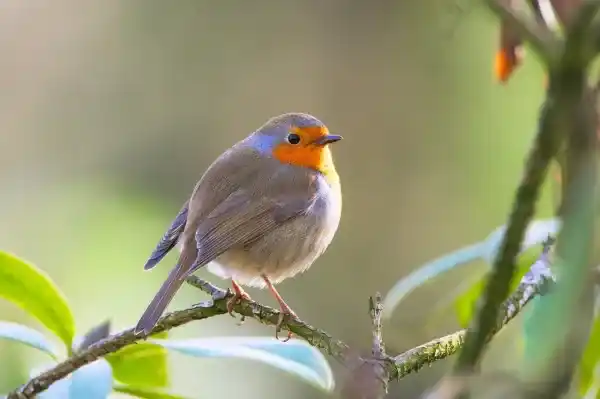
10. European Robin (Erithacus rubecula)
These small migratory birds can sense the Earth's magnetic field through a special photosensitive mechanism in their eyes. During flight, changes in angle create a speckled pattern in their field of vision, helping them navigate intercontinental migrations. They are a prime example of animals with "magnetic sensing vision."
Other animals with exceptional vision (in list form)
Peregrine falcon (Falco spp.)
Dragonfly (Anisoptera)
Domestic cat (Felis silvestris catus)
Housefly (Diptera)
Lynx (Lynx spp.)
Purple-banded long-beaked hawk moth (Deilephila elpenor)
Jumping spider (Salticidae)
Sheep (Ovis aries)
Hummingbird (Colibrí spp.)
Tarsius spp.
If you are interested in this article, you can also read:
The Animal with the Most Sensitive Sense of Smell
The world's fastest flying birds
What kinds of animals migrate?
The above information will help you better understand the amazing visual systems in the animal world. Feel free to check out more animal science articles on this site.
bibliography
Solov'yov, I., Schulten, K. (2015). Animal magnetokinesis. Theoretical and Computational Biophysics Group. Website: http://www.ks.uiuc.edu/Research/cryptochrome/
Webb, J. (2016). The secret behind the crocodile's keen vision. URL:
Beatty, R., Beer, A., & Deeming, C. (2010). The Book of Nature. UK: Dorling Kindersley.