New Zealand consists of two main islands and is characterized by frequent geological activity and numerous volcanoes. Around 100 million years ago, New Zealand separated from Gondwana due to plate tectonics, and has remained isolated ever since. This geographical isolation has fostered the evolution of many unique species, especially birds.
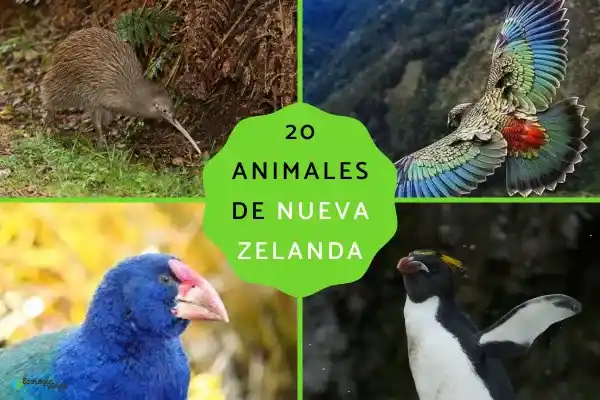
Today, New Zealand is a highly biodiverse ecological hotspot, with approximately a quarter of its birds and most of its insects being unique to the world. Before the arrival of humans, this land had no land mammals, causing many birds to lose their ability to fly. However, the introduction of exotic mammals led to the extinction of many native bird species. This article introduces 20 of New Zealand's most iconic animals, offering a deeper understanding of this country's unique wildlife world.
1. Common kiwi (Apteryx australis)
The kiwi is the national symbol of New Zealand and is a nocturnal, flightless bird. They have a rounded body covered with soft, feathery plumage, a long and sensitive beak with nostrils at the tip, and whiskers similar to a cat's whiskers. They rely heavily on their sense of smell to find food.

They are terrestrial birds with medullary skeletons, unlike most flying birds which have hollow bones. Kiwis are known for their exceptionally large size ratio between the individual bird and its egg. The wild population is estimated to be less than 50,000 individuals, and their numbers are steadily declining.
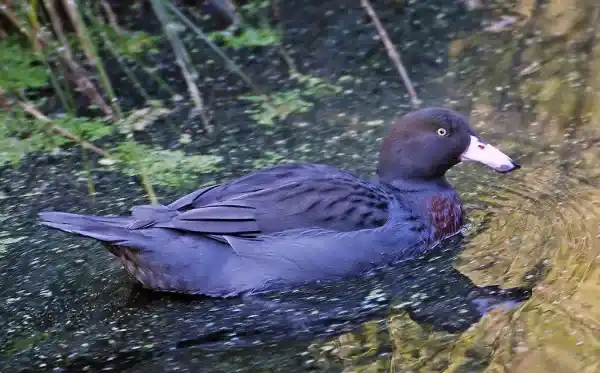
2. Blue duck (Hymenolaimus malacorhynchos)
The Blue Duck is an endangered duck species endemic to New Zealand. It has bluish-grey plumage and lives in the fast-flowing waters of mountain rivers. It is a poor flier but an excellent swimmer. Its population is declining due to predator encroachment and habitat loss.
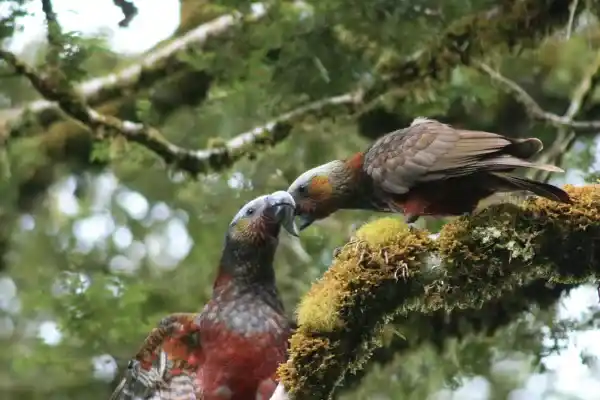
3. Kaka Parrot (Nestor meridionalis)
The Kaka parrot is a medium-sized parrot with predominantly brownish-orange plumage, first recorded in 1851. They inhabit forest canopies and rocky areas, feeding on nectar and plants. Their name, "kaka," comes from Maori and means "parrot." There are two subspecies: the North Island Kaka and the South Island Kaka.
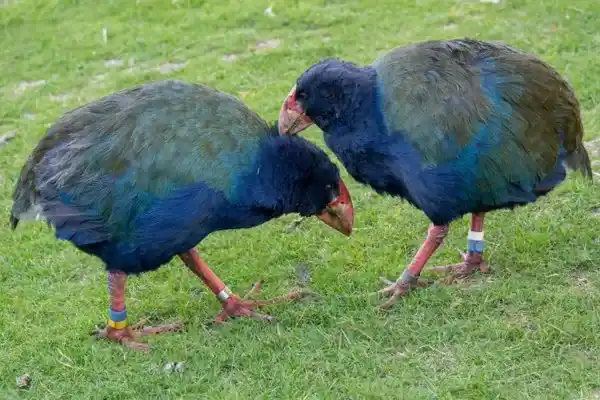
4. Takapo Rail (Porphyrio hochstetteri)
The Takapo is a large rail-like bird with bright blue-green plumage. It is flightless and can only walk slowly. Once thought to be extinct, it was rediscovered in 1945. It still faces extinction and is one of New Zealand's key protected species.
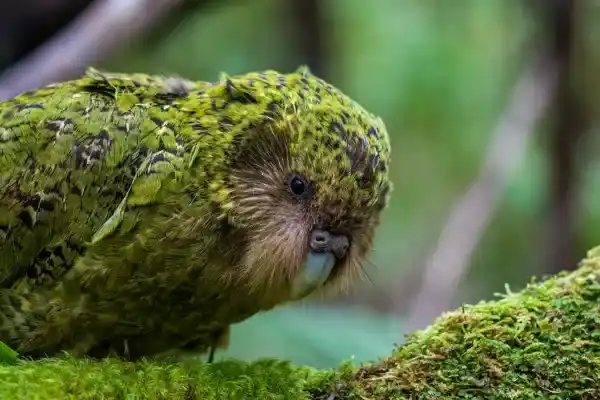
5. Night parrot (Kakapo, Strigops habroptilus)
The night parrot is the world's only flightless parrot, and it is large, reaching up to 60 centimeters in length. It is a nocturnal animal, named for its owl-like facial plumage. Its feathers are soft, and because it does not need to fly, it lacks flight feathers. This species has an extremely long lifespan, and mates are chosen by the female. It was thought to be extinct in 1974, but in 2005, 86 individuals were confirmed to still be alive.
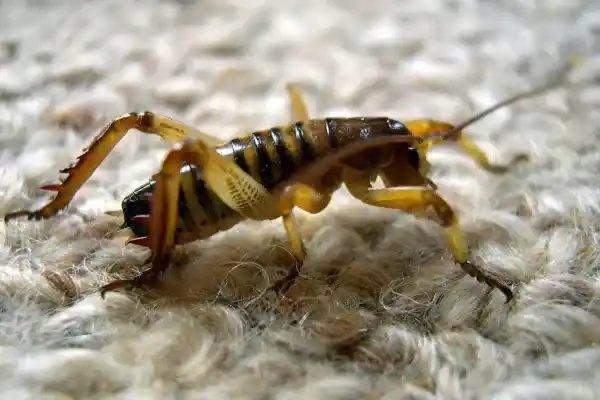
6. Weta (family Stenopelmatidae)
Wetas are large insects endemic to New Zealand and are often referred to as the "dinosaurs of the insect world." They originally served as rodents in the ecosystem, but faced serious threats after the introduction of rats by humans. They possess powerful jaws, enabling them to dig burrows, and also feed on humus and other insects.
7. Kea’s parrot (Nestor notabilis)
The Kaia parrot is New Zealand's only alpine parrot, inhabiting the glaciers and high mountains of the South Island. Its plumage is predominantly greenish-brown with bright red undersides. It is playful, active, and intelligent. This species is endangered and faces threats to its survival due to frequent human activity.

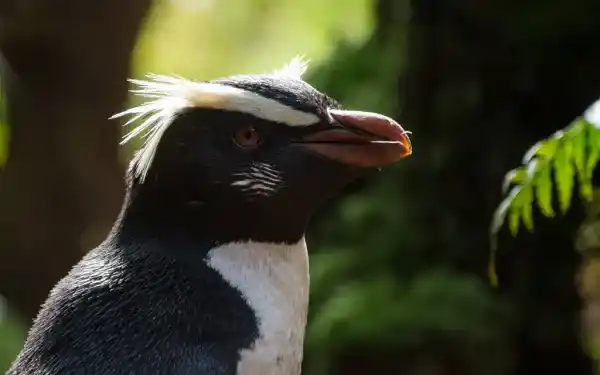
8. Fiordland Penguin (Eudyptes pachyrhynchus)
Also known as the New Zealand penguin, it stands about 50 centimeters tall and is characterized by its yellow crest around its eyes and white cheeks. They spend most of their time alone at sea, only briefly returning to land during the breeding season. They are nocturnal and very cautious and shy during the day.
9. Hooker's Sea Lion (Phocarctos hookeri)
Hooker sea lions are among the largest sea lions in the world. Females are white or cream-colored, while males are dark brown or black. They primarily breed in the sub-Antarctic climate region of the Auckland Islands. Mothers are extremely protective of their cubs, often sheltering them in woodlands to protect them from storms and male harassment. They are overhunted due to their resemblance to seals.

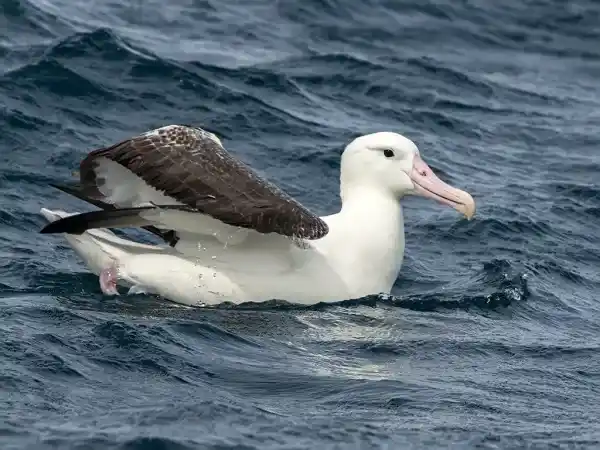
10. Royal Albatross (Diomedea epomophora)
These are enormous seabirds with wingspans reaching up to 3 meters and pure white plumage. They have glands in their nasal cavities that expel ingested seawater salt. They are excellent fliers and swimmers, but walk clumsily. They are migratory birds, nesting and breeding only on the coast of New Zealand.
11-20. Other representative animals of New Zealand
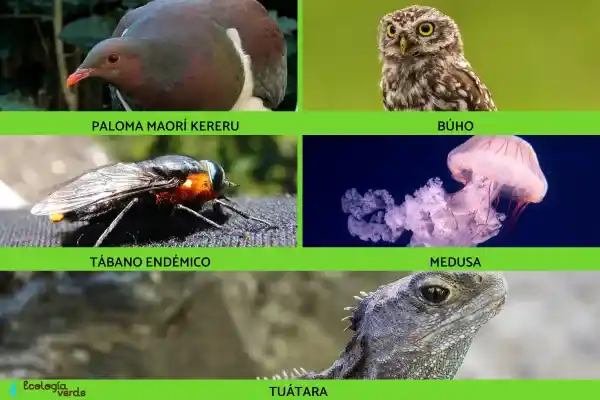
Here are 10 other rare or endemic animals of New Zealand:
Maori pigeon (Kereru, Hemiphaga novaeseelandiae) : A large fruit pigeon native to New Zealand.
Owls of the order Strigidae (family Strigidae) : include several native species.
Endemic horseflies (family Tabanidae) : large blood-sucking insects.
Jellyfish (Medusozoa subphylum) : Common in the waters off New Zealand.
Tuatara (Sphenodon spp.) : A living fossil reptile unique to New Zealand.
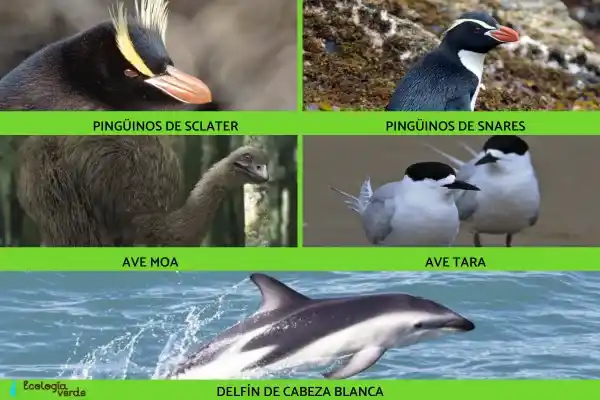
Sclateri penguin (Eudyptes sclateri) : endangered and endemic.
Snell Penguin (Eudyptes robustus) : Found only in the Snell Islands.
Moa (Moa spp.) : An extinct, wingless giant bird, entirely endemic.
Striped Tern (Sterna striata) : A seabird endemic to New Zealand.
The white-headed dolphin (Cephalorhynchus hectori) : one of the smallest dolphin species in the world.
If you are interested in more similar articles, please visit our website's "Wildlife" category to learn about amazing species from around the world.
References
National Geographic (2015). Human Heritage: Indonesia, Australia, and the Pacific. Spain: Editec.
Braswell, T., (2001) *Eudyptes pachyrhynchus* (Thick-billed Seahorse). University of Michigan Museum of Zoology. Accessible at: https://animaldiversity.org/accounts/Eudyptes_pachyrhynchus/
The Society for Marine Mammals (SF) Phocarctos hookeri. Accessible at: https://marinemammalscience.org/facts/phocarctos-hookeri/
Mackerras, I. (1956). New Zealand horseflies (Diptera). Proceedings of the Royal Society of New Zealand, Vol. 84, Part 3, pp. 581-610.
IUCN Red List of Threatened Species (2016). Nestor productus. Website: https://www.iucnredlist.org/species/22684834/93049105