Seals are diverse, including the subfamilies Phocinae and Monachinae. Other species include the common seal, grey seal, striped seal, Mediterranean monk seal, and leopard seal. Seals are typical animals of cold-climate coasts. They are marine mammals, highly adapted to aquatic life, and play a vital role in the food chain. For example, in the Arctic, polar bears primarily prey on seals. However, as predators, they also help regulate lower trophic levels. Seals come in different species or types, each with its unique characteristics. We invite you to read this article to learn about the different species of seals, their characteristics, and which species are at risk.
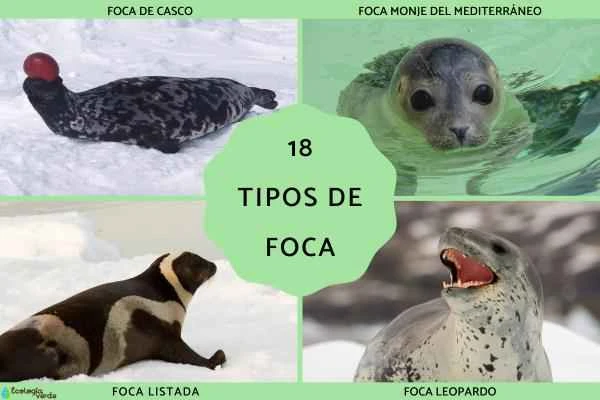
Table of contents
Seal classification and main characteristics
Representative species of Northern Hemisphere seals (Phocinae)
Representative species of Southern Hemisphere seals (Monachinae)
Other common seal species
Endangered seals and the threats they face
Summary: The Importance of Seal Conservation
1. Classification and main characteristics of seals
Seals belong to the pinnipeds of the suborder Caniformia in the order Carnivora, and their family name is Phocidae (true seal family). Based on distribution and morphology, they are mainly divided into two subfamilies: the northern seal (Phocinae) and the southern seal (Monachinae).
Main features:
It has no outer ear, giving it excellent underwater hearing.
Their hind limbs evolved into flippers, allowing them to move slowly on land but swim nimbly in water.
They vary greatly in size, with small species weighing about 60 kilograms and the largest reaching 3.5 tons.
A streamlined body shape helps with efficient swimming.
They are carnivorous, preying on fish, cephalopods, crustaceans, and some species feed on small organisms.
2. Northern Hemisphere seals (Phocinae)
Also known as the northern seal, it is distributed in the Arctic and subarctic regions and has well-developed claws on its forelimbs and hindlimbs.
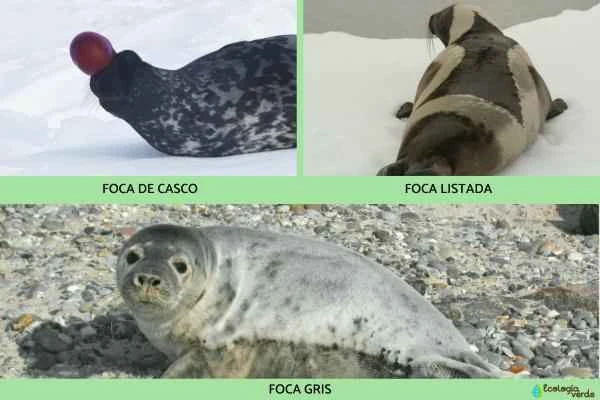
Helmeted Seal (Cystophora cristata)
Males have enlarged nasal sacs, and their bodies are grayish-black with dark spots. They are distributed in Greenland, Iceland, and northern Norway.Striped seal (Histriophoca fasciata)
It has a black body with white rings and is distributed in the Sea of Okhotsk and the Bering Sea.Grey seal (Halichoerus grypus)
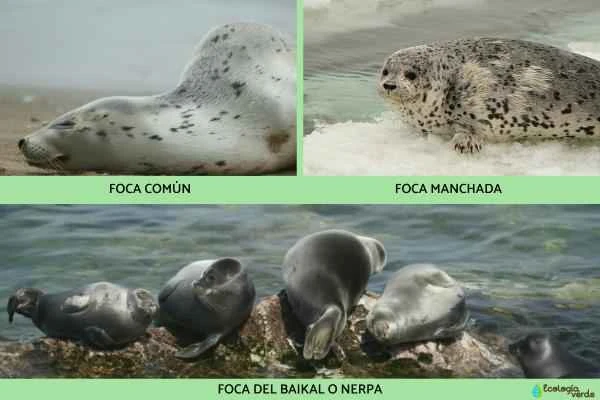
Grey with white spots, 2-3 meters in length. Divided into two subspecies: one in the North Atlantic and one in the Baltic Sea.Harbor seal/Spotted seal (Phoca vitulina)
It has a grayish-white body with spots, is the most widely distributed species, and lives along the coasts of the Pacific and Atlantic Oceans.Spotted seal (Phoca largha)
It is distributed in the North Pacific Ocean and surrounding waters, and is of medium size with a dog-like nose.Baikal seal (Pusa sibirica)
The world's only freshwater seal, the smallest in size, with dark fur, found only in Lake Baikal.
3. Southern Hemisphere seal (Monachinae)
Distributed in the Southern Hemisphere, including tropical, temperate, and polar regions. Hind limb claws are reduced in size.
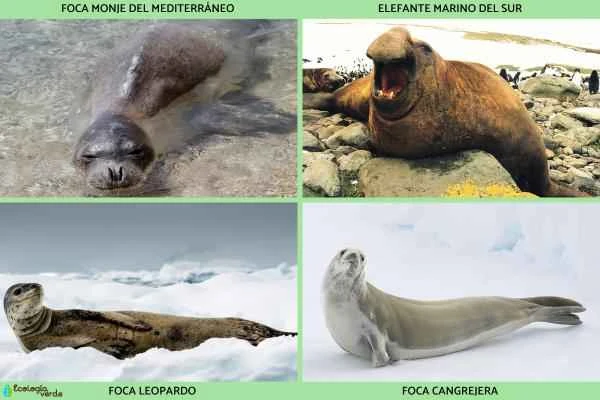
Mediterranean monk seal (Monachus monachus)
It has a gray body with a white stripe on its abdomen and is now a critically endangered species.Southern elephant seal (Mirounga leonina)
They are enormous, with males reaching up to 5 meters in length, and have well-developed noses. They are found in Antarctica and its surrounding areas.Leopard seal (Hydrurga leptonyx)
The second largest seal in Antarctica, with a streamlined body and a length of 2-3.5 meters.Crab-eating seal (Lobodon carcinophagus)
They feed on krill, and their body color turns almost pure white in winter. They are distributed in the Antarctic region.
4. Other common seal species
Caspian seal (Pusa caspica)
Ringed seal (Pusa hispida)
Greenland seal (Pagophilus groenlandicus)
Hawaiian monk seal (Neomonachus schauinslandi)
Ross seal (Ommatophoca rossii)
Bearded seal (Erignathus barbatus)
Northern elephant seal (Mirounga angustirostris)
Weddell seal (Leptonychotes weddellii)
5. Endangered Seals and the Threats They Face
Threatened seals mainly include:
Helmeted Seal (Cystophora cristata): Vulnerable
Striped seal (Histriophoca fasciata): Near Threatened
Caspian seal (Pusa caspica): Endangered
Mediterranean monk seal (Monachus monachus): Critically Endangered
Hawaiian monk seal (Neomonachus schauinslandi): Endangered
Main threats:
Poaching, climate change, sea ice loss, water pollution, food resource depletion, and habitat shrinkage are just some of the problems.
6. Conclusion: The Importance of Seal Conservation
Seals play a crucial role in marine ecosystems. Protecting seals helps maintain marine ecological balance and protects more marine life. Legal protection should be strengthened, human interference reduced, and public awareness promoted to provide a safer environment for seals and their habitats.