At first glance, groundhogs and gophers can look very similar—both are burrowing rodents with brown fur and a penchant for digging . However, they differ significantly in classification, appearance, behavior, habitat, and diet . Understanding these differences can help identify which type of burrowing rodent you are dealing with.
1. Classification: Different families and orders
| feature | Woodchuck | Pocket Gopher |
|---|---|---|
| Scientific Objectives | Sciuromorpha | Castorimorpha |
| Science | Sciuridae (family Sciuridae) | Geomyidae (Geomyidae family) |
| Related animals | Squirrels, chipmunks, prairie dogs, groundhogs | Kangaroo, kangaroo, pygmy mouse |
| Number of species | There are 14 species in the groundhog group. | There are 35 species of hamsters in 5 genera. |
Marmots belong to the family Sciuridae , the largest member of the group , while voles belong to the family Cricetidae , including the cheek pouch vole .
2. Physical differences: size, teeth, and tail
| feature | Woodchuck | Groundhog (Saccharomyces rubrothes) |
|---|---|---|
| Size and weight | They can weigh up to 13 pounds (5.9 kg) and are 16-27 inches long. | They can weigh up to 2 pounds (0.9 kg) and are 5-14 inches long. |
| teeth | White teeth , remaining in the mouth when closed. | Yellow/brown front teeth that protrude even when the mouth is closed. |
| Foot color | Dark brown or black | Usually pink |
| Tail | Short, thick, and hairy | Hairless, long, mouse-like tail |
| front paws | Strong but not too flexible , suitable for climbing and digging. | Highly curved claws , designed for efficient digging. |
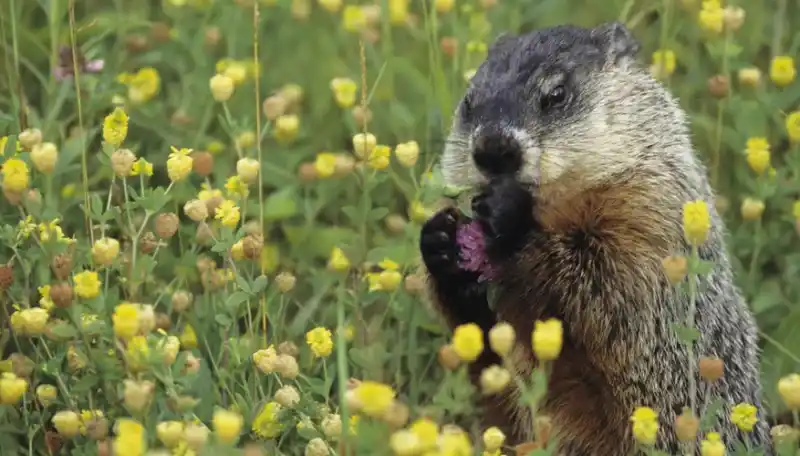
Marmots are much larger than ground squirrels and more like beavers , while ground squirrels have smaller bodies, hairless tails, and prominent teeth.
3. Habitat and burrowing behavior
| feature | Woodchuck | Pocket Gopher |
|---|---|---|
| Geographical range | North America (United States, Canada) | North America and Central America |
| cave dwelling | Simple nests , separate summer and winter burrows | The complex tunnel system is divided into foraging areas, nesting areas, food storage areas, and waste areas. |
| Surface activity | They are often seen in open fields, roadsides, and densely populated areas. | Rarely seen , they spend most of their lives underground . |
| cave entrance | Large, visible entrance hole | Small, sealed cave entrances to prevent predators |
Groundhogs spend more time on the ground than gophers and are commonly found in fields and urban areas , while gophers rarely come out of their burrows and prefer a hidden underground lifestyle .
4. Diet: Food storage and fat storage
| feature | Woodchuck | Pocket Gopher |
|---|---|---|
| Main diet | Plants , including grasses, clover, flowers, and roots | Roots, tubers, plant stems, grains |
| cheek pouches | none | Large internal cheek pouches are used to carry food. |
| Winter food storage | Eating large amounts of food in summer to accumulate fat for hibernation | Storing food in underground caves for winter consumption |
Unlike gophers, marmots do not store food —instead, they increase their body fat during the summer to prepare for hibernation. However, gophers store food in underground "food pantries" to survive the harsh winter.
5. Hibernation and Seasonal Activities
| feature | Woodchuck | Pocket Gopher |
|---|---|---|
| Hibernation? | Yes , true hibernating animals, they sleep during the winter. | No , they operate underground year-round. |
| Winter Survival Strategies | Survival reserves based on body fat | Relying on food stored in the cave |
Marmots are true hibernating animals , meaning they use stored fat to survive the winter , while voles are active underground year-round , feeding on stored food.
6. Summary: The main differences between groundhogs and gophers
| feature | Woodchuck | Groundhog (Saccharomyces rubrothes) |
|---|---|---|
| size | Large, up to 13 pounds | Small, maximum 2 pounds |
| teeth | White teeth, visible inside the mouth when closed. | Yellow teeth, teeth protrude even when mouth is closed. |
| Tail | Short, fluffy tail | Long, hairless tail |
| foot | Dark brown or black | Usually pink |
| Habitat | They are often found on the ground , living in open fields, roadsides, and suburbs. | He spent most of his life underground and was rarely seen. |
| cave | Simple nests, separate summer and winter burrows | The complex tunnel system has separate food chambers, nesting chambers, and excretion chambers. |
| diet | Eat plants, don't store food | They eat roots and tubers and store food in caves. |
| hibernation | True hibernating animals sleep during the winter. | They do not hibernate and are active underground year-round. |
Conclusion: How to distinguish between a groundhog and a gopher.
If you see a large, furry rodent on the ground, it is most likely a groundhog . If the animal is rarely seen and leaves small, sealed burrow entrances , it is most likely a gopher .
✔ Marmots are large animals with white teeth. They hibernate and are often found in fields and suburbs .
✔Groundhogs are small in size, have yellow teeth, live underground , and rarely come out to move around except to move soil .
Understanding these key differences can help homeowners, farmers, and wildlife enthusiasts better identify and manage these burrowing rodents !