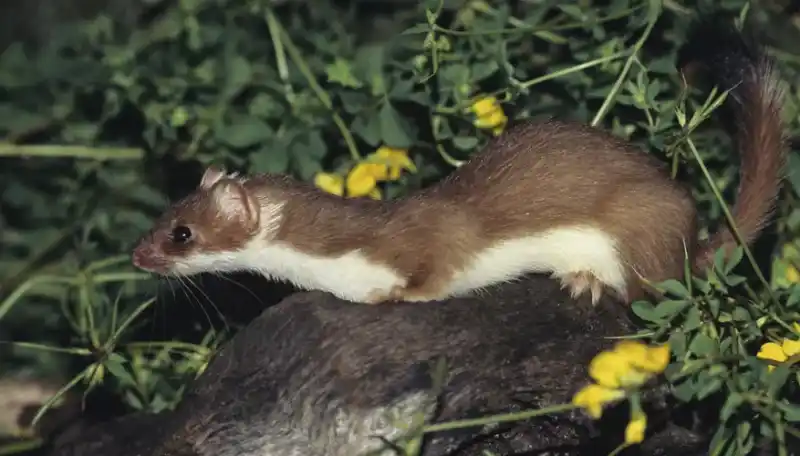
Weasels belong to the genus *Mustela *, a group of small, carnivorous mammals known for their slender bodies and efficient hunting abilities . The genus *Mustela* includes approximately 17 species , such as the weasel, stoat, weasel, black-footed stoat, and European mink . These animals primarily prey on small rodents , making them very beneficial to farmers and gardeners .
Different species of weasels and their characteristics
| Weasel type | scientific name | size | Geographical range | Significant features | Protection status |
|---|---|---|---|---|---|
| Smallest weasel | Snow Weasel | Up to 8 inches (20 cm) long | North America, Europe, Asia | The world's smallest carnivore | No danger |
| Longtail Weasel | Mustela frenata | It is 18 inches (46 cm) long. | North America and Central America | Long tail, highly adaptable | No danger |
| Weasel (Muscicapidae) | weasel | Up to 13 inches (33 cm) tall | North America, Europe, Asia | Winter whitening | No danger |
| European weasel | weasel | Up to 20 inches (50 cm) long | Europe | Ancestors of domesticated ferrets | No danger |
| Steppe weasel | Weasel | Up to 20 inches (50 cm) long | Eastern Europe and Central Asia | A robust, cave-dwelling lifestyle | No danger |
| Black-footed Weasel | Mustela nigripes | It is 24 inches (61 cm) long. | North America (unique) | Critically endangered , nocturnal hunter | endangered |
| European mink | Mustela lutreola | It is 16 inches (41 cm) long. | Europe (France, Spain, Russia, Ukraine, Romania) | Critically endangered , similar to the American mink | Critically Endangered |
1. Weasel: A small but powerful predator
Weasels are widely distributed across Asia, Europe, and the Americas , but they have not been found in most parts of Oceania and Africa, except where ferrets have been introduced.
Major weasel species in North America:
Long-tailed weasel ( Mustela frenata ) : One of the most widely distributed species, known for its adaptability and long tail .
The smallest weasel ( Mustela nivalis ) : the world's smallest carnivore , measuring only 8 inches (20 cm) in length and weighing up to 4.5 ounces (128 grams) .
Both species are excellent hunters and can control rodent populations in forests, grasslands, and even farmlands.
2. Weasel (or ferret): Chameleon weasel
The sable ( Mustela erminea ), also known as the mink , is native to North America, Asia, and Europe , but in its place of introduction, New Zealand , it has become a major pest .
Unique characteristics of the weasel:
Its fur turns pure white in winter , making it highly valuable in the fur trade .
Unlike many other fur-bearing mammals, stoats are not endangered because they can thrive in a variety of climates .
They are fierce hunters who often prey on animals larger than themselves.
3. Weasel: A wild relative of the ferret
Weasels are the larger members of the weasel genus and are robust in build.
Two main species of weasels:
| Species | scientific name | Significant features |
|---|---|---|
| European weasel | Mustela putorius | The ancestors of domesticated ferrets had dark fur and were widely distributed in Europe. |
| Prairie Weasel | Mustela eversmanii | They live in caves and are distributed in Eastern Europe and Central Asia. |
The European weasel plays an important historical role because it led to the domestication of the ferret , which is now widely kept as a pet and used for hunting rodents.
4. Black-footed ferret: The rarest ferret in North America.
The black-footed ferret ( Mustela nigripes ) is the only native ferret species in North America .
It was declared extinct in the wild in 1987 , but intensive conservation efforts have helped reintroduce small populations.
It remains one of the most endangered carnivores , with only about 250 individuals remaining in the wild.
Black-footed ferrets are strict nocturnal hunters , primarily preying on prairie dogs .
Why is the black-footed ferret on the verge of extinction?
The prairie dog population has declined , and its habitat has been destroyed .
The disease outbreak affected its limited population.
Conservation programs have helped stabilize the population, but the species remains vulnerable.
5. European mink: Critically endangered species
European mink ( Mustela lutreola ) looks similar to American mink , but they are not closely related .
It is distributed in France, Spain, Russia, Ukraine and Romania , but was once widely distributed.
European mink is critically endangered due to overhunting, habitat loss, and competition from the invasion of American mink .
Unlike the semi-aquatic American mink , European mink prefer riverbank and wetland environments .
Threats to European mink:
Overexploitation of the fur trade in the past has led to a severe decline in the mink population in Europe.
Habitat destruction and human encroachment.
Competition from the invasive American mink has made the American mink more aggressive and adaptable.
Conclusion: Understanding the diversity of weasels
The genus *Weasel* includes a wide variety of species , ranging from the smallest weasel to large weasels and the endangered ferret .
Weasels are highly skilled hunters , known for their slender bodies and rodent hunting abilities .
Weasels change color in winter , making them valuable in the fur trade .
Weasels are the wild ancestors of domesticated ferrets .
Black-footed ferrets and European mink face serious threats and require conservation measures.
By learning about these fascinating carnivores, we can better understand their ecological roles and the importance of protecting endangered species .