The American Avoc (scientific name: *Recurvirostra americana*) is a wading bird known for its distinctive upturned beak, long legs, and captivating plumage. It is widely distributed throughout North America, particularly common in wetlands and coastal habitats. This article provides a comprehensive guide to the American Avoc's characteristics, habitats, behavior, and conservation status, offering birdwatchers, researchers, and nature enthusiasts alike.
Basic information about the American Avocet
Scientific name and classification
The American Avocet's scientific name is *Recurvirostra americana*, and it belongs to the family Recurvirostridae, which also includes other wading birds such as the long-legged sandpiper and the three-toed sandpiper.
Appearance features
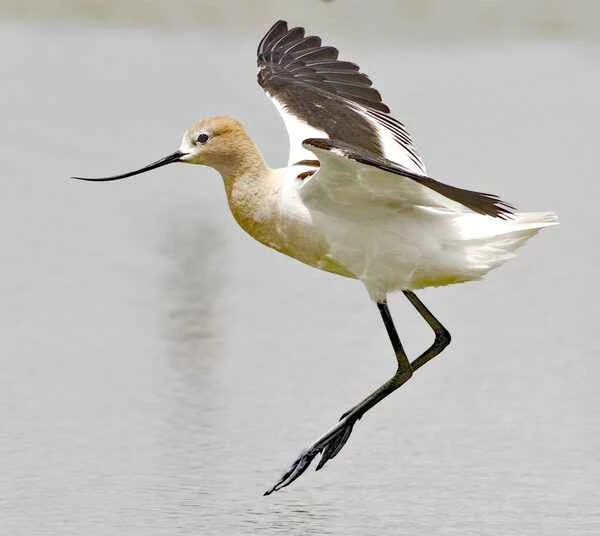
The American Avocet is a medium-sized wading bird with a striking appearance. Its long body and legs, combined with its distinctive upturned beak, allow it to easily forage in shallow water. During the breeding season, both males and females have vibrant plumage; the male's head and neck are orange-red, while the female's are slightly paler, brownish-gray. Outside the breeding season, their plumage becomes softer, giving them a greyish-blue hue.
Body size and weight
Body length: approximately 40-46 cm (16-18 inches).
Wingspan: Approximately 71-76 cm (28-30 inches).
Weight: Approximately 225-340 grams (8-12 ounces).
life
The American avocetus can live up to 10 years in the wild, but its actual lifespan is usually shorter due to predation and environmental factors.
Habitat and distribution range
Habitat
The American Avocet primarily inhabits shallow wetlands, coastal marshes, and salt flats. They prefer areas with soft mud or shallow water, environments ideal for them to hunt aquatic insects and small crustaceans. They are also commonly found in shallow lakes and estuaries.
Distribution range and migration
Breeding range: The American Avocetus mainly breeds in western North America, from the central United States to southern Canada, including the Great Basin, the Midwest and the western Inland region.
Wintering grounds: They migrate to Southern California, Mexico, and parts of the southwestern United States during the winter, and some even migrate to Central America and the Caribbean.
Migration time
The American Avocet is a migratory bird, with most populations undertaking long-distance migrations between their breeding and wintering grounds. The migration typically begins in early spring, when they return to their breeding grounds; and in late autumn, they migrate south to spend the winter.
Behavior and foraging habits
Foraging techniques
One of the most striking features of the American Avocet is its upturned beak, a key characteristic for foraging. They typically use their beaks to swirl from side to side in the water, stirring the bottom to catch small fish, insects, and crustaceans. This foraging method is known as **"sieve-like foraging" or "swishing foraging"**.
food
The American Avocet primarily feeds on aquatic insects, small crustaceans, worms, and algae. They typically forage in shallow mudflats, ponds, and swamps, and are often seen standing in the water, probing the bottom with their beaks.
Nest building behavior
The American Avocet primarily nests on the ground. They build shallow nests in mud or gravel, usually near water. They tend to nest in groups, a behavior that helps them defend against predators. Females typically lay 3-4 eggs, which are incubated by both parents.
Courtship and Reproduction
During the breeding season, the American Avocet displays a complex courtship display. The male performs a series of ritualistic dances, including high leg raises and bowing, to attract the female. These courtship behaviors are usually accompanied by calls and other vocalizations.
How to identify the American Avocet
Identify features
The American Avocet is easily recognizable by its slender body, long legs, and distinctive upturned beak. During the breeding season, the male's bright orange-red head is very striking, while the female's colors are softer, appearing as a pale brown.
Feather changes
Breeding plumage: In spring and summer, the plumage is brightly colored. The male bird has an orange-red head and neck, while the female bird has softer colors.
Non-breeding plumage: In autumn and winter, the plumage becomes softer in color, with the body being grayish-blue and the abdomen being white.
Young birds' plumage: Young birds are lighter in color, with stripes and spots on their backs, which gradually change as they grow older.
Protecting the status quo and threats
Preserve the status quo
Currently, the American Avocet is listed as a species of least concern, but its population status is under close scrutiny due to factors such as habitat loss, climate change, and wetland degradation.
Threats
Although the American Avocet is not yet endangered, it still faces some threats:
Habitat destruction: Agricultural development and urbanization have led to the degradation and disappearance of wetlands.
Climate change: Climate change may alter rainfall patterns, affecting reproductive success and food supply.
Pollution: Wetland pollution can affect food sources and water quality.
Protective measures
Conservation organizations are protecting the habitat of the American Avocet by maintaining wetland ecosystems and establishing protected areas. Meanwhile, relevant laws and policies also safeguard their breeding and foraging grounds.
Interesting facts about the American Avocet
Symbolic meaning: The American Avocet is regarded as a symbol of beauty and elegance due to its graceful appearance, and it often appears in nature art and photography.
Vocal characteristics: The American Avocet emits a range of calls, including a sharp high-pitched call when threatened and a low, mournful call during the breeding season.
Aquatic foraging techniques: They are excellent surface foragers, using their upturned beaks to catch small prey in the water.
Unique nesting: Unlike many wading birds, the American Avocet prefers to nest in groups to reduce the threat of predators.
The American Avocet is a charming and elegant bird, renowned for its distinctive appearance and foraging behavior. Understanding their physical characteristics, migration patterns, and ecological roles allows us to better appreciate their importance in maintaining healthy wetland ecosystems. Although their population is currently stable, conservation efforts remain crucial in the face of habitat loss and environmental challenges.
For birdwatchers and nature lovers, spotting an American Avocet in its natural habitat is an extraordinary experience. Whether in coastal marshes or inland wetlands, the American Avocet remains one of the most captivating wading birds in North America.