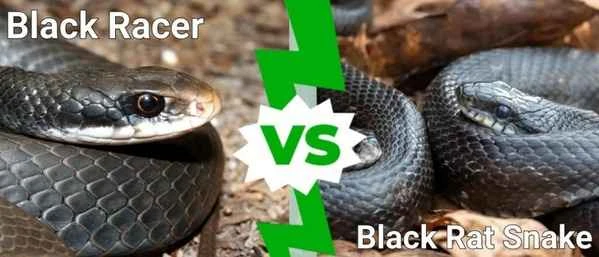
When it comes to black snakes, the two most easily confused species are the Black Racer (scientific name: Coluber constrictor) and the Black Rat Snake (scientific name: Pantherophis obsoletus) . Both are common non-venomous snakes in North America, but they actually differ significantly in appearance, behavior, and habitat. This article will detail the characteristics, habits, and ecological roles of these snakes to help you better distinguish between them.
Appearance: How to tell the difference?
Black snake appearance
The black snake's body is covered in smooth, shiny scales, giving it a very streamlined appearance. Its body is pure black, with a white chin and large, alert eyes. Adult black snakes typically range in length from 90 to 150 centimeters (3 to 5 feet).
The appearance of the black rat snake
In contrast, the black rat snake's scales have distinct ridges (a rough texture), giving them a more "matte" appearance than the black rat snake. Their bodies are predominantly black, but they often retain some grayish-white markings on their bellies or sides. Black rat snakes are larger, with adults reaching 180 to 240 centimeters (6 to 8 feet), making them one of the longest snakes in North America.
Behavior: A Contrast Between Speed and Stealth
Black snake behavior
As their name suggests, black snakes are known for their astonishing speed. They use swift movements to escape predators and capture prey. Black snakes are more active during the day and tend to be more tense. When threatened, they may flee quickly or exhibit defensive behaviors, such as hissing or attempting to attack, but they rarely actually bite.
Black rat snake behavior
Black rat snakes are more composed and move more slowly. They are adept at climbing trees and often search for eggs or chicks in bird nests. Unlike black snakes, black rat snakes usually remain still or curl into a defensive posture when threatened, rather than immediately fleeing.
Habitat: Where do they live?
Black snake habitat
Black snakes prefer open areas such as grasslands, fields, and forest edges. They are mainly distributed in the southeastern and eastern United States. Black snakes thrive in sunny environments, which helps them maintain their body temperature and hunt.
Black rat snake's habitat
Black rat snakes are highly adaptable, living in forests, farmlands, wetlands, and even suburbs. Their excellent climbing abilities allow them to utilize a wider range of habitats. Black rat snakes are widely distributed in the eastern and central United States.
Diet: What do they eat?
Black snake's diet
Black snakes are opportunistic predators with a very broad diet, mainly including insects, small mammals, amphibians, and other reptiles (including smaller snakes). They hunt by actively chasing and subduing their prey.
Diet of the black rat snake
Black rat snakes are known for controlling rodents, hence their nickname "farmer's friend." They also prey on bird eggs, chicks, and small mammals. Unlike black snakes, black rat snakes use constriction to subdue their prey (constriction killing).
Toxicity and Threat to Humans
Neither black snakes nor black rat snakes are venomous and harmless to humans. However, their defensive behaviors differ slightly:
Black snakes may attempt to attack when they feel threatened, but usually without causing harm.
Black rat snakes are more docile and usually choose to run away or play dead rather than attack.
These two snakes are very helpful in controlling pests and are an important part of the ecosystem.
Key differences between black snakes and black rat snakes
| Features | blacksnake | Black Rat Snake |
|---|---|---|
| Appearance | Smooth, shiny scales; relatively small body size | Rough scales; relatively large body size |
| Behavior | Quick-moving, tense, and proactive hunter | Slow-moving, calm, and good at climbing trees. |
| body shape | 90-150 cm (3-5 ft) | 180-240 cm (6-8 ft) |
| feeding habits | Eats insects, reptiles and small mammals | Eats rodents, bird eggs and baby birds |
| Habitat | grasslands, fields, forest edges | Forests, farmland, wetlands and suburbs |
Interesting facts about black snakes and black rat snakes
Black snakes: Although they are known for their speed, they are not as good climbers as black rat snakes. They also shake their tails rapidly in fallen leaves, mimicking the sound of rattlesnakes to scare away enemies.
Black rat snakes: They hibernate in groups during the winter and sometimes share burrows with other snakes, including venomous snakes such as rattlesnakes.
Frequently Asked Questions
Do black snakes and black rat snakes pose a threat to humans?
No, neither of these snakes are venomous and poses no direct threat to humans.
Which is faster, the black snake or the black rat snake?
The black snake is faster, which is where its name comes from.
Do black snakes and black rat snakes attack each other?
Although they may compete for similar prey, direct conflict is rare. Black snakes may prey on smaller snakes, but generally avoid attacking adult black rat snakes.
Understanding the differences between black snakes and black rat snakes helps to better appreciate their unique roles in nature. Black snakes are known for their speed and agility, while black rat snakes are renowned for their climbing and pest control abilities. Both snakes are important components of the ecosystem and play key roles in maintaining the natural balance.
Whether you see a black snake darting across a field or a black rat snake resting leisurely in a tree, remember that they pose no threat to humans and are actually very beneficial to the environment.