Filtering is a common feeding method in the animal kingdom and a way in which natural selection acts on the evolution of life. The latest issue of Science and its sub-journal Science Advance reported two research findings from the Institute of Vertebrate Paleontology and Paleoanthropology of the Chinese Academy of Sciences, both of which are related to filtering.
*Atopodentatus unicus* was a filter-feeding Triassic marine reptile with distinctive tooth morphology. In earlier studies, its unique skull morphology was not properly understood due to the poor preservation of the fossils. Recently, a research team from the Institute of Vertebrate Paleontology and Paleoanthropology reconstructed the skull structure of this animal using two perfectly preserved fossil specimens. Its exaggerated lateral widening, previously only occasionally seen in a very small number of fish and prehistoric amphibians, is a first-time record in reptiles.
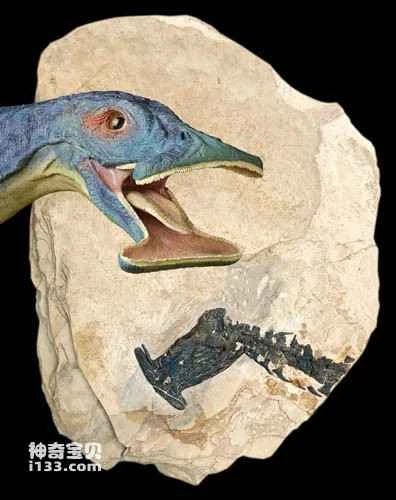
Figure 1. Fossil and reconstruction of Atopodentatus unicus
Furthermore, the three different tooth morphologies in the mouth of *Fluorodon* were used for gnawing and filtering algae, representing the earliest record of a herbivorous marine reptile. This further illustrates the unexpected diversity of early marine reptiles' adaptations to radiation. The findings were published online in *Science Advances* on May 6th.
In another study, the "filter" was not the animal's body structure, but rather major environmental change events.
34 million years ago, during the Eocene-Oligocene transition period in geological history, the global climate underwent a dramatic change, abruptly transforming from a greenhouse environment to an "ice house" environment. Accompanying this was the rapid expansion of continental ice sheets and a large-scale replacement of faunal groups.
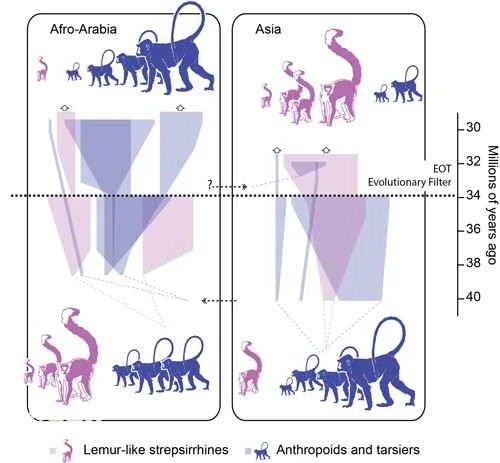
Figure 2. Evolutionary "filtering" diagram of primates lemurs (left) and apes (right).
Primates are highly sensitive to temperature changes, and this transitional period profoundly impacted their evolution. Primates that once thrived in North America, Europe, and northern Asia nearly went extinct after this dramatic climate shift. Tropical regions of southern Asia and northern Africa became refuges for primates. Those primates that entered these refuges seemed to be "filtered out."
Most apes living in Asia were "filtered out," while lemurs appeared to be unaffected. Conversely, lemurs living in Africa were "filtered out" upon entering the refuge, with only a few species surviving. Meanwhile, apes living in Africa flourished after this filtering process, laying the foundation for the origin and evolution of humans. This finding was published in *Science* on the same day.