What would daily life be like for humans without numbers? It's hard to imagine. But what about the animal kingdom? Research over the past few decades has found that animals, like humans, possess a "number sense" and use the concept of numbers in their lives. This numerical ability is not based on language; it can even be traced back to life forms that existed before modern humans evolved. Because numerical ability is a survival skill, it is crucial for the survival and reproduction of animals. This is why many animals possess this ability.
Numerous studies on animal habitats have shown that counting ability can enhance various survival skills in animals, including foraging, hunting, avoiding predators, becoming familiar with the environment, navigating, and socializing.

Many animals displayed surprising arithmetic abilities.
Group power
Before the evolution of organisms with arithmetic capabilities, the oldest life forms on Earth—single-celled microorganisms—were already processing digital information. Bacteria survive by absorbing nutrients from their environment, dividing, and multiplying—one becomes two, two become four...
In recent years, microbiologists have made a new discovery—these single-celled bacteria actually have social activities and can sense whether there are other bacteria nearby. In other words, they can sense the number of bacteria.
For example, Vibrio fischeri, which lives in the ocean, can produce light through a bioluminescent mechanism, similar to the bioluminescence of fireflies.
Marine Vibrio fischeri does not glow when it is essentially isolated in a diluted solution (with extremely low cell density). However, when the cell density reaches a certain level, all bacteria glow simultaneously.
This shows that Vibrio fischeri can distinguish when it is alone and when it is with a group.
They do this through a chemical language.
Vibrio fischeri secretes a communication molecule. When the concentration of this molecule in the water reaches a certain level, that is, when a certain bacterial colony size is reached, Vibrio fischeri transmits information about how many companions are around to other bacteria, and then they all glow together.
This behavior of bacteria is called swarm sensing (QS), which means that bacteria "vote" with information-transmitting molecules. When the number of votes reaches a certain level (swarming), all bacteria will react.
This behavior is not unique to Vibrio fischeri. All bacteria indirectly transmit cell quantity information through swarm sensing mechanisms using signaling molecules.

Fireflies glow in the forest
Ants and bees
Surprisingly, swarm sensing isn't exclusive to bacteria—animals use it too.
Japanese leafcutter ants (Myrmecina nipponica) are a good example: once they sense a swarming, they will migrate en masse to a new location.
In this consensus-building process, the ants will only swarm out and migrate collectively when the number of leafcutter ants at the target location reaches a certain level.
They believe that relocating the ant nest is safe under these circumstances.
Digital cognitive abilities are also crucial for animals' navigation and the development of efficient foraging plans and routes.
In 2008, biologists Marie Dacke and Mandyam Srinivasan conducted an elegant experiment under complete control, discovering that bees can estimate how many landmarks are in a flight path leading to a food source, even after the spatial layout has changed.
Bees rely on landmarks to measure the distance between the hive and food sources. Therefore, judging numbers is crucial to their survival.
When it comes to optimizing foraging strategies, the usual approach is "more is better," which seems self-evident; however, sometimes, going against the grain is better.
Field mice like to eat live ants, but ants are not to be trifled with and can be quite dangerous because they will bite attackers when threatened.

Ant colonies decide when to migrate their nests by counting their ants.
If you put a field mouse and two groups of ants in the same space, one group with more ants and the other with fewer ants, which group will the field mouse attack? The one with fewer ants!
In one experiment, mice were given the choice between 5 and 15, 5 and 30, and 10 and 30 ants, and each time they chose the colony with the smaller number of ants.
They seem to have made this choice to make the foraging process more comfortable and avoid being bitten by ants frequently.
Numbers are important
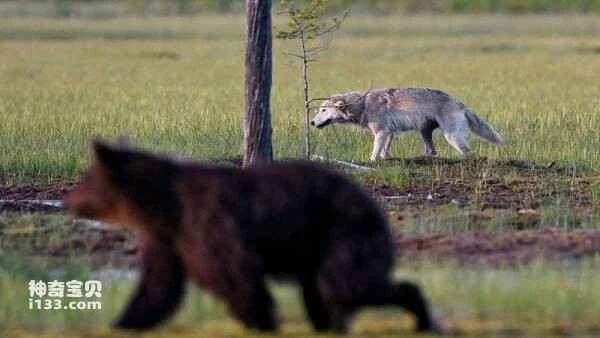
When hunting in groups, the concept of number plays an important guiding role.
The number of wolves participating in a hunt determines the probability of successfully hunting elk or bison.
Wolves often hunt large animals, such as elk and bison, but these large animals will not surrender easily and will kick, bite, and fight to kill the wolf.
Therefore, the optimal number of wolves to hunt varies depending on the animal. For elk, two to six wolves are sufficient, while bison are more difficult to hunt, and a hunt with nine to thirteen wolves increases the chances of success.
Therefore, for wolf packs, there is indeed such a thing as "numerical power" when hunting, but it depends on the ferocity of the prey.
Animals with little self-defense capability tend to act in groups, and the "digital power survival strategy" revealed by this phenomenon needs no further explanation.
However, clustering together is not the only digitally-related strategy for defending against predators.
Sometimes, numbers play a more complex role in deciding a hunting strategy.
singing code
In 2005, a team of biologists from the University of Washington discovered that the European black-capped tit has an amazing ability to sound an alarm, alerting its companions to nearby danger.
Like many animals, the black-capped tit will send out a warning call to its companions when it senses an enemy or danger nearby.
If it is a stationary predator, the black-capped tit's warning call is: Chi-ka-ti.
Researchers have found that the number of "ti" syllables at the end of the call conveys information about the level of danger.
For example, “chi-ka-ti-ti”, with two “ti” syllables, might mean that there is a less dangerous owl nearby.
These grey owls are relatively large and clumsy, making them unable to hunt the small and agile black-capped tits in the jungle, so they are not dangerous.
Conversely, the small owl moves freely in the forest and easily hunts the black-capped tit, making it the most dangerous natural enemy.
When the Black-capped Tit sees the Owlet, the alarm call ends with several more "ti" sounds, becoming "chi-ka-ti-ti-ti-ti".
Clearly, this is a data-based defense strategy.

Before engaging an intruder, the lioness will estimate the number of attackers.
Distinguishing between the many and the few
When a resource needs to be strictly protected, the number and size of the herd are important; assessing the relative numbers of members in both sides is clearly valuable for survival of the fittest.
Several species of mammals have made a common discovery while venturing into the natural world: in the struggle for resources, the size of the population determines victory or defeat.
Karen McComb, a zoologist at the University of Sussex, and her colleagues conducted a cutting-edge experiment studying the instinctive reactions of lionesses in Tanzania's Serengeti National Park when faced with intruding outsiders.
The research report explored the reactions of wild animals when they heard sounds simulating an intruder being played over a loudspeaker.
If the sound sounds like an invading lion, the lioness will charge aggressively at the loudspeaker, treating it as an enemy.
The research team played the roars of invading lionesses for a group of lionesses in the Serengeti National Park.
They played two different simulated sounds: the roar of an unfamiliar lioness and the collective roar of three lionesses.
The purpose of the experiment was to determine whether the ratio of attackers to defenders would affect the defenders' strategy.
The study found that a single lioness was very reluctant to confront one or three intruders.
When the three guardians are together, they will rush towards one intruder (the simulated enemy in the simulated sound) without hesitation, but they will hesitate when faced with three intruders.

In the animal kingdom, quantity comparison is very important, and the ability to count is definitely a major advantage.
Clearly, the risk of injury from fighting the three intruders served as a warning to them.
They will only confront the three intruders (in the simulated sound) if there are five or more companions on their territory.
In other words, lionesses will only confront intruders head-on if they have a numerical advantage; this clearly demonstrates that animals possess the ability to use quantitative information to determine their actions.
Military strategy
Gorillas, our close relatives in the animal kingdom, also exhibit distinct behavioral characteristics.
Michael Wilson and his colleagues at Harvard University conducted a similar experiment, testing chimpanzees' reactions with simulated sounds and finding that they behaved like military strategists.
They seemed to apply the calculation formulas used by armies to calculate the balance of power between opposing sides without thinking. Specifically, the chimpanzees followed the predictions given by the Lanchester's square law combat model in military theory.
This model predicts that when both sides have a large number of troops involved in the battle, one side will only be willing to engage in battle if its own troops are at least 1.5 times the number of the enemy's troops.
This is exactly the reaction of the wild chimpanzees used as experimental subjects.
From a biological perspective, maintaining life is a means to an end, and the end is the inheritance of genes.
The reproductive method of mealworms (Tenebrio molitor) is very telling: many males mate with many female mealworms, resulting in fierce competition.
As a result, a male mealworm will continuously court more and more females in order to maximize its mating opportunities.
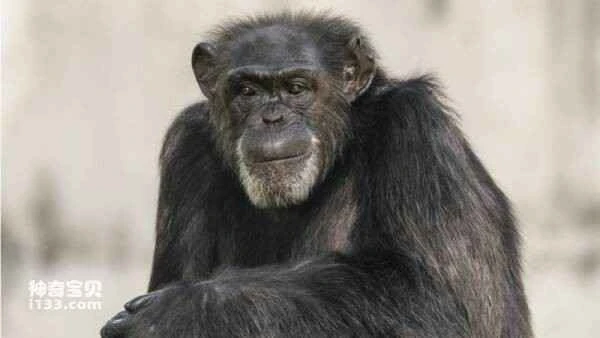
Like humans, chimpanzees make strategic decisions and know how to form alliances.
After mating, the male will stay by the female's side to prevent her from mating with other males; moreover, the length of time the male can monopolize a mate is related to the number of competitors he encountered before mating. The more competitors he defeats, the longer the monopoly will last.
Clearly, this behavior plays a crucial role in the reproduction of mealworms and therefore has a high fitness value. The ability to estimate numbers enhances the male mealworm's competitiveness in mating.
This could become a major driving force for the development of more complex quantitative estimation cognitive abilities throughout the evolution of nature.
Sperm Race
If you think that successful mating equals victory, you're mistaken. For some animals, the truth is far more complex—the ultimate reward belongs to the one who successfully fertilizes the egg.
During mating, the male has completed its task, but the race of sperm has only just begun; they must strive to be the first to reach the egg and fertilize it.
Reproduction holds a paramount position in biology, and the race of sperm has triggered numerous adaptive changes in animal behavior.
Whether in insects or vertebrates, a male's ability to estimate the intensity of competition determines the quantity and composition of his semen.
For example, in the order Scorpionidae, the long-armed beetle (Cordylochernes scorpioides) commonly mates with a single female.
Obviously, the sperm from the first male to mate has the highest chance of successfully fertilizing the child, while the chances of subsequent males becoming the father of her child become increasingly slim.
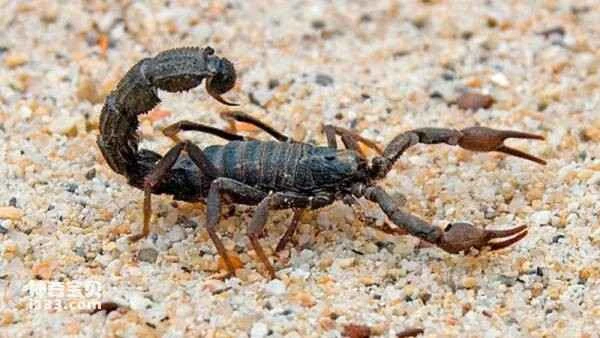
The long-armed beetle in the order Pseudoscorpii practices polyandry.
However, sperm production is a very costly process, so the distribution of sperm is carefully considered, and the number of sperm in the semen is determined based on the chance of fertilization.
Male scorpions can determine how many rivals a female scorpion has mated with by smell. Based on olfactory cues, as the number of rivals who have mated with "her" increases from zero to three, the amount of "his" sperm allocated will decrease accordingly.
cunning
Some birds have a knack for cleverly shifting the responsibility of raising their young onto other birds. After all, incubating eggs and raising offspring is hard work, and it's best to let other birds do it for them.
These birds are called brood parasites, which means they lay their eggs in the nests of other birds and have the host do everything from incubation to feeding.
The unfortunate host is naturally unhappy and will try to avoid being exploited and cheated. One defense strategy is counting.
For example, the American coot will secretly place its eggs in its neighbor's nest, hoping that the neighbor will be foolish enough to mistake the other's eggs for their own and incubate them together. The neighbor, however, is not stupid and will try to avoid being exploited in this way.
Ecological studies of wild American coots have found that potential hosts can count how many eggs they have laid and then ignore the extra eggs of nest parasites.

The danger alert call of the black-capped tit varies depending on the severity of the danger; the more notes at the end, the greater the danger.
There is a small songbird in North America that is particularly good at brood parasites, called the brown-headed cow oriole.
These orioles are cunning. The mother bird will lay her eggs in the nests of various different host birds, from small goldfinch to large meadow pipit, without being picky.
However, these chosen hosts must be intelligent in order to ensure that their offspring are born healthy and grow up normally.
Brown-headed cow oriole eggs take 12 days to incubate, a very precise timeframe; if they only incubate for 11 days, the chicks will not hatch, and the egg will be wasted.
Therefore, the incubation period for the host bird nests chosen by the brown-headed cow oriole varies from 11 to 16 days, with an average of 12 days.
These host bird mothers typically lay one egg a day, and if they don't lay an egg one day, the mother bird will begin incubating it. This means the chick begins to develop inside the shell.
This information is crucial for the brown-capped oriole, as it not only needs to find the right host but also needs to determine the exact time when the host lays its eggs so that its own eggs laid in the host's nest can incubate for 12 days.
If a brown-headed cowbird lays its eggs in its host's nest too early, the owner may discover the deception and the eggs may be destroyed. If the eggs are laid too late, the incubation period will be insufficient, and the chicks will not hatch.
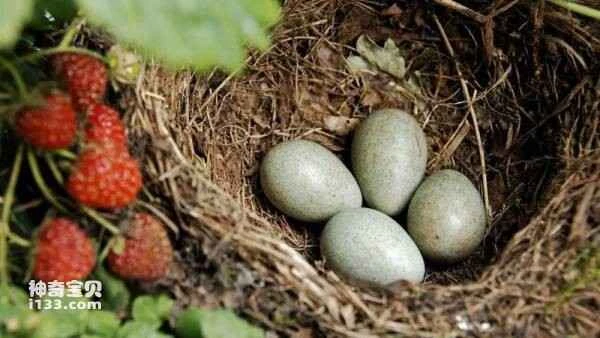
The brown-headed cow oriole mother lays her eggs in other birds' nests with precise timing, a process so complex it's almost unbelievable.
villain among birds
David J. White and Grace Freed-Brown of the University of Pennsylvania conducted an experiment that showed that female brown-headed orioles closely monitor the nest of their host birds, allowing the nest parasitism process to synchronize with the host's incubation time.
After identifying a host's nest, the brown-headed cow oriole will monitor how many more eggs have been laid since its first visit. If the number continues to increase, it indicates that the host is still laying eggs and the incubation process has not yet begun.
In addition, the brown-headed cowbird will also look for empty nests that have been adding one egg each day for several days.
For example, when a brown-headed cowbird first arrives at its host bird's nest, it sees one egg. When it returns on the third day, it sees three eggs, so it will lay one of its own eggs there.
If the last check reveals that the number of eggs added to the nest is less than the number of days between the last two checks, it knows that the incubation process has begun, and there's no point in laying eggs in this nest anymore; it won't benefit from it.
Is this math problem complicated? To transfer the heavy responsibility, the brown-headed cowbird mother needs to visit different nests for several consecutive days, remember the changes in the number of eggs in the nest, estimate the number of eggs laid by the host bird during the two visits, count the days, and finally calculate which day and which nest to lay the egg.
Is that all? Not so fast.

The unreasonable tyrant bird
Brown-headed bullwing mothers have a set of follow-up reinforcement behaviors—after laying eggs in their host's nest, they stay nearby to guard and supervise. To ensure their offspring can hatch successfully, they behave like gangsters. If a brown-headed bullwing finds that her eggs have been destroyed or are missing in the host's nest, she will retaliate by pecking the host's eggs apart or carrying them out of the nest in her beak and smashing them on the ground.
Therefore, the host must incubate and nurse the brown-headed cow oriole's eggs as if they were their own, otherwise the consequences will be severe.
From the perspective of survival of the fittest, the host bird parents should also strive to be good foster parents to the brown-headed cow oriole chicks.
Survival and reproduction
Natural selection. In order to ensure the continuation of their genes, many animals have evolved to an astonishing degree, and the brown-headed cow oriole is a prime example.
Under the pressure of survival of the fittest, whether due to environmental factors or threats from other animals, countless animal populations have maintained or enhanced the adaptive capabilities caused by specific genes during the evolutionary process.
If the instinct to recognize and use numbers helps with survival and reproduction, then it will certainly be preserved and developed, and will always be relied upon.
The reason why number ability is so widespread in the animal kingdom is this: the instinct or ability to count has evolved over a long period of time because a common ancestor once discovered it, and it was passed down from generation to generation in the course of evolution, with all branches of later generations inheriting this gene; it may also be that different branches of different species have discovered the mystery of numbers at the same time.
Regardless of the era or species to which it originates, the ability to count is certainly an adaptive trait.
* This article was originally published in The MIT Press Reader and is reprinted with permission from BBC Future. The author is the Director of the Institute of Neurobiology and Professor of Animal Physiology at the University of Tübingen, Germany. He is also the author of A Brain for Numbers.