Humans are quite familiar with dinosaurs, from the dinosaur skeletons and fossils in the Natural History Museum in London to the dinosaur world in Hollywood science fiction films, or the detailed introductions in school textbooks. From the age of dinosaurs to their extinction and then to fossil research, the exploration has never stopped, yet it seems to have no end.
Archaeologists and biologists continue to make new discoveries about dinosaurs.
Recent research has found that dinosaurs' cloaca (excretory and reproductive outlet) glowed, which may have been a way of communicating with their own kind and conveying specific information, similar to how baboons' buttocks become red and swollen when they are in heat.
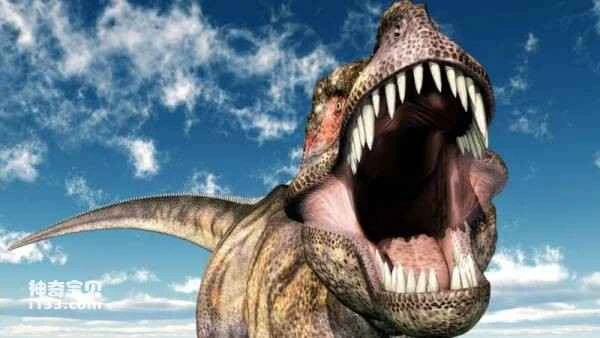
Tyrannosaurus Rex was one of the largest carnivorous animals in history.
Jakob Vinther, a lecturer in macroevolution at the University of Bristol, and Diane Kelly, an anatomist and expert on animal reproductive systems at the University of Massachusetts Amherst, presented their latest findings on the physiological structure and function of dinosaurs in the academic journal The Conversation.
This was an unexpected discovery, first published in the journal Current Biology, originating from an exhibit at the Natural History Museum of Sengenburg in Frankfurt, Germany: a fossil specimen of a Psittacosaurus found in early Cretaceous sedimentary rocks of Jehol in Liaoning, China.
Unlike the body structure of other mammals, the cloaca of dinosaurs was a "multi-functional opening" that served all functions: defecation, urination, mating, and laying eggs.
However, most unearthed dinosaur fossils do not retain a relatively complete cloaca. It wasn't until the discovery of non-avian dinosaur and avian fossils in Liaoning that the scaly skin texture and feathers were perfectly preserved, and even the melanin in the fur and scales was clearly visible.
This provides paleontologists with the materials needed to reconstruct the original skin color of dinosaurs and create colorful, three-dimensional replicas of the specimens.
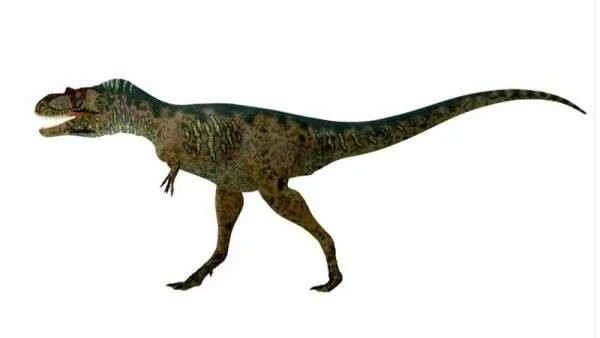
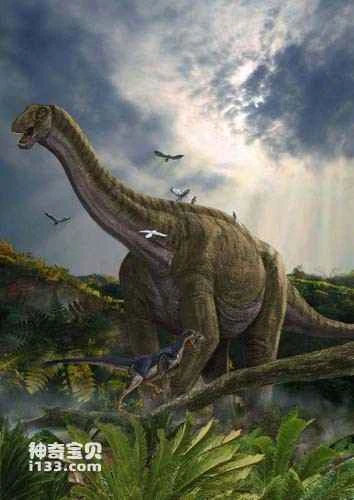
Albertosaurus is a theropod dinosaur belonging to the genus Tyrannosaurus therapoda.
Paleontologist Bob Nicholls and his colleagues reconstructed the appearance and coloration of this Psittacosaurus during its lifetime. It lived over 100 million years ago, was about the size of a Labrador Retriever, and was a close relative of large ceratopsian dinosaurs like Triceratops.
After its original colors were restored and projected onto a life-size 3D model, it can be seen that it had anti-shade camouflage, which provided it with cover in the dimly lit forest.
But the even more astonishing secret lies in its buttocks, and the revelation of this secret was purely accidental.
After completing the color restoration of this Psittacosaurus, the research team returned to the Sengenberg Museum to film a short video showcasing the color restoration process. During filming, they discovered that its cloaca was remarkably well-preserved, more so than any other dinosaur fossil of this area, making it an excellent specimen for in-depth research.
The research team then began reconstructing the rump of the 130-million-year-old Psittacosaurus. The completed model showed a pair of lateral lips on either side of the cloacal opening, forming a V-shape towards the tail tip, with a mass between the lateral lips. The cloacal surface was covered with small, overlapping scales and had melanin deposits, giving it a darker color. However, the sex of this dinosaur fossil could not be determined.
If the cloaca of a Psittacosaurus was this dark color when it was alive, it would not serve as camouflage and would appear abnormal.

The dinosaur depicted by the artist is only the size of a sparrow, but the anti-mask camouflage of its fur is still visible.
How can this anomaly be explained?
Dinosaurs once coexisted with birds. During biological evolution, birds developed instinctive visual signals for recognizing their own kind and for courtship, such as the peacock displaying its tail feathers.
Some birds use their cloaca to signal, for example, the female of the Collared Pipit will have her cloaca glow during courtship.
It is known that dinosaurs possessed highly advanced visual communication abilities, such as iridescent feathers. So-called "naked" dinosaurs, meaning those covered entirely in scales rather than feathers and with no coverings around their buttocks and tails, could transmit information entirely through cloacal signals.
This well-preserved dinosaur fossil, with its tail and rump intact, provides valuable clues to dinosaur social behavior. However, it is still impossible to determine whether this color signaling was for courtship or other purposes.
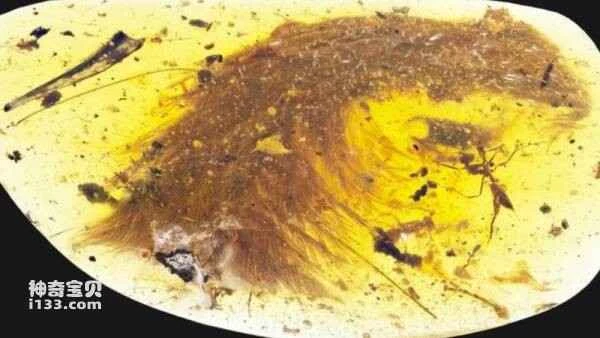
Scientists have discovered for the first time a well-preserved fossil of a hairy dinosaur tail in amber from Myanmar.
Diane Kelly said that in most cases, tetrapod cloacal specimens cannot provide sex information, "those obvious features are hidden inside the cloaca, and unfortunately these features are not preserved in fossils."
More well-preserved fossil specimens are needed for comparison and corroboration in this research, filling the gaps in the anatomical structure of the dinosaur cloaca.
But one thing is certain: more than 100 million years ago, dinosaurs had a way of communicating with each other by changing the color of their buttocks to make them shiny.