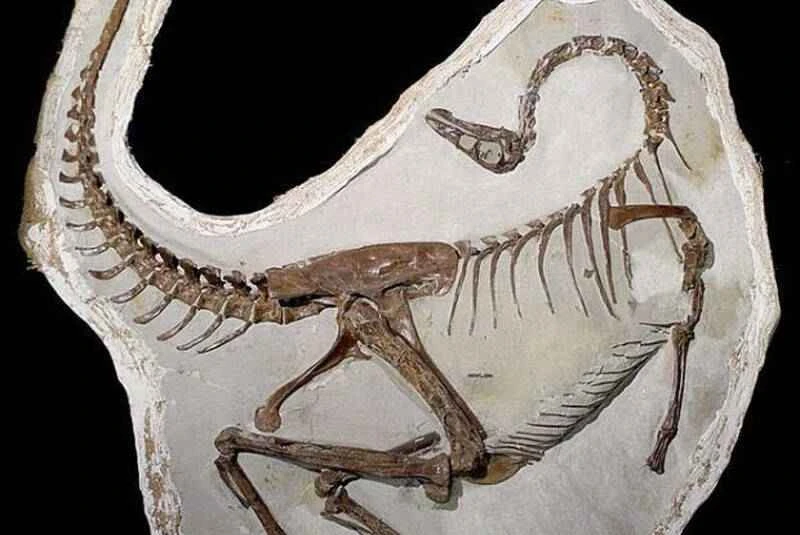
Prehistoric animals have always been an important window for humankind to explore the mysteries of nature. Imagining an ancient world full of unknown creatures inevitably makes one ponder the hundreds of millions of years of evolutionary history and the brilliance of biodiversity on Earth. Dinosaurs are undoubtedly the most well-known group of prehistoric animals, but in fact, during the age of dinosaurs, there existed many strangely shaped reptiles that lived in the ocean. Although these creatures are often mistakenly called "marine dinosaurs," they are actually two different groups from dinosaurs.
In this article, we will delve into these often misunderstood "marine dinosaurs"—more accurately, prehistoric marine reptiles. You will learn whether they truly belong to the dinosaur group, their ecological characteristics, and their classification.
Did marine dinosaurs really exist?
The Mesozoic Era, known as the "Age of Dinosaurs," was a period when dinosaurs flourished on Earth. However, despite dominating the land, dinosaurs never fully adapted to a fully marine life. In other words, strictly speaking, "marine dinosaurs" did not exist .
Many large reptiles adapted to marine environments did exist during the same period as dinosaurs, such as ichthyosaurs, plesiosaurs, and mosasaurs. Because of their similar appearance to dinosaurs (such as their large size and reptilian features) and their close proximity in time, they are often mistakenly called "marine dinosaurs," but they have no biological classification relation to dinosaurs.
The difference between dinosaurs and marine reptiles
Here are the main differences between dinosaurs and marine reptiles:
The limb structures differ : dinosaurs' limbs were perpendicular to their bodies, suitable for walking on land. In contrast, the limbs of marine reptiles extended from the sides of their bodies, gradually evolving into flippers suitable for swimming.
The body temperature regulation methods are different : most dinosaurs were endothermic (i.e., "warm-blooded"), while marine reptiles were ectothermic ("cold-blooded") and needed to rely on the external temperature to regulate their body temperature.
The classification systems are different : dinosaurs belong to the superorder Dinosauria, while marine reptiles belong to several completely different taxa.
Classification of marine reptiles (excluding dinosaurs)
Marine reptiles are diverse; the following are their main classifications:
| taxonomic groups | Feature Summary |
|---|---|
| Mesosauria | The earliest marine reptiles, adapted to saltwater life |
| Ichthyosauria | Similar in morphology to modern dolphins, viviparous. |
| Protostegidae | Extinct, prehistoric sea turtle with enormous size |
| Cheloniidae (sea turtle family) | Common modern sea turtles include green sea turtles and loggerhead sea turtles. |
| Dermochelyidae (family Leather Grinding) | Including the world's largest living sea turtle—the leatherback turtle |
| Mosasauridae | Giant marine lizard, ferocious predator |
| Plesiosauria | Its distinctive features include a slender neck and four long fins. |
| Thalattosuchia | Marine reptiles similar to modern crocodiles |
| Nothosauroidea | Long neck, slender body, with some land adaptability |
| Placodontia | It feeds on hard shellfish and has plate-like teeth. |
Although dinosaurs did not have marine members, many of their evolutionary descendants—birds—have adapted to marine ecosystems. For example:
Penguins (Spheniscidae) : They cannot fly but are strong swimmers, such as emperor penguins;
Pelecaniformes : Includes pelicans, frigatebirds, cormorants, etc.
Procellariiformes : such as albatrosses, possess salt excretion glands to adapt to marine life.
Detailed Explanation of Representative Marine Reptiles
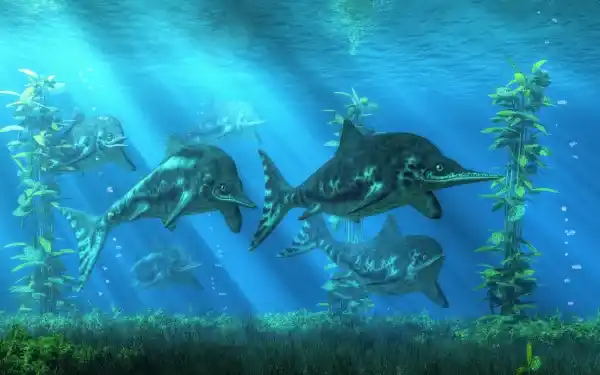
1. *Stenopterygius*
Description : Ichthyosaurs, resembling modern dolphins in appearance.
Size : It can reach a length of 4 meters.
Characteristics : Viviparous animals with a long snout, dorsal fin, and tail fin; limbs evolved into flippers.
Ecology : It may feed on small fish and cephalopods and is adapted to high-speed swimming.
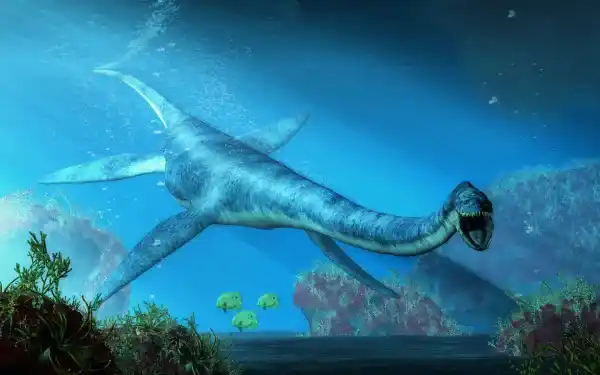
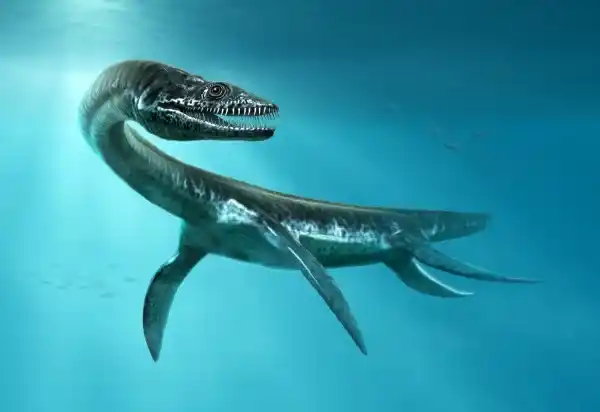
2. *Plesiosaurus*
Description : A typical plesiosaur, with a broad body, an extremely long neck, and a small head.
Size : 2-5 meters in length.
Diet : Primarily eats fish and shellfish, possesses a strong lower jaw; swallowing stones aids digestion and buoyancy control.
Reproduction : Viviparous, does not lay eggs.
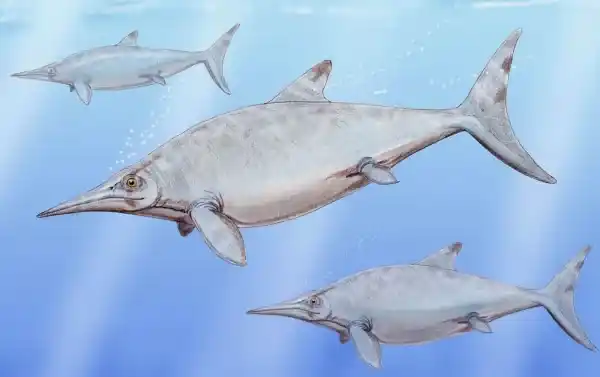
3. Ophthalmosaurus
Features : Eyes up to 10 centimeters in diameter, one of the largest known, suitable for hunting in the deep sea or at night.
Size : Approximately 6 meters in length.
Structure : It has large pectoral and caudal fins to enhance propulsion; its eyes have bony rings for support and protection.
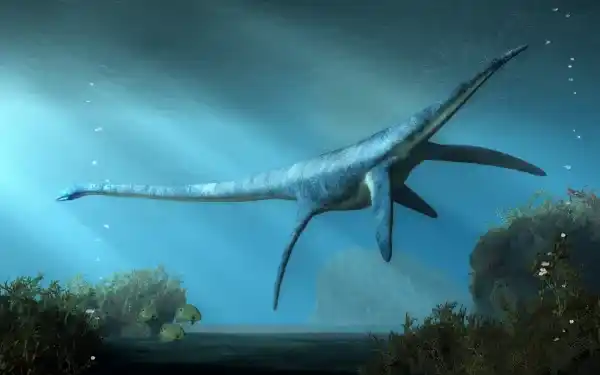
4. *Elasmosaurus*
Features : The neck is composed of 70 cervical vertebrae and can hardly be fully raised, only moving flexibly in shallow water.
Size : Up to 14 meters long.
Diet : Sharp teeth are useful for catching fish or defending against enemies; they are not fast swimmers but are good at ambushing.
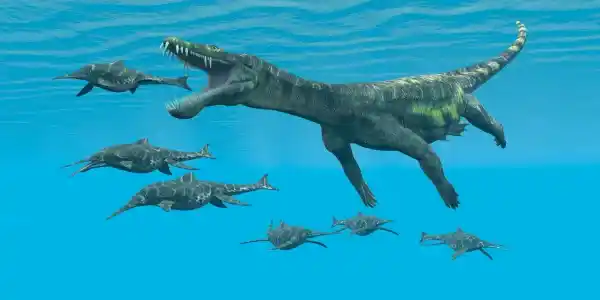
5. Nothosaurus genus
Habitat : Lives along the coast and often comes ashore to rest.
Size : Approximately 4 meters.
Reproduction : Oviparous animals, laying eggs on land.
Structure : The forelimbs and hindlimbs are webbed, which is suitable for both swimming and walking.
6. Platecarpus genus
Classification : Member of the Mosasauridae family.
Size : Approximately 4 meters, with a short head, long snout, and conical teeth.
Reproduction : viviparous.
Features : It is agile in the water and needs to surface to breathe; two pairs of fins and a long tail provide propulsion.
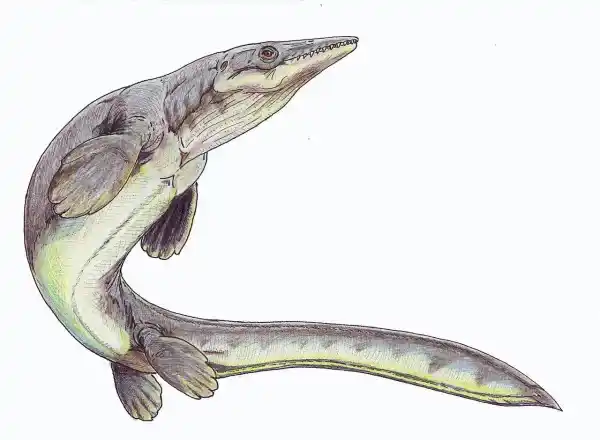
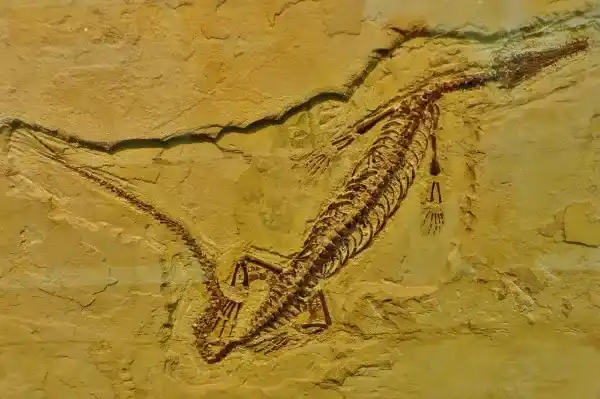
7. The genus *Mesosaurus*
Period : Lived from the Permian to the early Triassic.
Features : Long and narrow body, suitable for fast swimming; long snout, small skull and outward-pointing teeth can effectively catch small fish.
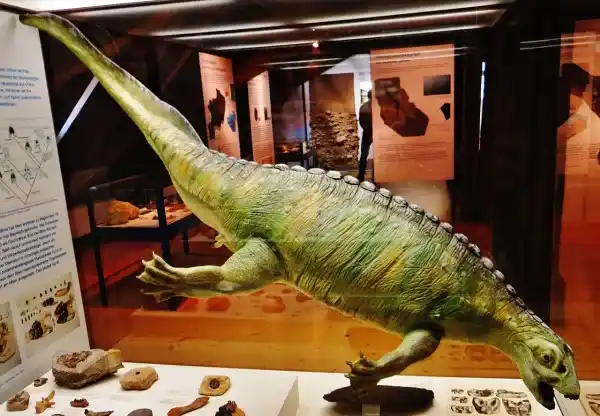
8. Placodus genus
Habitat : Shallow sea areas; feeds on benthic animals.
Body type : wide body, short neck, compact appearance.
Teeth : The front teeth are strong like chisels, and the back teeth are flat and can crush shells; the limbs are webbed to facilitate swimming.
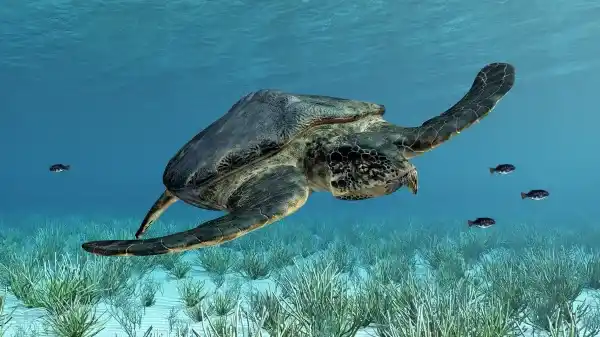
9. Archelon genus
Brief introduction : The largest prehistoric sea turtle genus, belonging to the extinct family Cheloniidae.
Size : It can reach 5 meters in length and weigh over 2200 kilograms.
Period : Lived during the Late Cretaceous period.
Diet : Its large beak allows it to prey on squid, planktonic shellfish, and shelled organisms.
Characteristics : The carapace is relatively soft, similar to that of modern leatherback turtles; the tail is long and pointed.
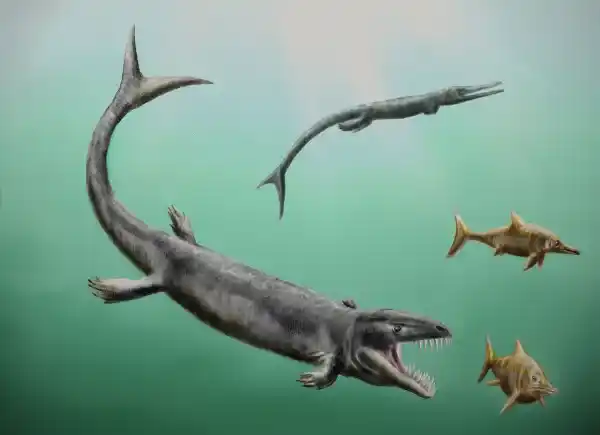
10. Dakosaurus
Classification : Member of the suborder Sarcosuchia, but not a relative of modern crocodiles.
Size : Up to 5 meters tall.
Features : Two pairs of lateral fins and a caudal fin, similar to an ichthyosaur; it is uncertain whether it is viviparous or oviparous.
11. Spinosaurus aegyptiacus
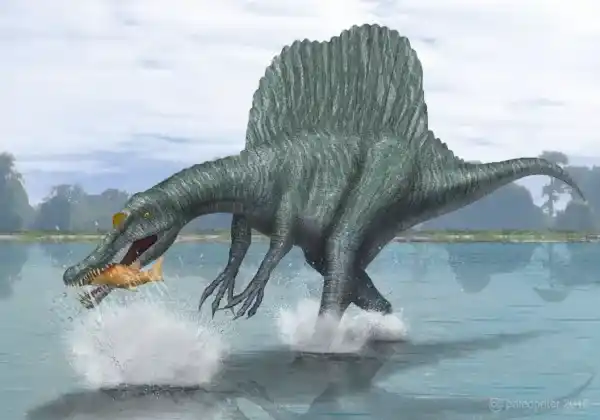
Special note : It is a member of the theropod group within the dinosaur family, and has semi-aquatic characteristics.
Habitat : Mainly inhabits freshwater and brackish water environments such as estuaries, mangroves, and shallow seas.
structure :
It has a sail-like structure, which may be used for underwater stabilization or courtship displays;
A long snout makes it easier to catch fish;
The nostrils being positioned towards the back helps with underwater breathing control.
Significance : Although not a typical "marine animal", its lifestyle made it the most adapted dinosaur to an aquatic environment.
Other famous prehistoric marine reptiles
Here are some more noteworthy prehistoric marine animal species:
Toretocnemus spp.
Paraplacodus spp.
Macgowania spp.
Shonisaurus spp.
Henodus spp.
Tylosaurus spp.
Hudsonelpidia spp.
Geosaurus spp.
Lariosaurus spp.
Himalayasaurus spp.
Summarize
While "marine dinosaurs" is a common but inaccurate term, we have come to know a great many real prehistoric marine reptiles with unique evolutionary paths and ecological adaptations. Together, they form a fascinating and mysterious chapter in Earth's history.
If you are interested in these marine reptiles, we recommend reading other related articles on our website, such as "Flying Dinosaur Species" and "Total Number of Known Dinosaur Species," to gain a deeper understanding of the true nature of dinosaurs and their "relatives."
References
Motani, R. (200) "The Evolution of Marine Reptiles". *Evolutionary Education Promotion* 2, 224–235
Martin, J., Geological Museum (undated), *Marine Reptiles of South Dakota*. Available at: https://www.northern.edu/natsource/earth/Marine1.htm
Gómez-Pompa, A., Barrera, A., Gutiérrez-Vázquez, J., and Halffter, G. (1980). Biology: Unity, Diversity, and Continuity of Life. Mexico City: National Board of Education in Biology, USA.
Beatty, R., Beer, A., and Deeming, C. (2010). The Book of Nature. Dorling Kindersley, UK.
Gimsa, J., Sleigh, R. and Gimsa, U. (2016). The mystery of the sails on the back of the Egyptian Spinosaurus. Geological Journal, 153(3), 544-547.