Not all animals rely on sight for survival. For species living in dark environments, such as deep-sea animals, subterranean animals, or cave dwellers , sight is not the most essential sense. They often evolve to gradually lose their sight, but in doing so, they develop extremely acute senses of smell, hearing, or other specialized sensory systems , enabling them to survive comfortably even in complete darkness.
In this article, we'll take you on a journey into 15 animals that are blind, either by birth or evolution , and see how they explore the world in different ways and thrive in the dark.

Table of contents
Star-nosed mole (Condylura cristata)
Dumbo Octopus (Grimpoteuthis spp.)
Mexican axolotl (Ambystoma mexicanum)
Blind snake (Blanus cinereus)
Golden mole (Chrysochloridae family)
Mexican blind carp (Astyanax mexicanus)
European cave salamander (Proteus anguinus)
Texas blind newt (Eurycea rathbuni)
Clams (Bivalvia class)
Hamsters (Cricetinae subfamily)
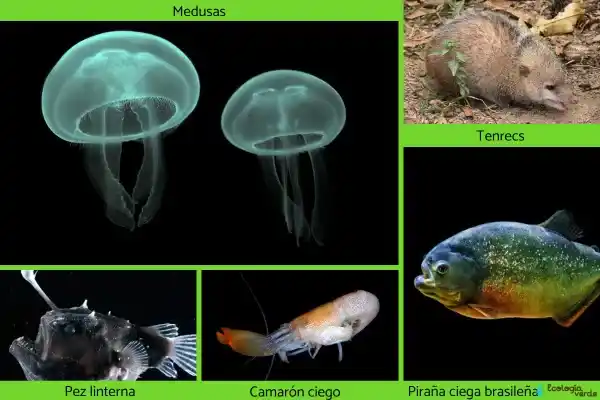
Other blind animals (such as jellyfish, blind shrimp, etc.)
1. Star-nosed Mole (Condylura cristata)
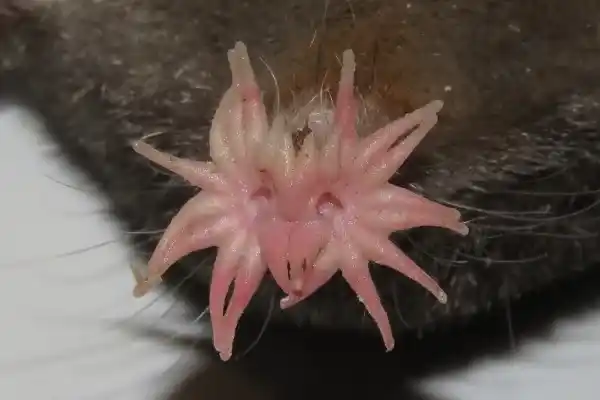
The star-nosed mole is a subterranean mammal of North America, best known for its distinctive star-shaped nose. Its nose has 22 barbels that allow it to "read" the textures, smells, vibrations, and even the faint electric fields of its surroundings, much like a blind person using Braille. This makes it almost entirely independent of vision . Its eyes are very small and degenerate, a structure that also helps it avoid the intrusion of underground dust.
2. Dumbo Octopus (Grimpoteuthis spp.)
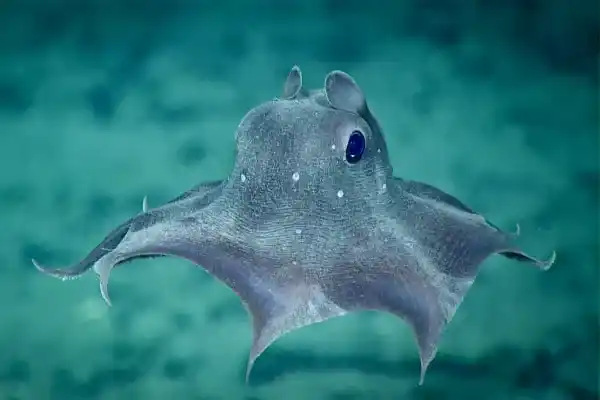
This deep-sea octopus gets its name from its ear-like fins, resembling those of Disney's Dumbo. Although it possesses relatively large eyes, these eyes lack the ability to form images ; they can only perceive light and movement. They live thousands of meters deep in the ocean, where there is almost no light . To compensate for their lack of vision, their tentacles are covered with suckers containing filamentous receptors, enabling them to sense changes in water flow and the presence of prey.
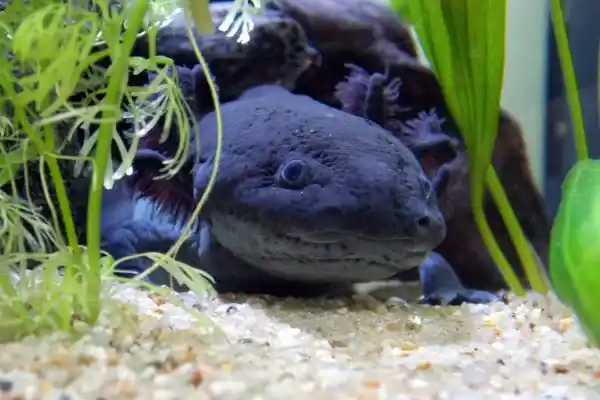
3. Mexican axolotl (Ambystoma mexicanum)
The axolotl, known as a "miracle of water walking," has very vestigial eyes , lacking eyelids and only able to see blurry shadows. However, its sense of smell and vibration perception are extremely advanced. As animals that live their entire lives in water, they can precisely detect the minute vibrations produced by their prey.
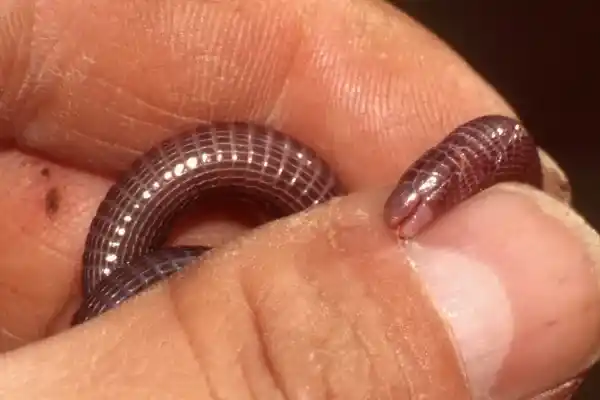
4. Blind snake (Blanus cinereus)
This is a small snake that resembles an earthworm in appearance and lives underground or beneath leaf litter. Its eyes are covered by a layer of bony scales, rendering it completely visual . However, its sense of smell and hearing are extremely sensitive, allowing it to accurately locate small prey such as insects.
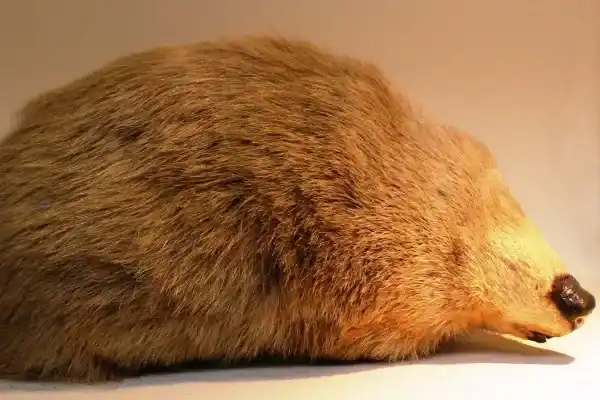
5. Golden mole (Chrysochloridae family)
Golden mole rats, primarily found in Africa, are eyeless mammals . Their eyes are covered by fur and completely unable to sense light. They are excellent burrowers with an extremely low metabolic rate and thermoregulation capabilities, capable of entering a hibernation state for up to three days in cold weather. Despite their lack of sight, they remain effective predators of insects and arthropods in Africa.
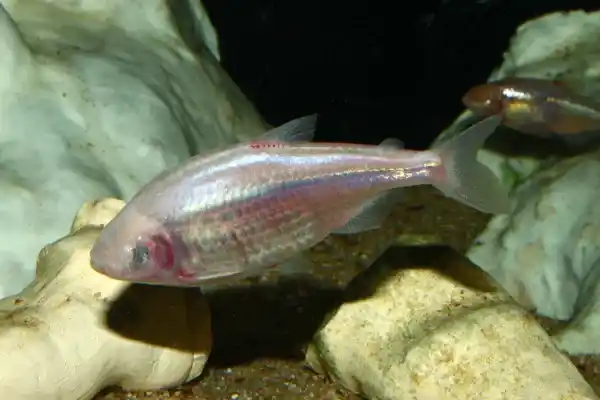
6. Mexican blind carp (Astyanax mexicanus)
This fish lives in underground caves in Mexico. Depending on the geographical region, some groups still retain their eyes, while others have completely lost them and exhibit typical adaptive evolutionary characteristics such as pigment degeneration, enlarged teeth, and well-developed taste papillae . This fish relies entirely on its taste and water flow sensing organs to survive.
7. European cave salamander (Proteus anguinus)
These snake-like amphibians live in the karst caves of Slovenia and Croatia. They are born with normal eyes, but as they grow, their eyes gradually degenerate and are covered by skin. Their heads are broad and flat , which helps them concentrate their sensory organs. They can identify species through smell , identify water composition through taste , and perceive subtle movements in the water and on land through hearing .
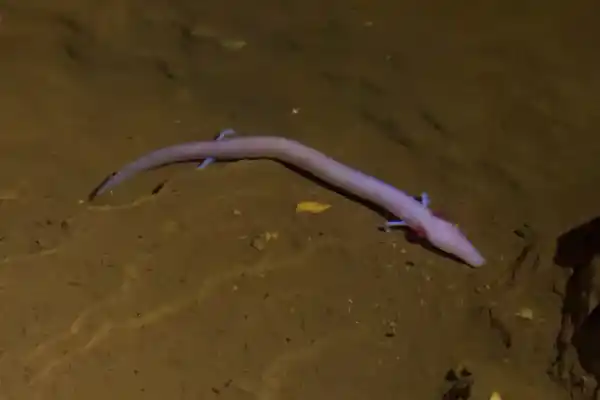
8. Texas blind newt (Eurycea rathbuni)
This is a cave salamander endemic to North America, resembling an axolotl in appearance. It has no visible eyes ; the eye area is covered by skin and cannot sense light. It lives in low-oxygen groundwater and possesses external gills for respiration. Its skin is extremely sensitive, capable of detecting the slightest changes in its environment , and its large head further enhances its perception of its surroundings.
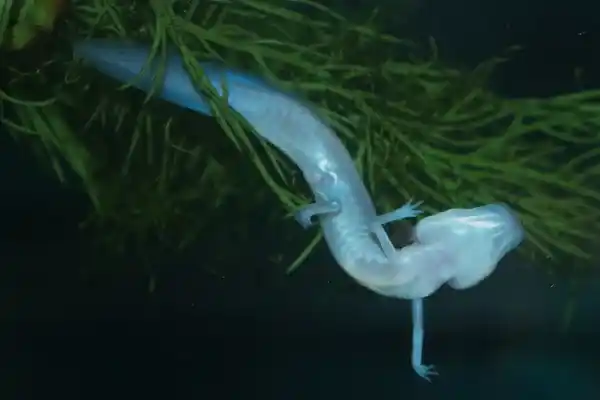
9. Clams (Bivalvia class)
As bivalve mollusks, clams do not have brains or real eyes . However, they have receptors in their fleshy mantle, possessing chemoreception (olfaction) and basic light perception (through primitive eyespots/eyespots) , which they use to sense changes in ambient light intensity or water flow.
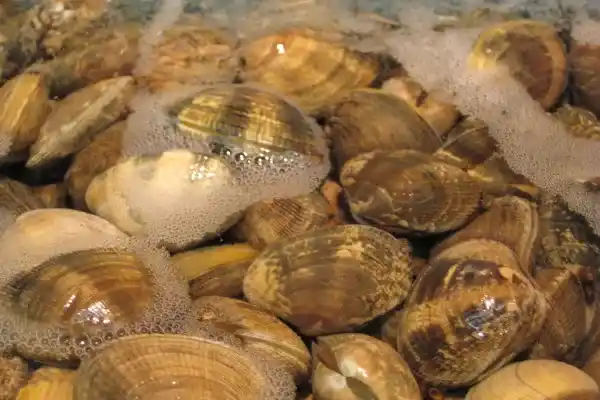
10. Hamster (Cricetinae subfamily)
Although hamsters are not completely blind, their eyesight is extremely poor . Their vision is blurry during the day and improves slightly at night. They cannot accurately judge the height or distance of objects , meaning that if placed at a height, they may misjudge the situation and jump, causing injury. Hamsters primarily rely on their sense of smell, hearing, and whiskers to perceive changes in their surroundings and environment.
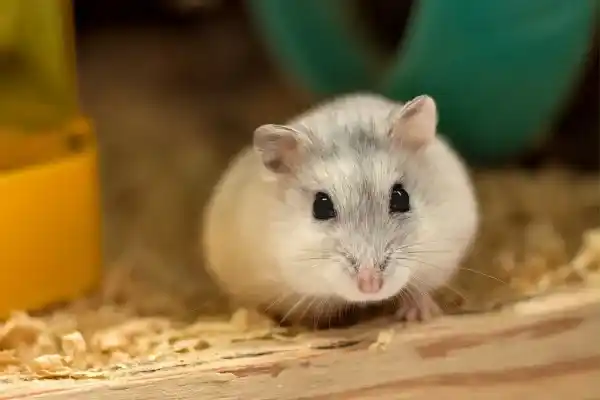
11. Other animals born blind
Besides the 10 animals mentioned above, many other species have also lost their ability to see during evolution, including:
Jellyfish (Medusozoa subphylum) : Some species have no visual organs at all and can only sense water flow and chemical signals.
Madagascar hedgehog (Tenrecidae family) : Mostly nocturnal or underground animals with degenerate eyesight.
Lanternfish (Ceratiidae family) : Deep-sea predators, some species have extremely poor or completely useless vision.
Blind shrimp (Parabogidiella spp.) : A crustacean that inhabits underground water systems and caves.
Brazilian blind piranha (Stygichthys typhlops) : lives in cave waters in Brazil and is completely blind.
Summarize
These blind animals are not products of defect , but rather masterpieces of long-term evolution in specific environments. They have adapted to the dark world in various unique ways: some enhance other senses to "substitute" for vision, while others utilize physiological energy-saving strategies to remain hidden for extended periods. Their existence not only demonstrates the diversity and adaptability of life , but also makes us reconsider whether "seeing" is the only way to survive.
If you are interested in these animals, you may wish to read our recommended articles: "Animals Living in Caves", "A Complete Guide to Aquatic Amphibians", "Detailed Explanation of Nocturnal Sexual Behavior in Animals", etc.
bibliography
Beatty, R., Beer, A., and Deeming, C. (2010). The Book of Nature. Doreen Kindersley, UK.