We generally believe that animals need to move to survive, but there is a group of amazing animals in nature that remain still for their entire lives or most of their time. Through unique survival strategies, such as relying on water flow to transport nutrients, fixed attachment, symbiosis, and low metabolic rate, they can survive, reproduce, and protect themselves without moving .
This article will take you deeper into the lives of these immobile animals (also known as "sessile animals") and how they thrive so well while remaining still.
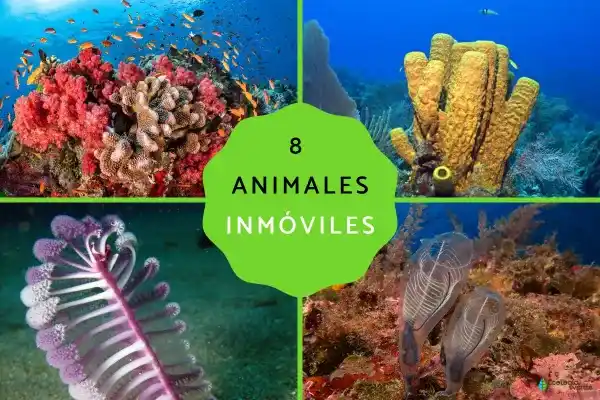
Why do some animals not need to move?
Most immobile animals live in marine or freshwater environments. This is because water provides them with everything they need: food is carried by water currents, and reproductive cells can be dispersed and fertilized using water flow . Here are some of their common physiological and ecological characteristics:
They feed by filtering , obtaining plankton or organic particles from the water.
In external fertilization , sperm and egg are released into the water, relying on the environment to mediate their union.
It has a disc-shaped attachment structure (discopedio) that firmly anchors it to a substrate such as rock, dock, coral, or sand.
They have an extremely low metabolism and can survive for a long time on very little nutrition.
They belong to an early group of animal evolution , with a simple structure but are indispensable in the ecosystem.
Next, we will list eight typical immobile animals and introduce their unique ways of survival.
1. Sponges (Porifera)
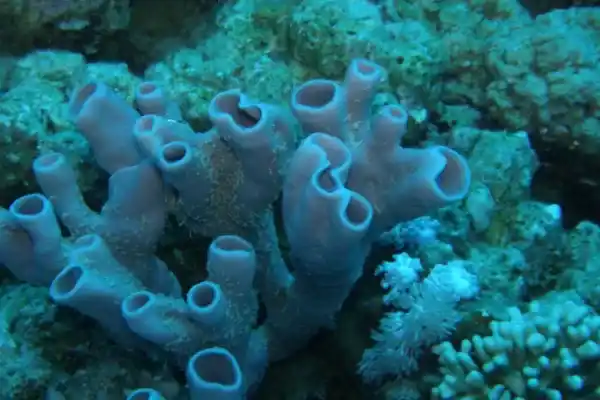
Sponges primarily live in the ocean, with very few species inhabiting freshwater. They typically attach themselves to rocks, corals, or other hard substrates. They exhibit diverse forms, including tubular, cup-shaped, and spherical shapes, or are composed of multiple small tubes, and their textures range from soft to hard.
Sponges do not have true organs; instead, they are composed of a group of functional cells. They absorb water through pores on their surface and form an internal water channel system , where "collar cells" capture and ingest tiny food such as plankton.
Recommended reading:
What are sponges? Detailed explanation of their structure and characteristics.
2. Barnacle (Balanus spp.)
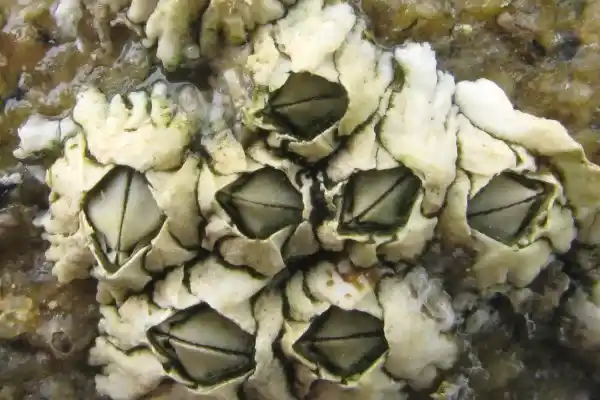
Barnacles are small crustaceans with a cone-shaped shell composed of multiple hard calcareous plates. There is an opening at the top of the shell from which tentacle-like appendages extend, creating water currents and filtering plankton for food.
They are commonly found on the bottom of ships, docks, rocks, and shell surfaces near the shore, and are typical marine terrestrial animals.
Recommended reading:
[Types and characteristics of crustaceans]
3. The sessile stage of a jellyfish – the polyp (Class: Scyphozoa)
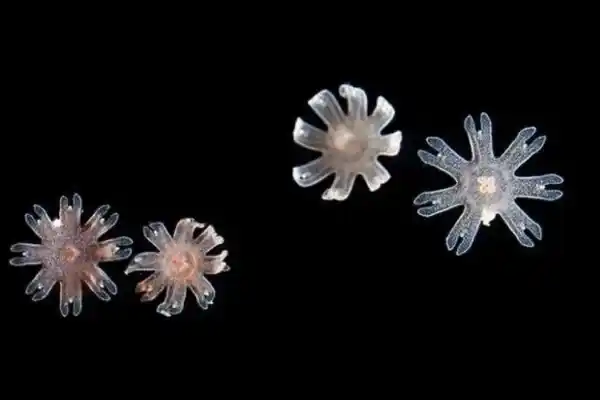
The life cycle of a jellyfish includes a " sessile larval stage " called the polyp. The jellyfish larva (planktonic larva) first attaches to the basal layer and develops into a polyp, which then divides (called segmentation) to form multiple jellyfish individuals.
This shows that not all animals remain motionless throughout their lives ; certain stages are fixed.
Recommended reading:
How do jellyfish reproduce? Learn about their amazing life cycle.
4. Sea anemone (Order: Actinaria)
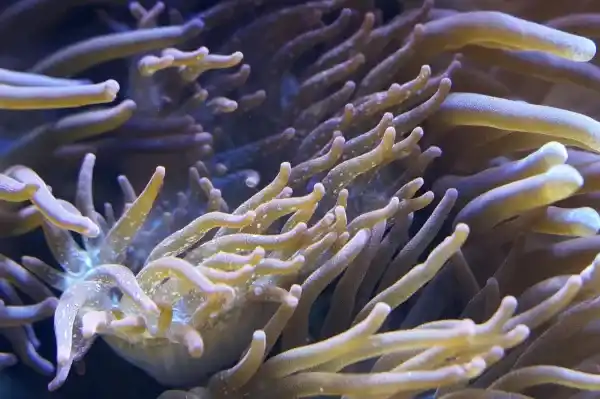
Sea anemones are cnidarians, belonging to the same group as jellyfish. Unlike jellyfish, sea anemones maintain a fixed polyp form throughout their lives , attaching themselves to substrates such as rocks, corals, and sandy areas. They come in various shapes, resembling flowers or feathers, and possess multiple tentacles used for predation.
Sea anemones have the following unique features:
It possesses nematocysts , which are used for predation or defense.
It lives in symbiosis with symbiotic algae and survives by utilizing their photosynthetic products.
It has contractile fibers (similar to muscles) that help maintain stable water pressure in the body.
Although it does not move, it can slowly contract its body or swing its tentacles.
Recommended reading:
[Species and ecological characteristics of cnidarians]
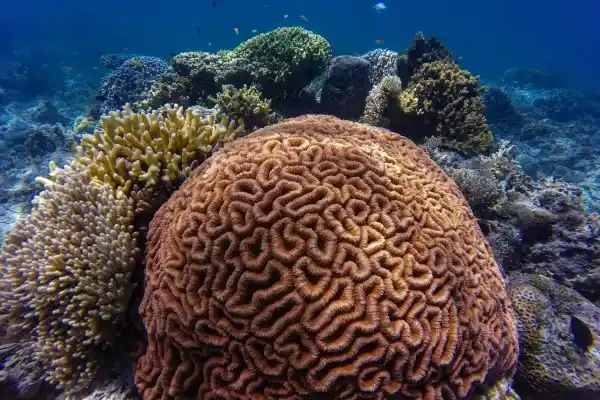
5. Corals (Anthazoa and Hydrozoa)
Corals are colonies composed of multiple polyps, forming the basis of coral reef ecosystems . They cooperate with photosynthetic symbiotic algae (such as zooxanthellae), preying on plankton through their nematocysts and relying on the symbiotic algae for energy.
When corals lose their symbiotic algae, they exhibit " bleaching ," a warning sign of marine ecological imbalance, often caused by global warming and ocean acidification.
Recommended reading:
[What are coral reefs? Functions and risks analysis]
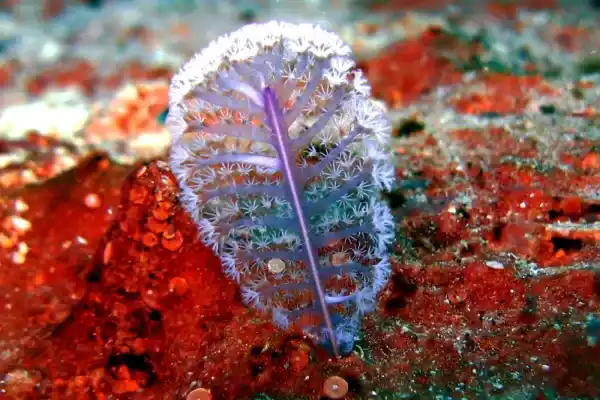
6. Pennatulacea (海羽)
Sea feathers are closely related to corals, resembling bird feathers in appearance, and are fixed in the sand and mud of the seabed. Their bodies consist of a main trunk and numerous polyps , which connect in groups to form a feather-like structure. They are brightly colored, and some species can reach up to 50 centimeters in length.
Fun fact:
They open their "feathers" at night to filter plankton from the water flow.
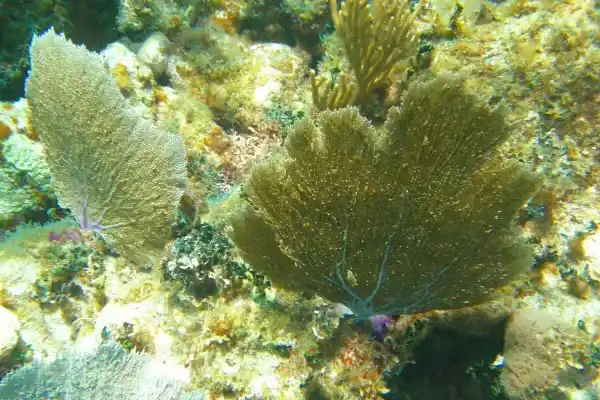
7. Sea fan/sea whip (Order: Alcyonacea)
Sea fans, also known as sea willows or horned corals, resemble tree branches or fans in shape and are composed of multiple polyps. They primarily feed on zooplankton brought by water currents. Due to their broad and thin shape, they secrete keratin to provide structural support.
Recommended reading:
[A Comprehensive Analysis of Coral Species: From Hard Corals to Soft Corals]
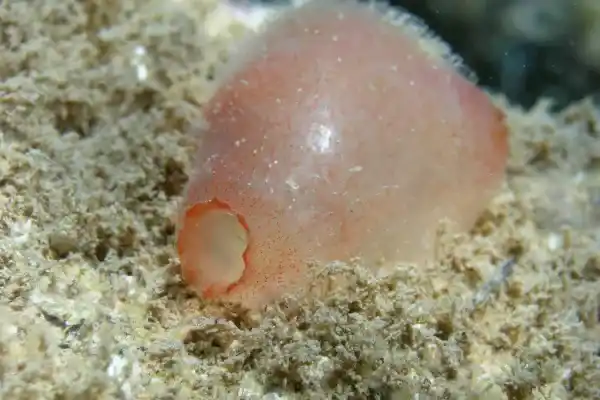
8. Tunicates (Ascidacea)
Tunicates are marine animals that resemble plants in appearance, with a hard outer membrane (called a "tunic") . Larvae can swim freely, but once they enter adulthood, they become anchored to a base ; some live independently, while others form groups.
Surprisingly, tunicates are more closely related to vertebrates (including humans) than other invertebrates, making them an important subject for studying vertebrate evolution.
Recommended reading:
What are tunicates? Their structure, types, and evolutionary significance.
Summarize
These immobile animals have evolved new ways to adapt to their environment, proving that **stillness is also a form of survival wisdom**. Whether through filtering food, symbiotic relationships, or low-energy survival, they all play important roles in the ecosystem.
If you enjoy these kinds of animal trivia, feel free to continue browsing related articles on our website:
What other animals don't move?
[Introduction to the oldest animal groups]
Stationary animals in deep-sea ecosystems
bibliography
Beatty, R., Beer, A., and Deeming, C. (2010). The Book of Nature. Doreen Kindersley, UK.