Although dinosaurs lived millions of years ago, we know of their existence because some of them became fossils after they died. So how are dinosaur fossils formed? Let's explore this process in more detail.
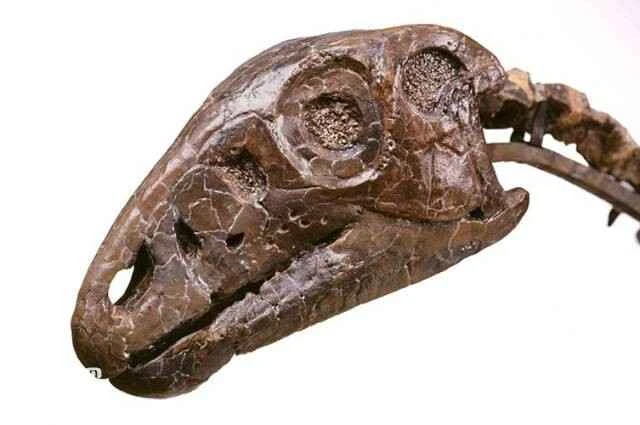
The skull fossil of the dinosaur Hypsilophodon was discovered in the UK, dating back approximately 125 million years.
I. What are fossils?
Fossils are physical evidence of prehistoric plants or animals. They may be their preserved remains or other traces, such as the marks they left on the ground during their lifetime.
Fossil remains—including fossilized bones and teeth—are called body fossils. Fossilized shells are also body fossils.
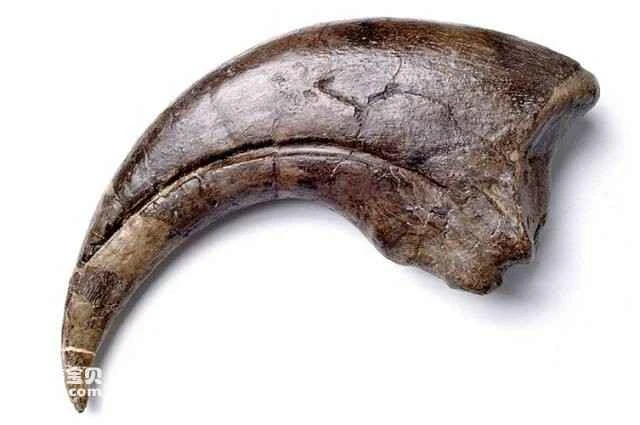
Another fossilized claw from the British dinosaur Baryonyx. Claws, like fossilized bones and skeletons, are part of the body's fossilized remains.
Other fossil traces of plants or animals are called trace fossils. Dinosaur trace fossils include footprints, imprints of their skin or feathers, and feces—called coprolites.
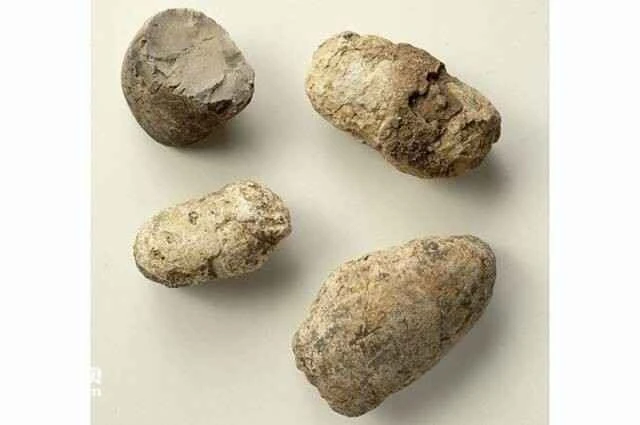
Fossilized dinosaur feces are an example of trace fossils.
II. Has everything turned into fossils?
Do all living things turn into fossils after they die? No! Very few do. Fossilization requires specific environmental conditions, making it a very rare event.
Most things that die will completely decompose and leave nothing behind.
Almost all the fossils we find (about 99%) come from marine animals such as shellfish and sharks. This is because they lived in the sea, and after they died, sand or mud could quickly bury their remains.
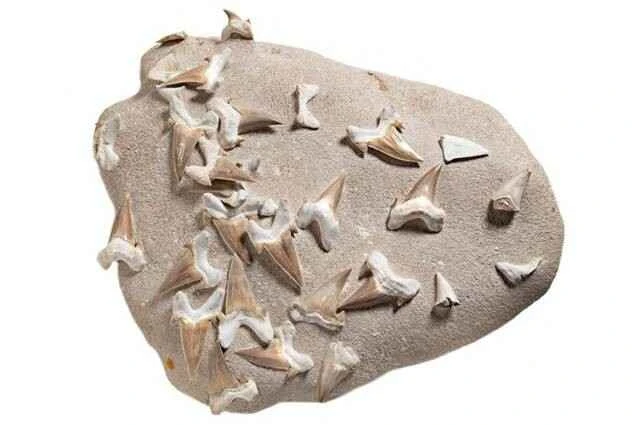
Shark teeth are particularly common fossils.
Once the remains are buried under sediment, their decomposition is slowed down due to lack of oxygen, giving them enough time to fossilize.
But dinosaurs lived on land, so how did they get buried so quickly that some of them became fossils?
"Most of the dinosaur fossils we've found come from animals that lived near lakes or rivers," said Dr. David Barton, a dinosaur researcher at the museum.
"Some people died shortly before the area was flooded, their bodies covered in mud and silt. Others were swept into the river by the heavy rains."
Occasionally, something even more dramatic happens—watch the video above to see what it is.
David added, "We don't know how many dinosaurs lived in jungle or mountain environments. It's unlikely that fossils would have formed in such conditions."
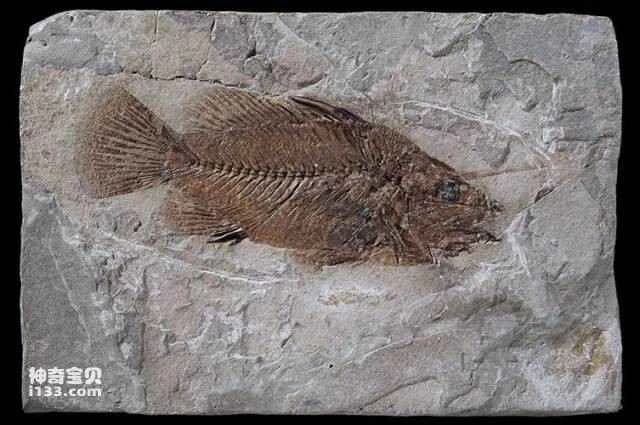
Fish fossils. Almost all the fossils we find come from marine animals because sediments such as mud and sand quickly bury their remains.
III. How are fossils formed?
The most common way animals like dinosaurs fossilize is called petrification. These are the key steps:
1. Animal death.
2. The soft parts of the animal's body, including skin and muscle, begin to decompose. Scavengers may come and eat some of the remains.
3. Before the body completely disappears, it is buried by sediment—usually soil, sand, or silt. Usually, only bones and teeth remain at this point.
4. More layers of sediment accumulate on top. This puts a lot of weight and pressure on the layers below, compressing them. Eventually, they become sedimentary rock.
5. When this happens, water seeps into the bones and teeth, turning them into stone while leaving behind minerals.
This process could take thousands or even millions of years.
David added, "Water leaves mineral crystals in the pores of the bones. That's why dinosaur fossils often have a sponge-like or honeycomb-like texture: the internal skeletal structure is preserved."
Petrified wood, also known as fossilized wood, forms in the same way. This is why it's possible to count the annual rings of some fossilized trees.
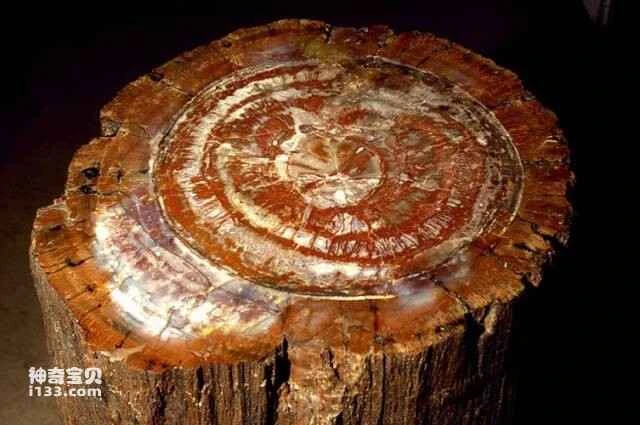
You can see growth rings in some petrified trees, such as this petrified tree trunk.
IV. Molding and Casting Fossils
Sometimes groundwater dissolves buried bones or shells, leaving bone or shell-shaped holes or imprints in the sediment. This is a natural mold.
If mineral-rich water fills this space, crystals will form and create fossils in the shape of primitive bones or shells, known as casting fossils. Alternatively, sediment can fill a mold and form casting fossils.
These are the most common ways shelled marine animals fossilize. This includes ammonites, which went extinct around the same time as dinosaurs, as well as more mollusks like oysters and mussels, which we can still find on beaches today.
Footprints and other trace fossils are formed in a similar way. The footprint forms a natural mold, and then sediment fills it to form a casting.
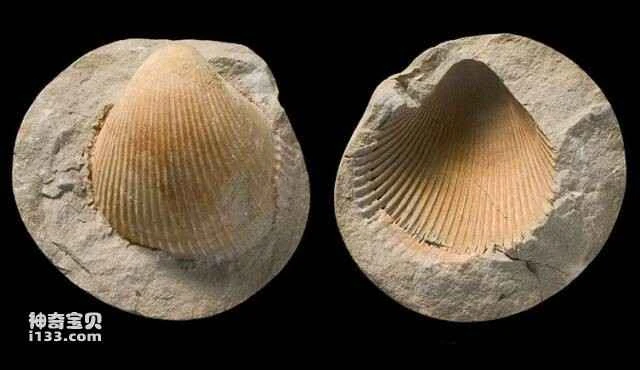
A bivalve fossil preserved as an inner and outer mold. The outer shell itself has dissolved.
V. Uplift, Weathering, and Erosion: Why We Can Find Fossils
How do we find fossils when they're buried under rocks worth millions of years? It's thanks to a combination of uplift, weathering, and erosion (plus luck).
The Earth's surface is broken down into huge, irregularly shaped fragments—tectonic plates—which come together like puzzle pieces. These plates drift very slowly, driven by the heat from the Earth's interior.
In some parts of the world, these tectonic plates collide. This can force rocky areas together and push them upwards. In the most dramatic cases, this uplift can form mountain ranges. This is why marine animal fossils can be found on the summit of Mount Everest.
Where once the ice sheet was covered by a huge, thick layer, it has now melted, and the rocks are rising up.
Rocks can also be slowly pushed up by newly formed igneous rocks beneath them.
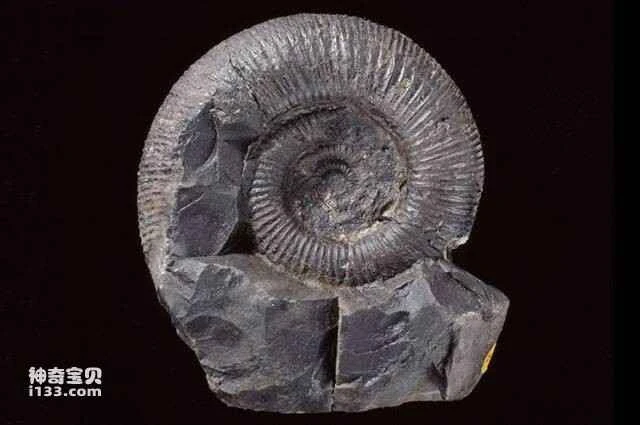
Ammonite fossils collected from an altitude of over 5,000 meters in the Himalayas of Asia.
The elevation is only part of the story. Wind, rain, ice, heat, and the weathering and erosion of rivers cause rocks to split and wash away fragments.
David said, "It could take millions of years, but the fossils will gradually be exposed on the surface where we can find them."
"Fossils appear in sedimentary rocks because of how they form. So if you're looking for fossils, that's where you should go."