The Amazon basin is one of the most biodiverse regions on Earth, stretching not only across Brazil, Colombia, and Peru, but also into Bolivia, Ecuador, Venezuela, Guyana, Suriname, and French Guiana. The Amazon River, one of the world's longest and largest rivers, flows through it, fostering a vast network of life. Scientific estimates place over 100,000 species of invertebrates , 3,000 species of freshwater fish , approximately 378 species of reptiles , 400 species of amphibians , 427 species of mammals , and 1,300 species of birds (slight variations exist between studies, but all demonstrate its astonishing richness).
This article features over 30 iconic Amazonian wild animals , supplementing their morphological characteristics, ecological habits, and conservation status, helping you to "explore all" the rainforest's star species in one article.
Table of contents
Jaguar
Three-toed sloth
Capybara (King of Guinea Pigs)
Toucan (family Woodpeckeridae)
Blue-and-gold macaw
Amazon kingfisher
Green anaconda (Green water anaconda)
Brown double-crested lizard (“Jesus lizard”)
Black Caiman
Poison Dart Frog (Example)
Amazonian representative fish species (electric eel, piranha, arapaima, silver arowana, etc.)
More Amazonian animals (mammals, birds, invertebrates)
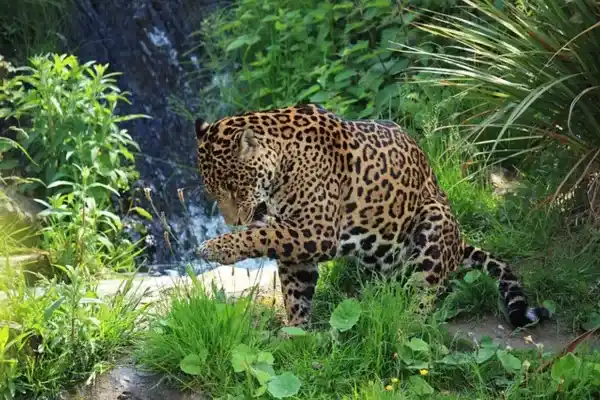
Jaguar Panthera onca
The largest cat in the Americas and one of the top predators in the Amazon. Its robust physique and rose-shaped markings are its distinguishing features. It prefers rivers, swamps, and dense forests, is an excellent swimmer, and has a wide diet (caimans, turtles, deer, etc.).
Conservation status : Listed as Near Threatened (NT) by the IUCN, with habitat fragmentation and poaching as the main threats.
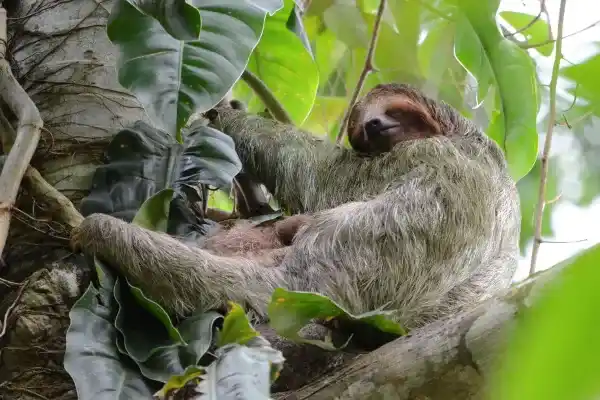
Three-toed sloth (Bradypus tridactylus)
These arboreal creatures are masters of slow-paced living, with slow metabolisms and minimal activity, typically resting for 15–20 hours a day. They rely on algae and symbiotic organisms to give their fur its unique green hue and feed on leaves.
Conservation status : Overall stable, but illegal hunting and habitat loss are causing pressure in some areas.
Capybara (Prairie guinea pig) Hydrochoerus hydrochaeris
The largest rodent in the world, reaching up to 1.5 meters in length. Semi-aquatic, a good swimmer, and often living in groups on riverbank grasslands.
Conservation status : Generally stable, but locally affected by hunting and wetland degradation.

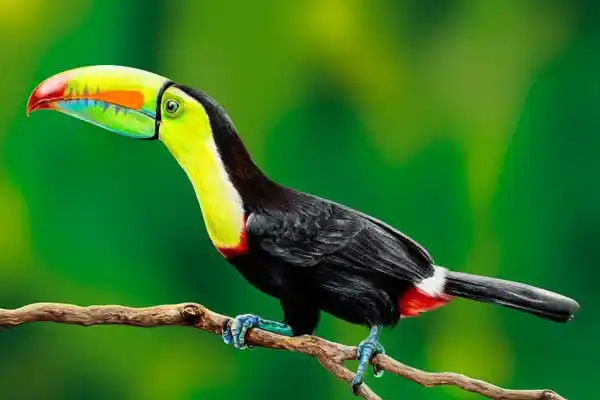
Toucan (Ramphastidae family)
Its distinctive features include its brightly colored, large, curved beak. It typically inhabits the rainforest canopy, feeding mainly on fruit, but also preying on insects and small vertebrates. The toucan ( Ramphastos toco ) is the largest, and while it is more commonly found in South American woodlands outside the Amazon, its family members are quite common in the Amazon.
Conservation status : Mostly Least Concern to Low Concern ; the key is to protect mature forests and large trees.
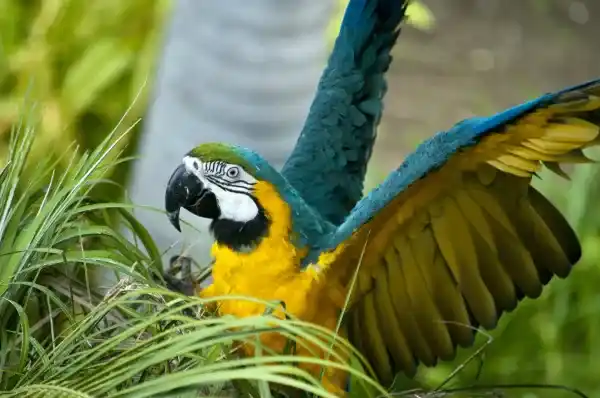
Blue-and-gold macaw Ara ararauna
One of the most famous and brightly colored large parrots in South America, with a blue back and yellow belly, they live in pairs or small groups and are lifelong mates. They feed on hard fruits and seeds.
Conservation status : IUCN Low Concern (LC) , but threatened by habitat loss and the illegal pet trade.
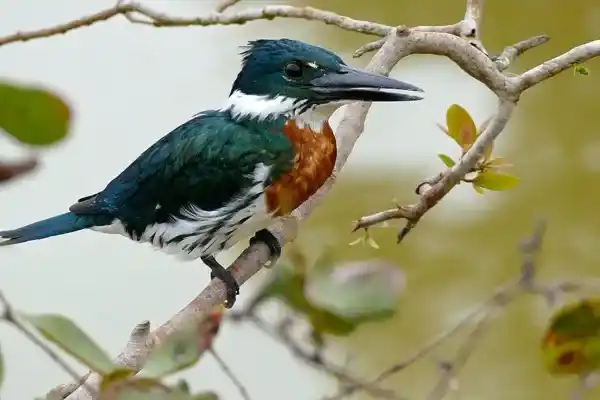
Amazon kingfisher (Chloroceryle amazona)
They reside in rivers and tributaries , are small in size and brightly colored, and dive to the surface to catch fish quickly.
Conservation status : Generally stable, but sensitive to riverbank integrity and water cleanliness.
Green anaconda ( Eunectes murinus )
One of the world's largest snakes (ranking among the top in both weight and girth), it often lurks in still water or grassy areas, using constriction to subdue capybaras, caimans, birds, and fish.
Conservation status : Overall stable, with a focus on wetland protection and preventing retaliatory hunting.

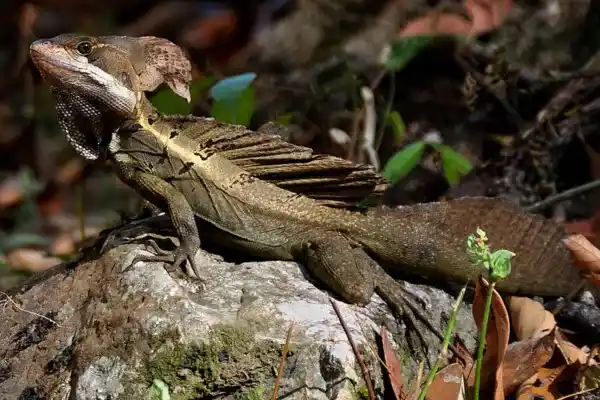
Brown double-crested lizard Basiliscus vittatus
Known as the " Jesus lizard ," it is famous for its ability to " run on water ." It is mostly found in riverside forests and undergrowth, and when encountering a predator, it quickly leaps into the water and runs away.
Conservation status : Currently at low risk, but highly sensitive to damage to forest edges.
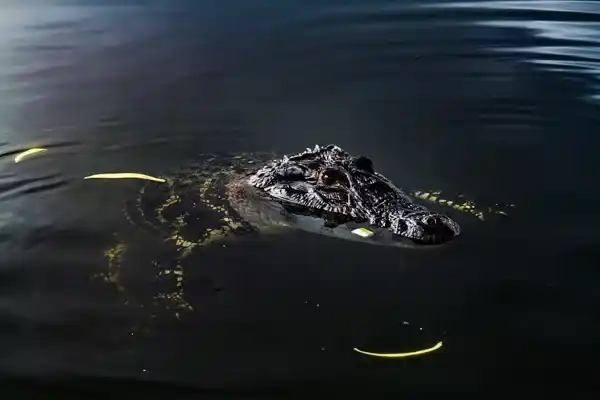
Black Caiman Melanosuchus niger
One of the top freshwater predators in the Amazon basin, adults are almost entirely black. Unlike the common caiman, the black caiman is larger, more territorial, and nocturnal.
Conservation status : After a history of overhunting, many countries have banned hunting and are in the process of recovery; habitat integrity is key.
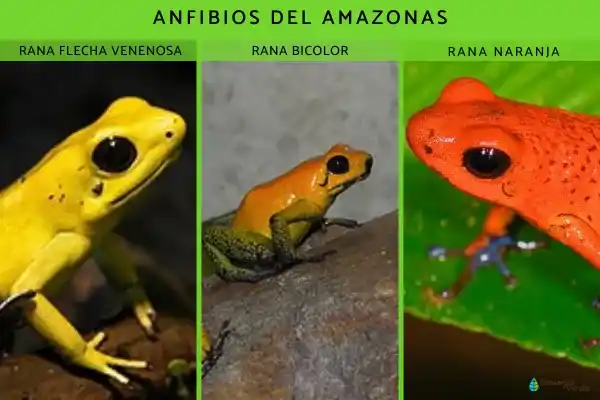
Poison Dart Frog (Example)
Phyllobotes terribilis ( Golden Poison Dart Frog)
Phyllobotes bicolor
Its brightly colored body (warning coloration) and skin secrete potent toxins, which the tribe traditionally uses to coat its hunting arrowheads.
Conservation status : Affected by habitat loss and illegal harvesting, it requires careful protection.
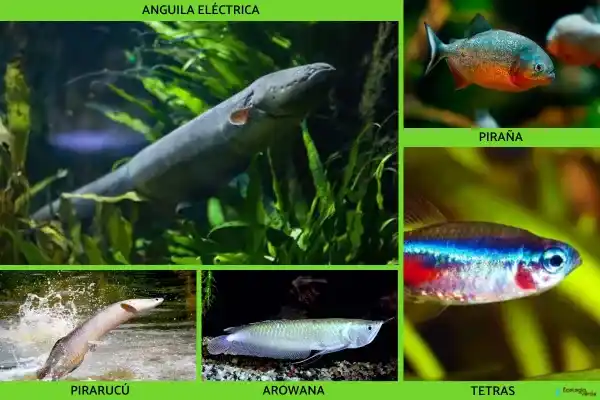
Amazon represents fish
Electric eel ( Electrophorus spp., traditionally known as E. electricus )
It possesses strong electrical discharge capabilities (for predation, navigation, and defense) and inhabits murky, still waters and swamps.Piranhas (Several genera in the family Serrasalmidae)
With sharp triangular teeth, it has a strong biting force; it is mostly opportunistic in its feeding (not the stereotype of "eating any kind of meat").Arapaima gigas (giant tuna/giant tuna)
These giant freshwater fish can breathe air and often inhale air at the surface of the water. As an important traditional catch, quotas and protected areas can help restore the resource.Silver Arowana (South American Arowana) Osteoglossum bicirrhosum
With a slender body and an upper mouth, it usually feeds on insects, small fish and small vertebrates at the water surface.Small, schooling fish such as Hyphessobrycon herbertaxelrodi are commonly found in clear blackwater streams and are an important source of ornamental fish worldwide (wild collection and habitat destruction should be avoided).
More Amazonian animal listings
mammals
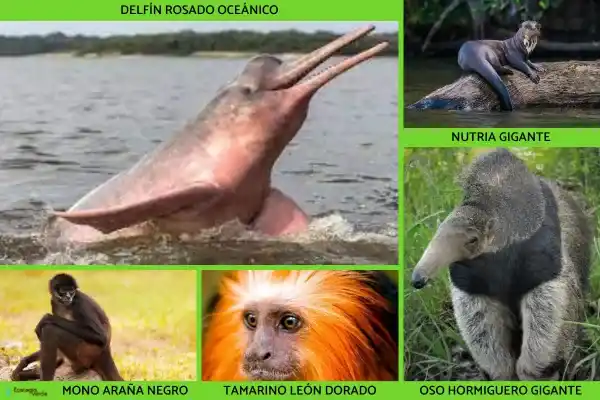
Amazon River Pufferfish (Pink Pufferfish) Inia geoffrensis
Giant otter Pteronura brasiliensis
Atels belzebuth (the "gymnastics king" of the rainforest canopy)
Howler Monkey (Red Howler Monkey) Alouatta seniculus (The Rainforest Alarm Clock at Dawn)
Saguinus imperator (with its "mustache" on display)
Giant anteater Myrmecophaga tridactyla
Nine-banded armadillo (Dasypus novemcinctus)
birds
The crested pheasant ( Opisthocomus hoazin ) has a fermented stomach; chicks have "primitive small claws."
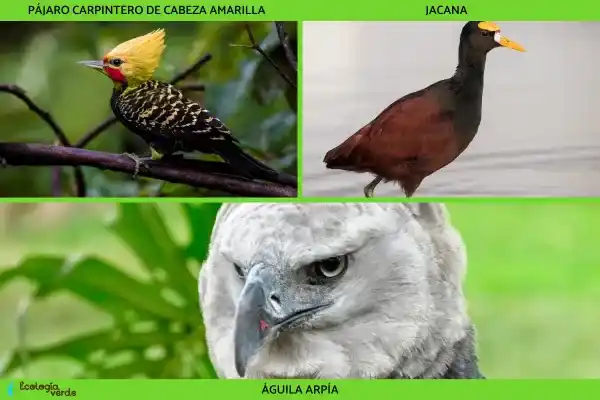
Jacana jacana ( meaning "big feet walking on lotus leaves")
Harpia harpyja (One of the most powerful birds of prey in the rainforest )
The Japanese bittern ( Eurypyga helias ) has stunning "false eyes" when its wings are spread.
Greater Blue Macaw ( Anodorhynchus hyacinthinus ) (Wideer distribution, also found in the Amazon, threatened by the pet trade)
Invertebrates
Blue Morpho menelaus (structural color "electric blue")
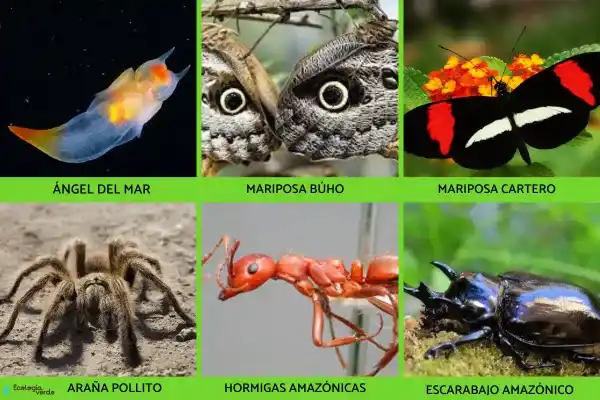
Caligo spp. ( the butterfly with the large "eyespots" on its hindwings )
The Postman's Butterfly ( Heliconius melpomene ) (with its lengthy courtship ritual and larvae that eat milkweed)
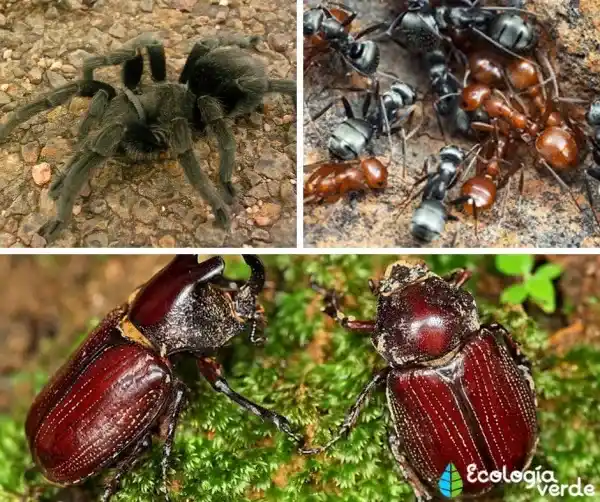
Theraphosa blondi (one of the world's largest wolf spiders )
Army ants (Eciton burchellii ) (moving "death carpet")
Leafcutter ant Atta / Acromyrmex (cultivating fungi "agricultural civilization")
Titanus giganteus ( giant tropical beetle)
Note: The above species have regional variations in their distribution in the Amazon; common names may refer to different taxa in different countries/languages, so the scientific names are attached for verification.
summary
The Amazon is a "species factory" and an "ecological engine." From apex predators like the jaguar and the giant green anaconda to agile macaws and blue morpho butterflies, and electric eels and thousands of freshwater fish species, they collectively weave the rainforest's material cycle and energy flow. Understanding these animals is not just about "gaining knowledge," but also a reminder that protecting the continuous and intact rainforest-river-wetland system is safeguarding the heart of Earth's biodiversity.
bibliography
Harris, R. & Hutchison, P. (2011) Amazon. Alhena Media & Brad Travel Guides Ltd., pp. 10-177.
Denevan, WM (1974) The Development and Impending Demise of the Amazon Rainforest. Conference of Latin American Geographers Publications Series, Volume 3 (Problems of Development in Latin America), pp. 73-79.