As the name suggests, waterbirds are a large group of birds that have adapted to living and feeding in aquatic environments (including freshwater and seawater ) during the course of evolution. Despite being birds that "love water," they exhibit an amazing diversity in morphology, behavior, and ecological niche: some wade in shallow water, some dive deep to chase fish, some float and filter feed, and some sail far out to sea.
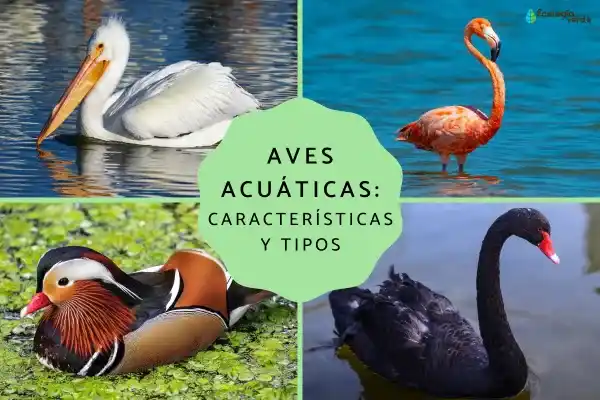
Table of contents
Key characteristics of waterbirds
Types of waterbirds (by flight ability / by habitat and feeding method)
Common Waterbird Names (including scientific names)
Birdwatching and conservation tips
Frequently Asked Questions (FAQ)
1) Core characteristics of waterbirds
Waterbird habitats are mainly divided into two categories:
Marine type : coast, sandy beach, reef, open sea, etc. (often referred to as "seabirds").
Freshwater type : lakes, rivers, swamps, wetlands, rice paddies and reservoirs, etc.
To adapt to aquatic life, waterbirds commonly undergo physiological, morphological, and behavioral adaptations, the extent of which varies among different groups:
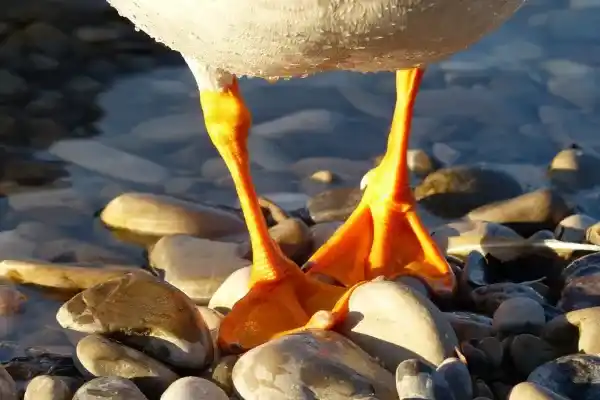
Webbed toes/palmars : enhances propulsion during swimming (ducks, geese, swans, cormorants, etc.).
Specialized beaks : long, straight spines, filter-feeding "comb teeth" (the "sieve plate" on the edge of a duck's beak), and water-cutting with the lower jaw (scissor-billed birds), etc., to adapt to different prey such as fish, crustaceans, mollusks, and insects.
Feathers are waterproof : the preen glands secrete oil, which is then applied through grooming to reduce water immersion and heat loss.
Salt glands : Seabirds (such as pelicans, petrels, and gulls) have nasal salt glands that can excrete excess salt.
Diving structures : feet positioned backward, streamlined body, and relatively dense skeleton to facilitate descent (loons, cormorants, grebes, etc.); penguins' wings are transformed into "flippers" for underwater propulsion.
Wading gait : Slender tarsi and toes allow birds to walk in shallow water without getting their chests and bellies wet (herons, cranes, flamingos, etc.).
Migratory : Many waterbirds are highly migratory species, seasonally moving and breeding between land, sea and wetlands.
2) Types of waterbirds
2.1 Press "Can it fly?"
Flying waterbirds : Most waterbirds can fly, using flight to connect their foraging grounds with their breeding grounds, and even to migrate across the sea (such as seagulls, pelicans, terns, cranes, herons, ducks, grebes, etc.).
Waterbirds that are not good at flying or cannot fly : typical examples include penguins , which spend their lives hunting in the water and breeding on land; their wings have evolved into fin-like structures.
2.2 By habitat and feeding method
Wading birds/shore birds (shallow water wading) : With slender legs and long necks/beaks, they walk, forage , or filter feed in shallow water. Examples include: cranes (Gruidae), herons (egrets, egrets, cattle egrets), crested ibises/spoonbills, flamingos, etc.
Swimming-diving type : Primarily used for underwater hunting , often with webbed feet, streamlined body shape, and dense plumage. Examples: Grebe ( Podiceps ), Cormorant ( Phalacrocorax ), Loon ( Gavia ), Mergus , Alcidae (such as puffins ) , and penguin .
Floating—Surface feeding : mostly filter-feeding/picking/diving to catch prey on the water's surface. Examples: ducks, geese, swans; pelicans (group hunting and "back-up bag" filter-feeding/diving); seagulls/terns (predation, diving to catch fish); gannets (diving into the water from high altitudes).
Oceanic seabirds (far from land) : They drift in the open sea for long periods, foraging for food with sea breezes and currents, and returning to islands or sea cliffs during the breeding season. Examples: Albatross ( Diomedeidae ), Petrel/Striped Water Shearling ( Procellariidae ), Warhawk (not good at swimming but belongs to seabird ecology).
In summary, not all waterbirds "swim in the water." Their ecological niches vary greatly, ranging from wading in shallow waters to diving for prey, from filtering food on the surface to sailing far out to sea.
3) Common names of waterbirds (including scientific names)
The following list takes into account both freshwater and marine environments, prioritizing species mentioned in your original text, and supplementing with a few common representatives to facilitate website readers' retrieval and illustration.
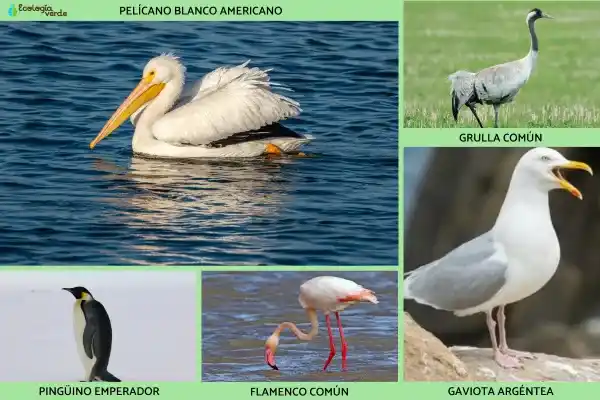
American white pelican ( Pelecanus erythrorhynchos) (large group coordinated hunting, filter feed from mouth pouch)
Common crane ( Grus grus) (wading for food, migratory bird)
Emperor penguin ( Aptenodytes forsteri) (largest penguin, breeds in Antarctica, entirely aquatic)
Greater Flamingo ( Phoenicopterus roseus) (shallow water filter feeder, beak with sieve plate)
Herring Gull (Larus argentatus ) (A common omnivorous gull found along the coast)
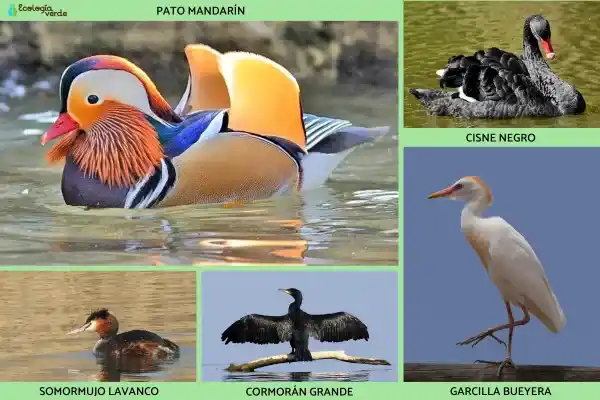
Mandarin Duck/Mandarin Duck Aix galericulata (Ornamental duck, the male has gorgeous plumage during the breeding season)
Black swan ( Cygnus atratus ) (a large waterfowl of the order Anseriformes, commonly found in lakes and wetlands)
Great Crested Grebe ( Podiceps cristatus) (a skilled freshwater diver, famous for its "mirror dance" during courtship)
Cormorant/Great Cormorant (Phalacrocorax carbo) (legs positioned backward, diving to chase fish)
Cattle egret ( Bubulcus ibis) (often accompanied by large mammals or during agricultural and pastoral activities, feeding on insects)
Available as an extended example (optional) :
Mallard/Wild Duck ( Anas platyrhynchos ); Little Egret ( Egretta garzetta ); Great Blue Heron (Ardea herodias ); Gannet/Northern Gannet ( Morus bassanus ); Common Tern ( Sterna hirundo ); Puffin/Atlantic Puffin ( Fratercula arctica) ; Loon/Common Loon ( Gavia immer ); Common Coot (Fulica atra/americana ); Common Kingfisher (Alcedo atthis) (caught along streams to catch small fish and shrimp, semi-aquatic).
4) Birdwatching and conservation tips
Keep your distance : Do not approach the nesting area or chase the chicks in the breeding grounds (sea cliffs, reefs, reed beds); use a telephoto lens.
Do not feed : Feeding will change feeding behavior and may even increase the risk of disease and tangling.
Cleaning and Plastic Control : Recycle fishing lines, hooks, and plastic products; participate in beach/wetland cleanups .
Dogs should be leashed : Wading birds and chicks are easily startled, and interference from dogs can lead to breeding failure.
Support wetland protection : Focus on habitat restoration and management of migratory stopover sites and spawning islands.
5) Frequently Asked Questions (FAQ)
Q1: What is the difference between waterbirds and "seabirds"?
"Waterbirds" is a broader ecological concept that includes birds in both freshwater and marine environments; "seabirds" generally refers to groups that rely primarily on the ocean for foraging, breeding, or out-of-water activities.
Q2: Why are some water birds afraid of water, while others dive very deep?
Different groups are adapted to different water depths and feeding methods : wading birds are adapted to walking in shallow water, grebes, cormorants, and loons have evolved diving structures, while penguins have completely switched to underwater propulsion.
Q3: How do waterbirds "waterproof and keep warm"?
Seabirds enhance their waterproofness by applying oil from their preen glands ; their feather structure traps air to form an insulating layer ; and some seabirds also utilize countercurrent heat exchange to reduce heat loss at their extremities.
Q4: Why can seabirds drink seawater?
Most seabirds have salt glands , which allow them to excrete excess salt through the nasal passages, thus maintaining osmotic pressure balance.