Parrots, eagles, penguins, chickens… they are all dinosaurs. Birds are actually special types of theropod dinosaurs. Clearly, not all dinosaurs went extinct—more than 10,000 species of dinosaurs live with us today.
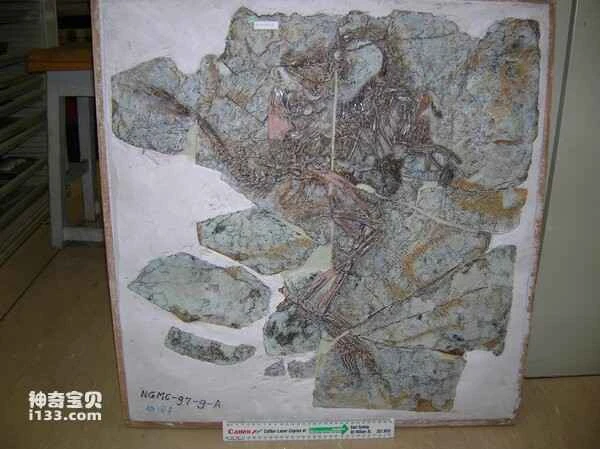
Archaeopteryx is one of the earliest known birds, dating back 150 million years , but birds had already evolved before that. Shortly after Archaeopteryx , a series of birds with more advanced characteristics appeared . One group gave rise to modern birds in the Late Cretaceous. Thus, for a time, bird-like dinosaurs, primitive birds, and early modern birds coexisted.
Only a few advanced birds (“new birds”) survived the extinction event at the end of the Mesozoic Era. These are the ancestors of today’s birds. Non-avian dinosaurs and primitive birds, such as Archaeopteryx , did not survive.
Why did so many birds die while some survived? Advanced birds are smaller and grow faster than primitive birds. They also have higher metabolic rates and more efficient flight systems. Some or all of these characteristics may have been key to their survival.

The idea that birds evolved from dinosaurs is not new. It was first proposed in the 1860s, when the famous fossils of the primitive bird Archaeopteryx and the small theropod Compsognathus were discovered. The theory gradually fell out of favor, but was revived by a series of new discoveries, including the spectacular discovery of a feathered dinosaur in the 1990s. Just as we evolved from mammalian ancestors and are mammals, birds also evolved from dinosaur ancestors and are dinosaurs.
Bird or dinosaur?
Today's birds are unique because they are the only animals with feathers, furcula, and specialized joints on their wings. But in the past, they weren't so distinctive. Many of these features are found in non-avian dinosaurs. Early birds also had teeth, long bony tails, and clawed hands, just like their closest dinosaur relatives.
To distinguish birds from other dinosaurs, we use an ancestor-based definition—all birds are descendants of Archaeopteryx and the common ancestor of modern birds . Birds can be called "avian dinosaurs," but using the word "bird" is still correct when talking about the feathered animals we see today. Non-avian dinosaurs are generally referred to as "non-avian (i.e., non-bird) dinosaurs." Two key examples are:
Archaeopteryx: Discovered in the 1860s, Archaeopteryx was the first fossil evidence linking birds to dinosaurs. It possessed feathers of modern birds and bones resembling those of small, non-avian dinosaurs. While it is the earliest and most primitive bird known to date, it is not considered the common ancestor of all birds. Classification: Theropoda; Avis.
Compsognathus : Compsognathus was a small, non-avian dinosaur that shared many similarities with Archaeopteryx. Discovered in the 1850s, it is a key fossil in discussions about birds and dinosaurs. Some Archaeopteryx remains have even been mistaken for Compsognathus . Classification: Theropoda; Compsognathidae.