Lemurs are fascinating creatures, renowned for their unique appearance, behavior, and crucial role in Madagascar's ecosystem. Among their many features, their large eyes are particularly striking, not only for their cuteness but also for their evolutionary adaptability. This article will take you deeper into the world of lemurs, exploring their large eyes, their ecological significance, and the challenges they face.
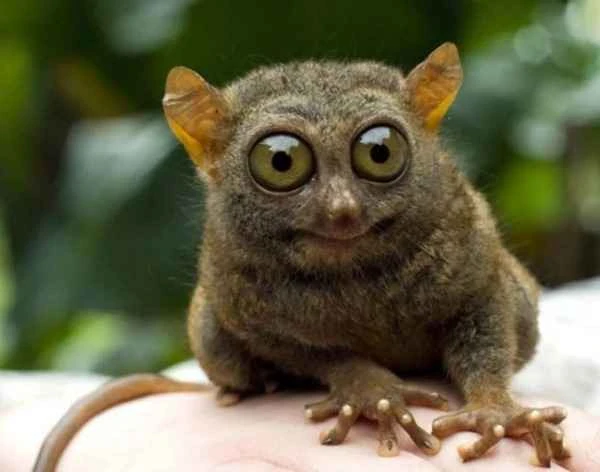
What is unique about the eyes of lemurs?
Lemurs' eyes have evolved specifically to adapt to nocturnal activity , allowing them to easily survive in low-light conditions. Their large eyes and reflective layer structure (called the lens ) greatly enhance their night vision. This characteristic gives them a significant advantage when searching for food, navigating dense forests, and evading predators at night.
Key features of lemur eyes:
Large pupils: absorb light to the maximum extent.
Lens: Reflects light back to the retina, improving night vision.
Wide field of vision: helps arboreal lemurs spot danger and locate food.
Although lemurs' eyes are not as good as diurnal primates in color recognition and detail capture, their night vision makes up for this deficiency.
The star species among big-eyed lemurs
Some lemurs are particularly known for their large eyes; here are a few iconic species:
1. Aye-Aye, Daubentonia madagascariensis:
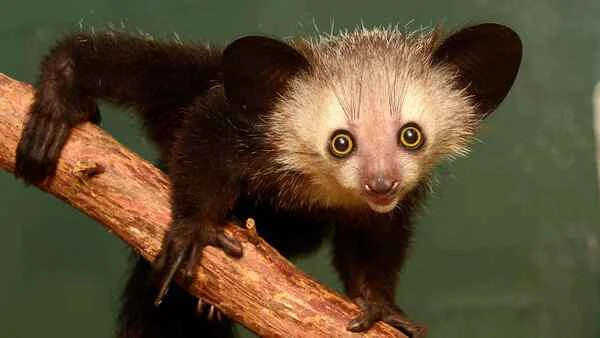
Known for its eerie large eyes and long, thin middle finger, this nocturnal lemur is impressive for its unique foraging methods.
Its large eyes help it find insects and larvae in the bark.
2. Mouse Lemur:
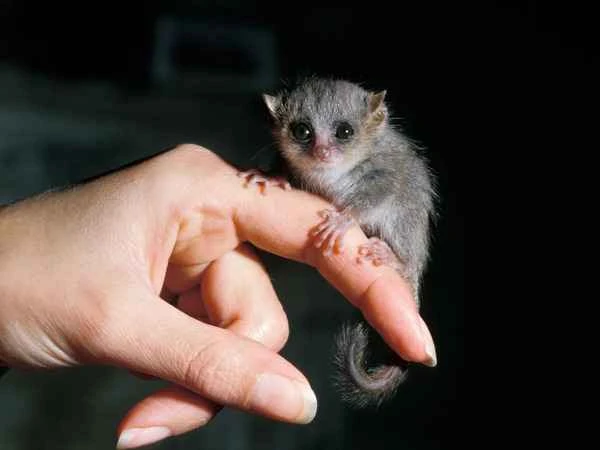
One of the world's smallest primates, the mouse lemur's large eyes are crucial for finding food and predators at night.
3. Madagascar's Indri (Lycoris radiata):
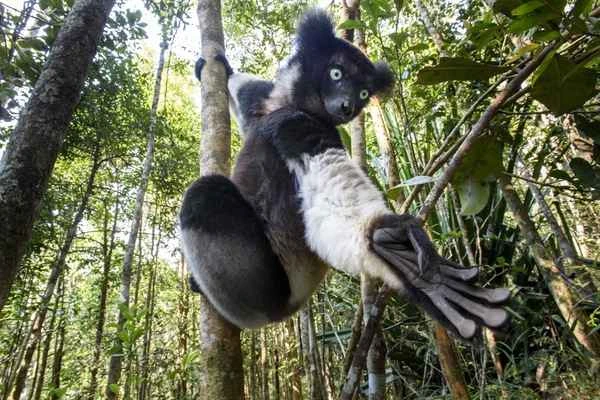
Although primarily diurnal, the lemur's eyes remain crucial for its arboreal navigation.
Each species' eyes are tailored to its unique behaviors and habitats.
Lemurs' Home: Madagascar's Natural Treasure
Lemurs are endemic to Madagascar, an island with one of the world’s richest ecosystems. Their habitats range from lush rainforests to arid regions, but they face serious threats due to deforestation and habitat destruction.
Challenges to conservation:
Every year, about 1% of Madagascar's forests disappear, directly impacting the survival of lemurs.
Illegal logging, agricultural expansion, and human encroachment are the main causes.
Lemur ecology and behavior
Lemurs are arboreal animals that rely on their environment for foraging, nesting, and socializing. They play an important role in seed dispersal, helping to maintain the health of Madagascar's forests.
Dietary habits:
Most lemurs are omnivorous , feeding on fruits, leaves, insects, and nectar.
Social behavior:
Lemurs exhibit both solitary and social lifestyles, depending on the specific species.
The cultural and scientific significance of lemurs
Its place in science:
Lemurs, belonging to the suborder Mosspisciformes , provide important clues about primate evolution. Their physical characteristics, including their eyes, offer insights into early primate ancestors.
Its place in culture:
Aye-aye, due to their distinctive appearance and mysterious image, are often associated with superstition and legend. Although this negative association causes them distress, conservation efforts are working to educate locals about their ecological value.
Protection efforts and how you participate
Lemurs face a severe threat of extinction, and many species are already endangered. Conservation plans focus on:
Protect Madagascar's forests.
Support ecotourism to fund conservation efforts.
Educate locals and combat the illegal wildlife trade.
What can you do?
Support conservation organizations such as the Lemur Conservation Foundation.
To spread knowledge about Madagascar's unique biodiversity.
Advocate for sustainable practices to reduce habitat loss.
Interesting facts about lemurs and eyes
Lemurs can communicate through vocalizations, body language, and their large eyes.
Aye-aye combines large eyes with sensitive ears for "knocking to find food".
Despite being adapted to nocturnal activity, species like the ring-tailed lemur are also very active during the day.
Seeing the world through the eyes of the lemur
Lemurs, with their captivating large eyes, are symbols of natural wisdom. As an essential part of Madagascar's ecosystem, they embody the fragile balance of biodiversity. By understanding and protecting these creatures, we can ensure the continuation of one of the most unique and awe-inspiring animals on Earth.
Let us work together to ensure that the lemurs' big eyes will forever shine in the forests of Madagascar!