Frugivores are a group of animals whose primary food source is fruit . Some species are almost exclusively fruit eaters , while many others are opportunistic fruit eaters (consuming large amounts of fruit in addition to an omnivorous or herbivorous diet). They form a mutually beneficial interaction with fruit-bearing woody and herbaceous plants : animals obtain energy and nutrients, and plants disperse seeds through animals, maintaining the renewal and expansion of vegetation ecosystems such as forests and shrublands.
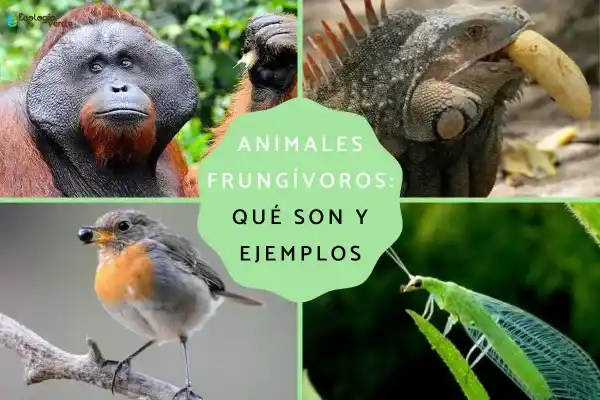
Table of contents
Key characteristics of frugivores
Ecological role: Why fruit consumption is crucial
Examples of frugivorous mammals
Fruit eaters among reptiles
Fruit eaters among birds
Fruit-eating invertebrates
Fruit-eating fish
Frequently Asked Questions (FAQ)
1) Key characteristics of frugivores
A fruit-based vegetarian diet consists mainly of fresh berries, drupes, nuts, pods, grains, etc.; some also consume nectar, tender leaves, insects, etc.
Morphological and physiological adaptations :
Mouthparts/dental row : Primates have blunt and wide molars, which are useful for crushing fruit pulp and seeds; birds have thick beaks or "sieve" structures to peck or sift fruit pulp and seeds.
Digestion and retention time : Many fruit eaters have a short retention time in the intestines , which allows for rapid absorption of fructose and avoids excessive damage to the seeds in the body, thus improving the efficiency of endozoochory.
Behavioral adaptations include climbing (arboreal primates, squirrels), hanging (fruit bats), and long-distance flight (fruit-eating birds) to expand their foraging radius.
The “Specialist-Omnivore” spectrum : from strict fruit eaters who eat almost only fruit to fruit-eating plebeians who eat fruit as their main but not only food, and then to omnivores who eat fruit seasonally/opportunistically.
2) Ecological role: Why eating fruit is so important
Seed dispersal : After ingesting the fruit, the whole seeds are dispersed to new locations through feces, often accompanied by "intestinal processing" and fecal nutrients, which improves the germination rate.
Community maintenance : Maintaining species regeneration in the understory and forest edges, and promoting gene flow and spatial expansion of plants.
Ecological network connectivity : It forms complex food webs with pollinators, herbivores, and predators, influencing the structure and function of various ecosystems such as forests, shrublands, and grasslands.
Note: Not all fruit-eating animals are conducive to seed dispersal. Some crush and digest seeds , and are considered seed predators in ecology, which may have an inhibitory effect on plant communities.
3) Examples of frugivorous mammals
About a quarter of mammals rely heavily on fruit in their diet, especially in tropical regions.
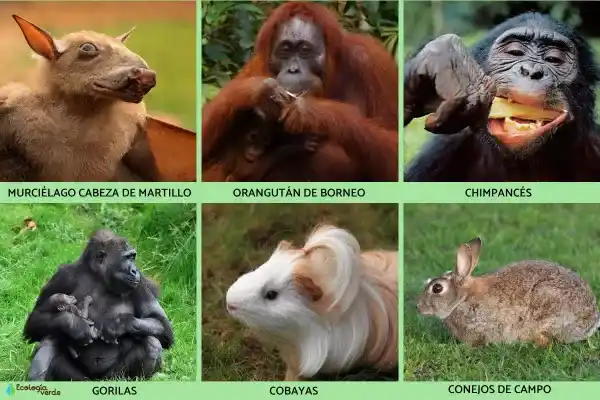
Hammerhead fruit bat ( Hypsignathus monstrosus ): A large fruit bat that flies long distances at night in search of fruit and is an important seed disperser in Africa.
Borneo orangutans ( Pongo pygmaeus ): Their diet consists mainly of forest fruits, and they adjust their diet according to the seasons.
Chimpanzees ( Pan troglodytes ) and gorillas ( Gorilla gorilla ): They consume large quantities of fruit, supplemented with young leaves and invertebrates.
Guinea pig ( Cavia porcellus ): Primarily herbivorous, but also consumes fruits and vegetables.
Wild rabbit ( Oryctolagus cuniculus ): Primarily herbivorous, with seasonal fruit consumption.
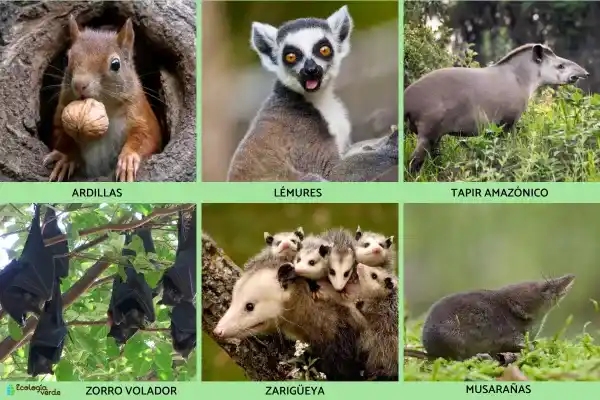
Squirrels (family Sciuridae): Many species feed on nuts and berries and participate in burial and dispersal.
The greater flying fox ( Acerodon jubatus ): A large fruit bat from Southeast Asia, and an important seed disperser for forest trees.
Opossums (Didelphimorphia): mostly opportunistic omnivores, with a high proportion of fruit.
South American tapir ( Taperius terrestris ): It can swallow large fruits and disperse seeds over long distances.
Lemuroidea : Many species are highly dependent on fruit sources from the forests of Madagascar.
Shrews (Soricidae family): Most are insectivorous, but they will also occasionally eat berries and fruit pulp.
Tip: In native tropical forests, fruit primates and fruit bats are often called "forest gardeners" because they play a vital role in tree regeneration.
4) Frugivores among reptiles
Many reptiles are omnivorous , but fruit makes up a significant portion of their diet, especially in captivity.
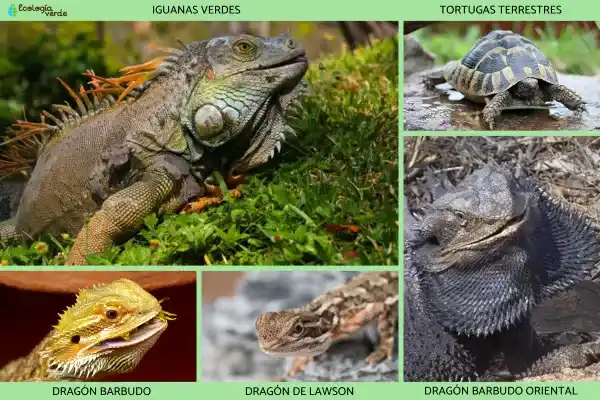
Green iguana ( Iguana iguana ): Adults mainly eat plants, but often consume various fruits.
Tortoises (Testudinidae family): Mostly herbivorous or mixed herbivorous-fruit diet, with fruit accounting for a larger proportion during seasonal availability.
Pogona vitticeps , P. henrylawsoni , P. barbata : Juveniles are fleshy, while adults gradually develop a large amount of plants and fruits.
5) Frugivores among birds
Besides the well-known toucan (Ramphastidae family) and parrot (Psittacidae family), there are numerous passerine and seabirds that eat fruit or are predominantly fruit-eating birds in forests, gardens, and suburbs around the world.
Strong-billed Finch/Common Strong-billed Finch ( Coccothraustes coccothraustes )
Great Tit ( Parus major )
Chaffinch (Fringilla montifringilla )
Caspian Gull ( Larus cachinnans ): A typical omnivore, seasonally consuming fruit.
Atlas Flycatcher ( Ficedula speculigera )
Reed warblers ( Hippolais )
Eurasian Robin ( Erithacus rubecula )
White-throated Warbler/Red-tailed Robin ( Phoenicurus phoenicurus )
Blackbird/Eurasian Blackbird ( Turdus merula )
European Goldfinch ( Caruelis carduelis )
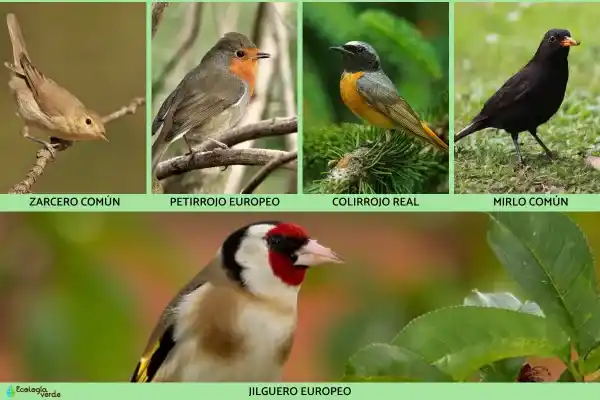
Many birds have thick or strong beaks to peck open fruit rinds and eat the pulp/seeds; their migrations and daily activities can carry seeds to great distances.
6) Fruit-eating invertebrates
Most invertebrates are predatory or herbivorous, but there are also typical frugivores :
Fruit flies ( Drosophila melanogaster ): feed on the juice of ripe fruit and microorganisms.
Aphids (family Aphididae): Many species suck plant sap and damage tender leaves, flowers, and fruits, such as...
Oleander aphid ( Aphis nerii )
Oak aphid ( Lachnus roboris )
Rose aphid ( Macrosiphum rosae )
Grain aphid ( Schizaphis graminum )
Lacewing larvae (Chrysopidae family): mostly predatory, but at certain stages they will also consume honeydew/juice.
It can also be added that flower scarabs (Cetoniinae subfamily) often feed on the juice of ripe fallen leaves.
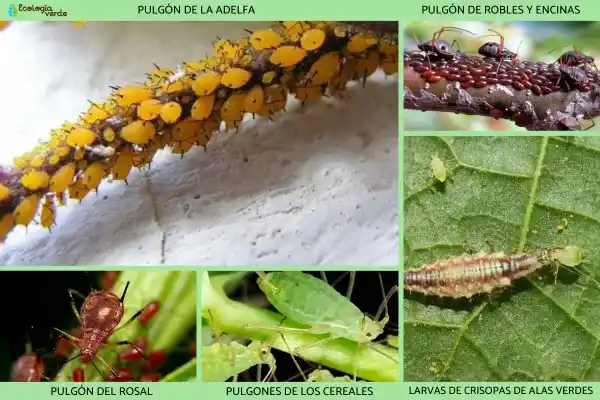
Horticulture tip: Although fruit flies and aphids are "fruit eaters/juice extractors," they are pests in the cultivation system and require integrated management.
7) Fruit-eating fish
Yes! During the flood season in tropical rivers, the "fallen fruit into the river" provides a large source of fruit for fish, resulting in the well-known phenomenon of fish spreading seeds (ichthyochory). Most fish are facultative fruit eaters , also consuming microcrustaceans, algae, and insect larvae.
White piranha/vegetarian piranha ( Piaractus brachypomus )
Colossoma macropomum ( Black Kachama/Tanbaki )
Silver dollar fish ( Metynnis argenteus )
Tometes trilobatus
Long-backed scaled carp ( Utiaritichthys longidorsalis )
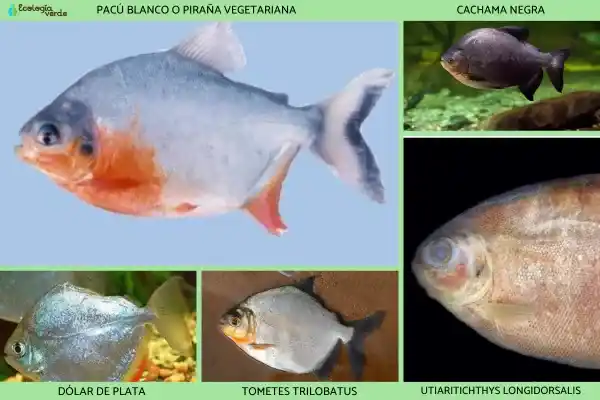
In the Amazon floodplains, seasonal fruit drop helps riparian forest seeds spread across the water, and the chewing and excretion of fish also affect seed germination and dispersal distance.
8) Frequently Asked Questions (FAQ)
Q1: Are frugivores the same as herbivores?
Not entirely equivalent. Herbivores primarily consume leaves, stems, grasses, and roots; fruit-eating species focus on ripe fruit . They also differ in fiber content, digestive strategies, and tooth/beak type .
Q2: Does an animal that eats a seed necessarily help spread the plant?
Not necessarily. The process of swallowing and expelling whole is more conducive to dispersal; if it is chewed up and digested , it is considered seed predation .
Q3: What factors determine which type of fruit animals prefer to eat?
Fruit size, color, smell, sugar-acid ratio , and fruiting season all influence selection; many plants and fruit-eating animals co-evolve (e.g., red/black coloration attracts birds).
Q4: Can the breeding environment be simply "fed fruit until full"?
This approach is not recommended. Nutritional requirements vary greatly among different species, and excessive fructose may pose health risks; any feeding plan should be based on species-specific scientific data and professional advice .
summary
Fruit consumption is not just about "eating fruit," but also a crucial ecological process for maintaining biodiversity and forest regeneration .
From primates, fruit bats, and squirrels to iguanas, tortoises, various fruit-eating birds , and fruit flies and tropical fish , fruit-eating behavior covers a wide range of species.
When evaluating the ecological significance of fruit consumption, the dual role of seed dispersal and seed predation should be considered simultaneously.
bibliography
Fedriani, JM and Suárez-Esteban, A. (2015) Frutas, semillas y mamíferos frugívoros: diversidad funcional de interacciones poco estudiadas. Ecosystems - A scientific review of ecology and environmental media. Vol. 24(3), pp. 1-4.
Maglianesi, MA and Jones, G. (2016) Effects of cambio climático sobre las interacciones planta-animal y consecuencias sobre los ecosistemas. Revista Biocenosis, Volume 1-2, Pages: 70-79.
Herrera, CM (2004) Ecology of Iberian Frugivores. Revista La ornitología hoy, Complutense University of Madrid, pp. 127-153.
Rubiano, A. and Arturo, A. (2011) Dispersion of fruit and vegetable seeds: a revision of a study in the Neotropics.