The monkey spider (scientific name: *Theraphosa blondi*), commonly known as the giant wolf spider, Goliath wolf spider, or bird-eating wolf spider, is a giant spider belonging to the genus *Theraphosa*, and is one of the largest spiders in the world.
One characteristic of giant spiders is that their chelicerae are parallel and do not cross when they move. In addition, they have only two pairs of spinnerets (glandular appendages used to produce silk) and eight eyes, although their eyesight is poor.

Characteristics of monkey spiders
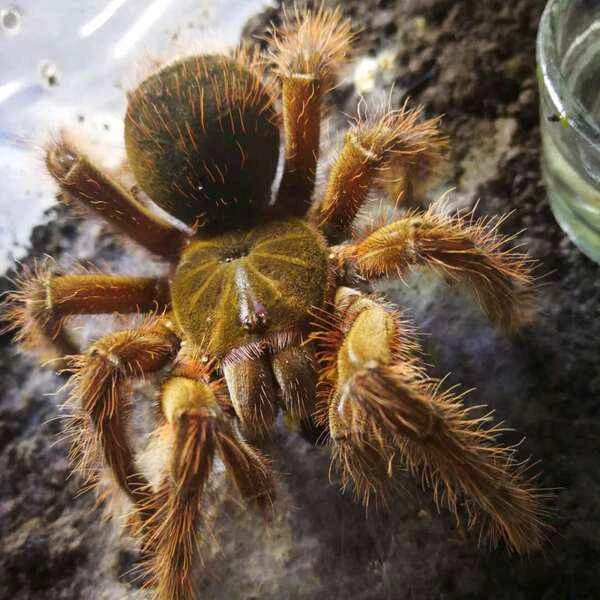
Theraphosa blondi prefers humid, warm, and rainy environments, and is typically brown in color with dark stripes on its legs. Its body is covered in terrifying hairs, and it is considered the largest spider in the world. It has a robust body, a broad thorax, and thick, powerful legs.
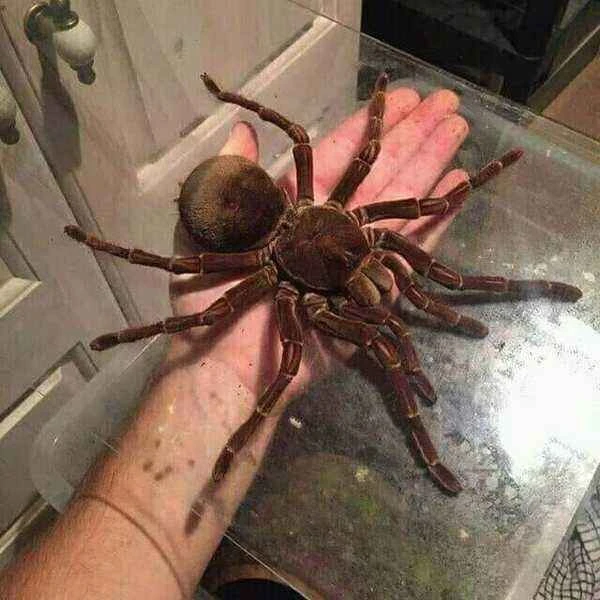
Its body length can reach 28 to 30 centimeters (including leg span), and its weight is about 100 grams, but records show that some individuals can reach 150 grams.
Distribution of monkey spiders
Monkey spiders are found in the Amazon region of Bolivia, Brazil, Colombia, Guyana, and Venezuela, and may also exist in Ecuador and Peru. They are also known as "Goliath tarantulas," although the name "tarantula" is inaccurate, as it refers generally to a spider found in Taranto, southern Italy—Lycosa tarantula. It was previously believed that a bite from this spider would cause "tarantula disease," requiring the practice of tarantula dancing for treatment; however, it has been proven that the venom does not cause such severe symptoms.
Behavior
Females are typically larger than males, and they reach sexual maturity at around three years old. A courtship ritual occurs before mating, during which the male is attracted to substances secreted by the female. Monkey spiders can live up to 14 years, and up to 25 years in captivity.
Other spider species only live for a year, making them very popular as exotic pets in the US, Europe, and Asia, which threatens the sustainability of this species in its native habitat.
Monkey spider's predation habits
Monkey spiders are nocturnal and rarely seen during the day. They live in burrows, especially the females. Males forage near the burrows, mainly preying on invertebrates such as centipedes, cockroaches, earthworms, beetles, and crickets.
Reproduction
Theraphosa blondi is solitary, only gathering during the breeding season. After mating with a male, a female lays 50 to 200 eggs, which hatch in a cave after six weeks.
Is the venom of the monkey spider dangerous?
While monkey spider venom is potent, it is not fatal; it only causes pain that lasts for about 48 hours and may leave wound-like sequelae. In addition to using venom for defense, they also launch barbs from their hind legs to injure the eyes and mouths of predators.
Monkey spider meat is popular in Indigenous communities.
The indigenous people of the Amazon consume this spider. When the spider hides in its burrow, they lure it out with a branch, then roast it over a fire to burn off its bristles, consuming only the cephalothorax and legs. In the Venezuelan Amazon rainforest, locals are highly skilled at consuming insects and spiders.
Monkey spiders taste similar to shrimp, and in cities like Pueto Ayacucho in the Venezuelan Amazon, professional chefs cook and serve this dish in restaurants.
Which communities consume monkey spiders?
In the Amazon region, located on the border of Venezuela and Brazil, the Yanomami indigenous people eat insects and spiders, including monkey spiders. They roast and season them. These indigenous people consume approximately 80 species of invertebrates, including beetle larvae and certain termite species. Another group, the Yekuana, eats 23 species of invertebrates, but not monkey spiders.
Besides the monkey spider, the Yanomami also consume two other spiders: Hobtele waikashiemi and Heteropoda venatoria.