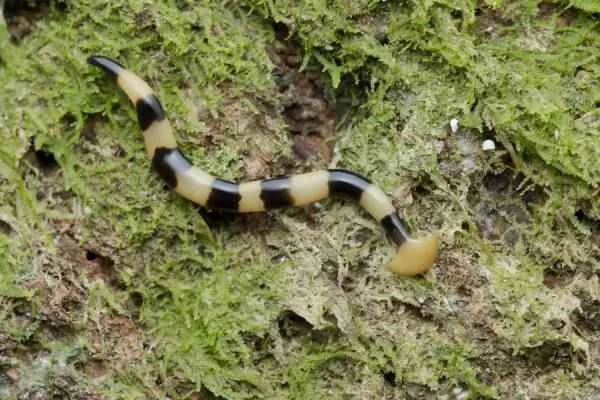
The hammerhead worm (Bipalium sp.) is a fearsome, venomous terrestrial flatworm. This large planarian lives on land and is both a predator and a cannibal. While these distinctive-looking worms do not pose a direct threat to humans, they are an invasive species with the ability to wipe out earthworms.
Quick overview: Hammerhead beetle
Scientific name: Bipalium sp.
Other names: broadheaded planarian, "landchovy"
Distinctive features: Large terrestrial planarian with a shovel-shaped head and abdominal legs or "crawler soles".
Size range: from 5 cm (B. outer membrane) to over 20 cm in length (B. kewense)
Diet: Carnivorous, feeding on earthworms and other animals.
Lifespan: Possibly immortal
Habitat: Distributed worldwide, preferring humid and warm habitats.
Protection status: Not assessed
Kingdom: Animal Kingdom
Phylum: Flatworms
Outline: Crossbar
Order: Trifoliales
Family: Horizontal family
Interesting fact: The hammerhead worm is one of the very few terrestrial invertebrates known to produce the neurotoxin tetrodotoxin.
describe
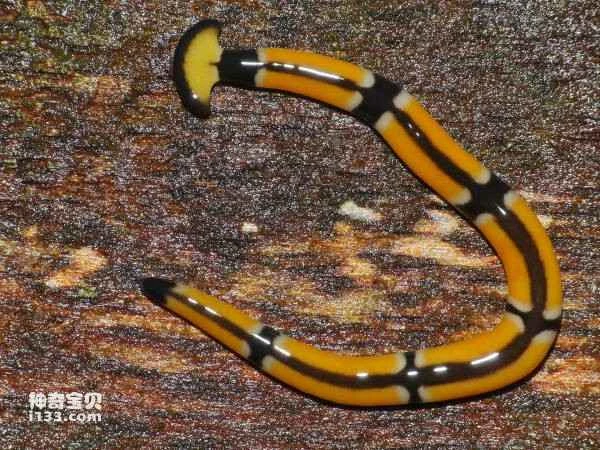
The most distinctive features of the hammerhead worm are its fan-shaped or shovel-shaped head and long, flat body. Planarians have a large "crawling shoe" on their underside for locomotion. Species are distinguished by the shape, size, color, and striped pattern of their heads.
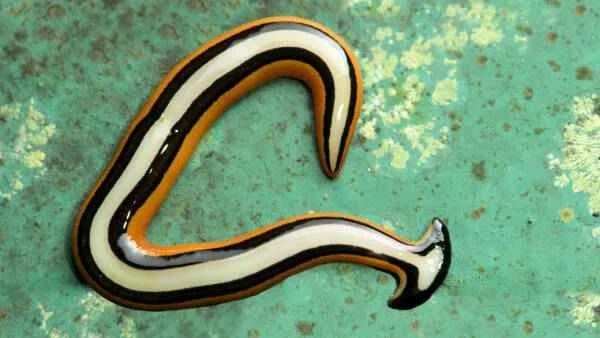
Terrestrial planarians are earth-toned, with colors ranging from gray, brown, gold, and green. Small hammerhead worms, including *Bacillus exomophora*, range in length from 5 to 8 cm (2.0 to 3.1 inches). In contrast, adult *B. kewense* worms can exceed 20 cm in length.
Distribution and Habitat
Planarians are native to tropical and subtropical regions but have become an invasive species worldwide. It is believed that they were accidentally transported and distributed on rooted horticultural plants. Because planarians require humidity, they are not commonly found in desert and mountain communities.
diet
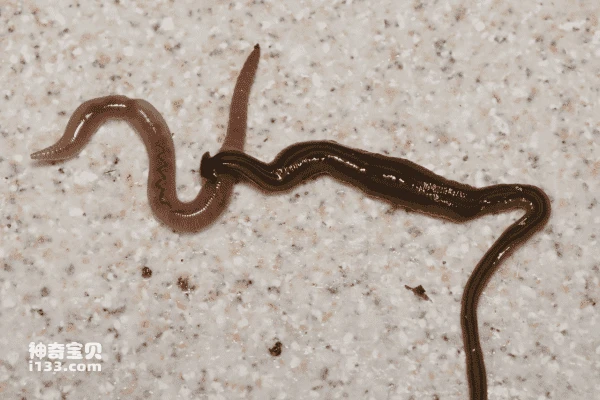
Diplodocus worms are carnivorous, feeding on earthworms, slugs, insect larvae, and even each other. The worm uses chemoreceptors located below its head or ventral groove to detect prey. The hammerhead worm tracks its prey, pushes it onto the surface, and entangles it in a viscous secretion. Once the prey is mostly still, the worm extends its pharynx from its body and secretes digestive enzymes, then uses cilia to draw the liquefied tissue into its branched intestine. Once digestion is complete, the worm's mouth also functions as its anus.
Hammerhead worms store food in vacuoles within their digestive epithelium. The worms can survive for weeks on these reserves and will even consume their own tissues for food.
toxicity
While some types of worms are edible, the hammerhead shark is not. Planarians contain the potent neurotoxin tetrodotoxin, which they use to anchor prey and deter predators. This toxin has also been found in pufferfish, blue-ringed octopuses, and rough-skinned newts, but it is not known to be present in any terrestrial species. It was previously found in hammerhead worms, an invertebrate.
Behavior
Hammerhead worms are mistakenly called hammerhead slugs because they move in a slug-like manner. They use cilia on the soles of their crawling shoes to glide along strips of slime. These worms have also been observed descending along a trail of slime.
Terrestrial planarians are photonegative (light-sensitive) and require high humidity. Therefore, they typically move and feed at night. They prefer cool, damp places and usually live under rocks, logs, or bushes.
Reproduction and Regeneration
These worms are hermaphroditic, each possessing both testes and ovaries. The hammerhead worm can exchange gametes with other worms through its secretions. The fertilized eggs develop inside the body and are expelled as egg sacs. After approximately three weeks, the eggs hatch, and the worm matures. In some species, the larvae differ in color from the adults.
However, asexual reproduction is more common than sexual reproduction. Like other planarians, hammerhead worms are essentially immortal. Typically, the worms reproduce by fragmentation, leaving behind tail tips that stick to leaves or other substrates and then develop into adults. If a worm is cut into pieces, each part can regenerate into a fully developed organism within weeks. Injured worms will rapidly regenerate damaged tissue.
Protection status
No hammerhead worm species is listed on the IUCN Red List, but there is no evidence that their numbers are threatened. Terrestrial planarians are widely distributed in their tropical and subtropical natural habitats and have expanded their territory worldwide. Once established in a greenhouse, the animals disperse to surrounding areas. In cold climates, the worms are able to survive freezing temperatures by seeking protected locations.
Economic importance
Researchers once worried that terrestrial planarians might harm plants. Over time, they were considered harmless to greenery, but then a more insidious threat emerged. Hammerhead worms have the potential to wipe out earthworm populations. Earthworms are crucial because they aerate and fertilize the soil. Hammerhead worms are considered a threatening invasive species. Some methods used to control slugs also apply to planarians, but their long-term impact on ecosystems is not yet fully determined.