Scientific classification
The Nyctibius is a genus of bird in the family Strigidae, belonging to the class Aves. This nocturnal bird has secured its place in the natural world with its unique appearance and habits. Below is a detailed scientific classification of the Nyctibius:
Kingdom: Animalia
Phylum: Chordata
Class: Aves
Order: Caprimulgiformes
Family: Strigidae
Genus: Nyctibius
Species: Includes multiple species, such as Nyctibius griseus (Grey Wood Owl) and Nyctibius jamaicensis (Jamaican Wood Owl).
Other names: Great Forest Owl, Toad-mouth Owl, Potoo, Forest Frog, Night Owl
Foreign name: Potoo
Wood owls are a popular attraction for nature lovers due to their nocturnal habits and distinctive appearance. They are a group of birds adapted to tropical and subtropical environments and are commonly found in the forests and woodlands of Central and South America.
Physical characteristics of the owl
Night Hunter: Master of Disguise
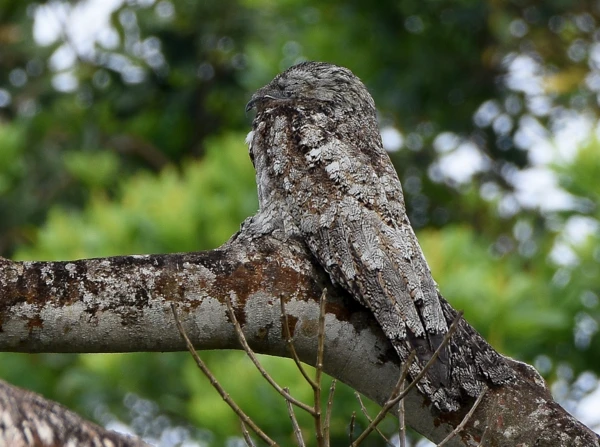
The owl's appearance is ingeniously designed, almost an extension of its survival strategy. They are relatively large, with wingspans exceeding 50 centimeters, but their most striking feature is their ability to blend seamlessly into tree trunks. The owl's plumage is primarily greyish-brown, brown, and white, making them virtually undetectable in trees or bushes.
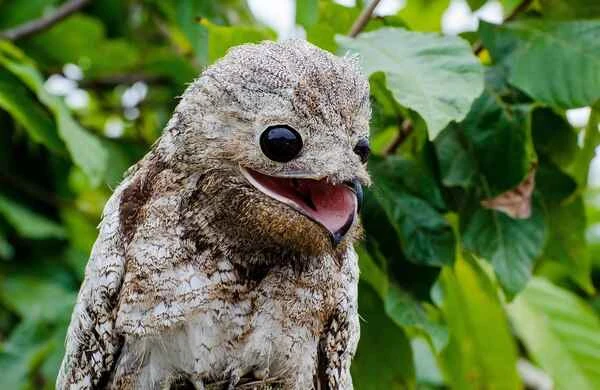
They have relatively large heads and small eyes, which are usually more prominent when active at night. The wood owl has a small, sharp beak, well-suited for catching small prey such as insects at night. Its feathers are arranged very densely, forming a bark-like texture that effectively protects it from predators.
The Art of Disguise
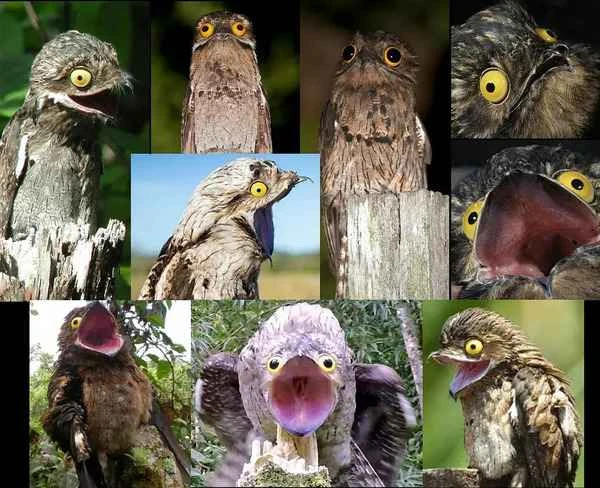
One of the most striking characteristics of the wood owl is its exceptional camouflage. They can stand silently on branches, blending completely into their surroundings, making them difficult to spot even when barely moving. This camouflage helps them avoid attacks from predators, especially large birds of prey.
Weight and size of the wood owl
Wood owls are medium-sized, weighing approximately 150 to 250 grams. Different species vary slightly in size, but they typically range in length from 30 to 40 centimeters and have a wingspan exceeding 50 centimeters. Their light weight and loose plumage make them remarkably agile fliers. Their broad, long wings aid in rapid flight through the forest.
Habitat of the Wood Owl
Loves tropical and subtropical forests
Wood owls are mostly distributed in tropical and subtropical regions, especially in Central and South America. They are commonly found in dense forests, particularly in humid and warmer areas. The forests inhabited by wood owls are typically lush with vegetation and dense trees, providing them with the necessary cover and food sources.
They prefer to inhabit tall trees, typically choosing locations with branches covered in moss, vines, and other vegetation to help them blend into their environment. During the day, they usually remain still in the trees to avoid being spotted by predators.
Habitat diversity
Although wood owls prefer tropical forests, they can adapt to other environments. For example, in drier areas, wood owls will inhabit arid tropical grasslands or forest edges, as long as the environment provides suitable conditions for them to live and hunt.
The role of the owl in the food chain
nocturnal predators
Wood owls are typical nocturnal birds, mostly active at dusk and night, primarily feeding on insects, especially flying insects such as moths and beetles. Their hunting methods are highly efficient, typically utilizing their night vision and flight ability to capture prey in gaps in the forest.
Wood owls have unique hunting techniques. They catch prey by swooping down in rapid flight or by weaving through trees, using their speed and agility to catch insects that accidentally fly by. Sometimes they also lie in wait in the night sky for their prey to come close.
Competition with other birds
Although wood owls are excellent nocturnal predators, they are not the only predators in the forest. Other nocturnal birds, such as nightjars and owls, also compete with them for food resources. In these areas, the competition between wood owls and these birds mainly manifests as competition for food and habitat.
Breeding behavior of the wood owl
Mate selection and courtship
The breeding season for wood owls typically falls between spring and summer. Unlike other birds, wood owls' courtship behavior is not elaborate; they prefer to attract mates through quiet, unassuming methods. The male usually chooses a prominent location in its roost and waits patiently for the female to arrive.
During the breeding season, male wood owls display a rich array of plumage colors, particularly on their wings and tail. Although their courtship behavior is relatively simple, the male successfully attracts the female's attention through plumage displays and subtle movements.
Breeding and raising chicks
Wood owls typically breed by finding a safe location in trees or thickets to build their nests. Their nests are usually constructed from twigs, dry grass, and other natural materials. Each breeding season, wood owls lay two eggs, which are incubated by both the female and male.
The incubation period takes about 28 days. After hatching, the parents feed the chicks with insects and small invertebrates until they are able to survive independently. Typically, wood owl chicks begin to attempt flight about a month after hatching.
Lifespan of a wood owl
Wood owls typically live for 10 to 15 years, a relatively long lifespan, especially considering their nocturnal nature and breeding habits. Their lifespan is influenced by a variety of factors, including habitat security, food availability, and predator threats. Wood owls can live longer in quiet, food-rich environments.
The battle of wits and courage between the owl and its natural enemies
Facing the challenge of predators
Despite their exceptional camouflage, the wood owl is not without predators. Large birds of prey, especially eagles and other carnivorous birds, pose their primary threat. To avoid prey, wood owls choose to roost at high altitudes and minimize their activity. Their camouflage is particularly effective at night, allowing them to disappear from the sight of predators.
The power of disguise
Interestingly, wood owls don't just rely on stationary camouflage to avoid predators; they also employ unique coping strategies when threatened. For example, when facing a predator, a wood owl will quickly fly away, using the cover of the forest to disappear from sight. This agile response allows them to effectively avoid being captured.
The migration season of the wood owl
Wood owls are partially migratory birds. Different species of wood owls have different migration seasons. Generally, wood owls begin their migration in autumn and winter, heading to warmer regions, particularly some tropical areas of Central and South America. The migration period usually lasts several months, primarily to find more suitable habitats and breeding grounds.
The timing of migration is not entirely consistent, as the migration behavior of wood owls often depends on environmental changes and the availability of food sources. They usually choose to migrate at night to avoid the strong sunlight during the day and to avoid being preyed upon by predators.
The call of the wood owl
The wood owl's call is unique and mysterious. Unlike many birds that emit clear, melodious calls, it produces a low, humming or "cooing" sound. Its call is usually deep and rhythmic, making it suitable for carrying at night. The wood owl's call is mainly used to declare its territory and communicate with its mate.
During the breeding season, male wood owls attract females with deep calls and display their territorial boundaries. The calls of different species of wood owls vary, but most have a mysterious "buzzing" or "cooing" sound, resembling distant thunder or the sound of wind at night.
Conservation of the forest owl
The wood owl faces significant conservation pressures due to habitat destruction and environmental change. Deforestation, agricultural expansion, and climate change have all impacted its habitat. To protect these nocturnal hunters, numerous environmental organizations and nature reserves have begun focusing on wood owl conservation efforts.
Currently, conservation efforts for the bedbird mainly focus on the following aspects:
Habitat protection : Ensure that the habitat of the wood owl is not destroyed by protecting tropical rainforests and primary forests.
Reduce human disturbance : In some important habitats, take measures to reduce human disturbance, especially during the breeding season.
Research and monitoring : Through ornithological research and long-term monitoring, data on the migration, breeding, and survival of the wood owl are collected to allow for timely adjustments to conservation strategies.
In some regions, the wood owl has also been included in the list of protected species to ensure that they are not overhunted or affected by environmental pollution.
Table of Wood Owl Varieties
| Variety Name | scientific name | Distribution area | Appearance features | main habitat | food sources |
|---|---|---|---|---|---|
| Greywood Owl | Nyctibius griseus | South America, particularly Brazil, Bolivia, and Peru | Large in size, with gray feathers, and excellent camouflage against tree trunks. | Tropical rainforests and wetlands | Flying insects, especially moths |
| Jamaican Wood owl | Nyctibius jamaicensis | Jamaica, Cuba, Haiti and the Dominican Republic | Feathers are gray or brown, with striped patterns. | tropical forests and shrublands | Nocturnal insects, beetles and moths |
| Northern Wood Owl | Nyctibius californianus | In North and Central America, they are mainly distributed in Mexico. | The feathers are relatively light-colored, with distinct markings on the chest. | Mountain forests and dry woodlands | Small insects, butterflies |
| Brazilian Wood Owl | Nyctibius minor | Brazil and neighboring tropical regions | The feathers are dark gray with brown stripes. | Tropical wetlands, tropical forests | They mainly prey on moths and beetles. |
| South American Wood Owl | Nyctibius subrufus | Central South America, especially Peru and Colombia | Medium-sized, with brownish-gray plumage featuring fine stripes. | Tropical lowland forests and wetlands | They mainly feed on flying insects. |
| White-bellied Wood Owl | Nyctibius albiventer | Mainly distributed in southern Brazil and Argentina | Dark back, white belly, smooth feathers | Humid tropical forests, riverbanks | Moths, beetles and other insects |
Brief introduction of the variety:
Grey Woodcock ( Nyctibius griseus ): This woodcock is widely distributed in tropical South America. It is relatively large, with grey plumage featuring brown stripes. They have exceptional camouflage abilities, blending almost completely into tree trunks. They prey on flying insects, such as moths and small beetles, at night.
Jamaican Woodcock ( Nyctibius jamaicensis ): This woodcock is mainly distributed in the tropical islands of the Caribbean, such as Jamaica and Cuba. They have distinctive grey or brown plumage and often inhabit dense forests and thickets, feeding primarily on nocturnal insects.
Northern Woodwing ( Nyctibius californianus ): This species of woodwing is mainly distributed in parts of North and Central America, especially Mexico. They have lighter plumage and distinctive chest stripes. They typically inhabit mountain forests and dry woodlands, and their diet consists mainly of flying insects.
Brazilian Wood-owl ( Nyctibius minor ): The Brazilian Wood-owl is mainly distributed in Brazil and surrounding tropical regions. They have dark gray feathers and brown stripes, and their habitat is mainly in wetlands and tropical forests. They prey on moths and other nocturnal insects.
South American Wood Owl ( Nyctibius subrufus ): This species is widely distributed in central South America. It has brownish-brown plumage, a medium-sized body, and inhabits humid tropical forests, preying on flying insects.
White-bellied Woodfinch ( Nyctibius albiventer ): Primarily distributed in southern Brazil and Argentina, it has a dark back and a white belly. These woodfinches inhabit humid tropical forests and river edges, feeding mainly on moths and beetles.
Top 10 Interesting Facts
Camouflage : Wood owls are masters of disguise. Their feathers closely resemble the texture of tree trunks and branches, allowing them to blend perfectly into their surroundings and avoid detection by predators.
Nocturnal : The wood owl is a completely nocturnal bird. It is almost inactive during the day, usually resting quietly in the trees, and only comes out to hunt at night.
Deep call : The call of the wood owl is very deep and rhythmic, and can usually only be heard at night.
Unique flight method : The forest owl flies very quietly and quickly, and is especially good at traversing forests to catch insects and other prey.
Dietary preferences : Wood owls mainly prey on flying insects, especially moths and nocturnal beetles.
Reproduction : The wood owl lays two eggs each time it breeds, and they are usually incubated by both the male and female birds.
Habitat selection : The wood owl prefers to inhabit dense tropical rainforests, especially places with a lot of trees and shrubs.
Hidden Lifestyle : During the day, wood owls are mostly still, using camouflage to hide themselves in the trees and avoid attacks from predators.
Migratory behavior : Wood owls are partially migratory birds, usually migrating to warmer regions in autumn and winter to find food and more suitable breeding habitats.
Cultural significance : In many Central and South American cultures, the owl is regarded as a mysterious symbol, representing the guardian of the night and the embodiment of wisdom.
The cultural significance of the forest owl
Its place in local culture
In many parts of Central and South America, wood owls are considered symbols of mystery. Their nocturnal nature and powerful camouflage abilities have earned them a place in local myths and folklore. Wood owls are often associated with mystery and wisdom, considered guardians of the night, and some tribes even regard them as "prophets," believing they can foretell impending changes.
The Importance of Modern Ecological Research
With the development of modern ecology, the wood owl, as a unique nocturnal bird, has become the subject of much research. Their adaptations, habitat behaviors, and interactions with the environment help scientists better understand how birds survive in complex ecological environments. The wood owl's role in ecological balance also makes them an important species in ecological research within protected areas.
The Nyctibius, a mysterious nocturnal hunter, has become a star in the natural world thanks to its superb camouflage, unique breeding methods, and role in the ecosystem. Their lives are full of wisdom and adaptability, occupying not only an important position in the ecosystem but also a unique place in human culture. From scientific classification to ecological research, every detail of the Nyctibius is worthy of exploration.