Did you know that the word "Armadillo" means "little armored warrior" in Spanish? Or that their "armor" is actually made of bony plates covered with keratin? Armadillos, these uniquely-looking animals, comprise about 20 different species, all originating in South America. They vary greatly in size, habits, and distribution.
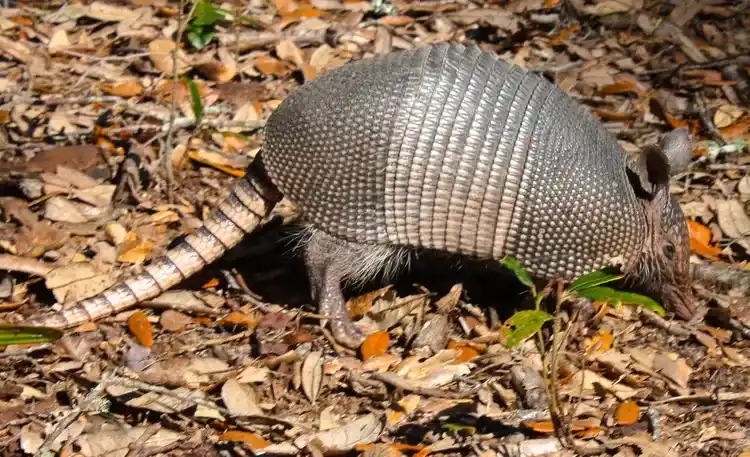
Here are 13 amazing facts about armadillos that you may never have heard of:
1. There is only one species of armadillo in the United States.
Currently, only the nine-banded armadillo (Dasypus novemcinctus) has successfully migrated to North America, becoming the only native armadillo species in the United States. Originally found only in the humid regions of the southern United States, they have now spread to northern areas such as Illinois and Nebraska. Global warming, leading to milder winters, is one of the reasons for their expansion.
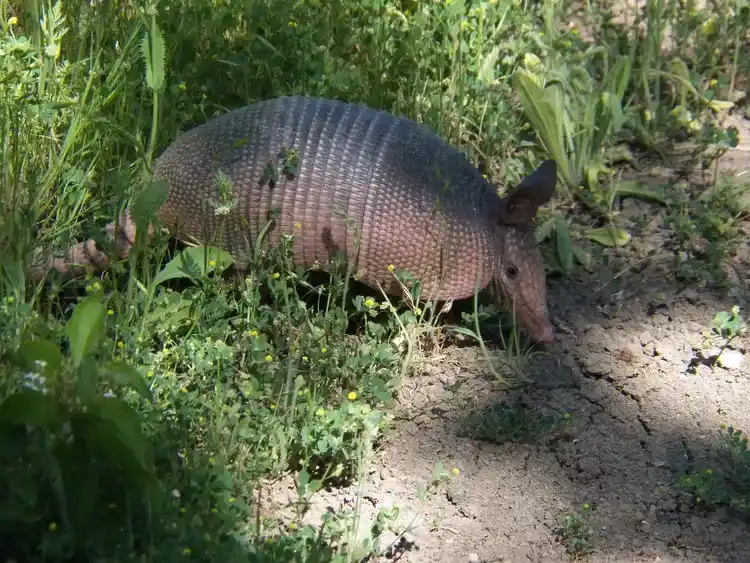
These armadillos are quite unique; they give birth to four identical offspring at a time, resulting from the natural division of a single fertilized egg. This method of "natural replication" is extremely rare among mammals. When startled, the nine-banded armadillo can also leap vertically 1 to 1.2 meters.
2. The Brazilian three-banded armadillo is a "resurrected species".
The Brazilian three-banded armadillo was once thought to be extinct until it was rediscovered in some parts of South America in 1988 and redefined as a "Lazarus species" (referring to animals that were wrongly thought to be extinct and then rediscovered).
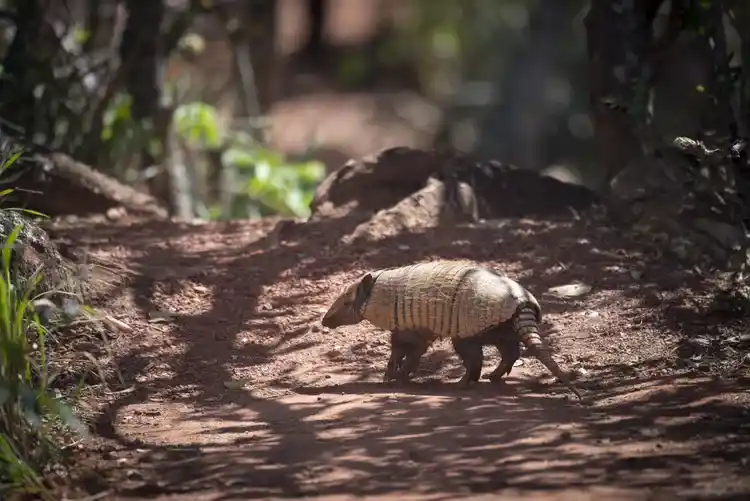
This species is currently listed as "Vulnerable" by the IUCN and "Endangered" in Brazil. They are mainly nocturnal, their numbers are small, and their habitat is being replaced by large areas of sugarcane and soybean fields. Coupled with poaching pressure, their survival situation is not optimistic.
3. The prehistoric "armored behemoth" was a distant relative of the armadillo.
A prehistoric behemoth called the Glyptodont was an ancient relative of the armadillo. These animals were enormous, covered in heavy armor, and some weighed over 2 tons. They appeared approximately 35 million years ago and remained until their extinction at the end of the last Ice Age.
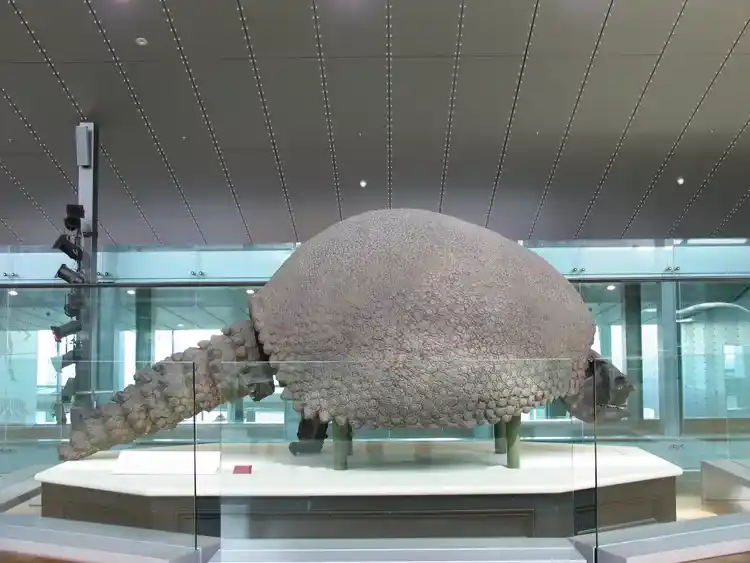
Humans once hunted them for food and used their bones and armor as building materials for shelters. Scientists now classify these armored beasts as a subfamily of armadillos.
4. Armadillos can sleep up to 16 hours a day.
Armadillos are typical nocturnal animals, spending most of their time at night foraging, digging burrows, and mating, while during the day they hide in burrows to sleep for long periods, sometimes up to 16 hours a day.
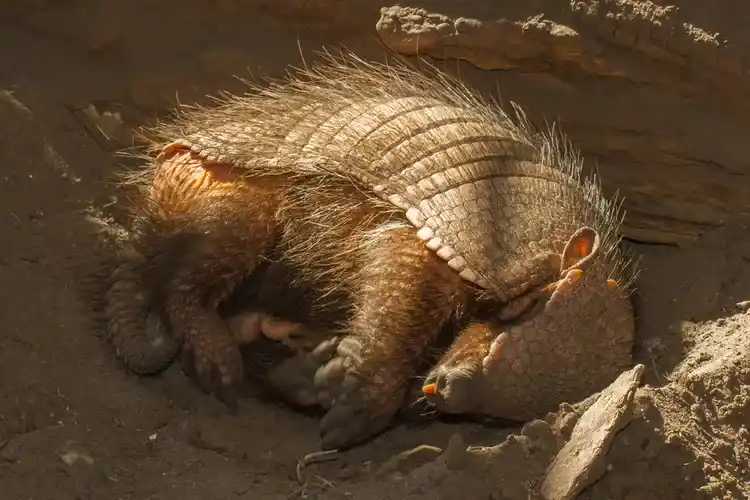
Although they are usually solitary, they sometimes share burrows with turtles, snakes, or mice. When awake, they spend a lot of time foraging for food, making them among the most "diligent" foragers among mammals.
5. Armadillos are the only non-human animals that can transmit leprosy.
Armadillos are the only known non-human species capable of transmitting leprosy (now known as Hansen's disease). The bacteria can survive in their bodies because armadillos have a low body temperature.
Researchers believe that this bacterium was likely brought to the Americas by European colonists in the 15th century and then "inherited" by armadillos. Humans can become infected by hunting or eating armadillo meat, or even by inhaling spores from its feces.
6. Not all armadillos can "turn into balls".
Many people believe that all armadillos can curl into a ball when they encounter danger, but in fact only two species— the Brazilian three-banded armadillo and the southern three-banded armadillo —have the ability to completely curl into a ball.

They belong to the genus *Tolypeutes* , and have fewer body plates and a more flexible structure. Most other armadillos, on the other hand, have more body plates and a more rigid structure, making them unable to fully curl up.
7. The largest armadillos can weigh up to 80 kilograms.
The giant armadillo (Priodontes maximus) is the largest living armadillo. Wild adults can weigh between 45 and 130 pounds (about 20 to 60 kilograms), while captive individuals can reach 176 pounds (about 80 kilograms) and are nearly 1.8 meters long.
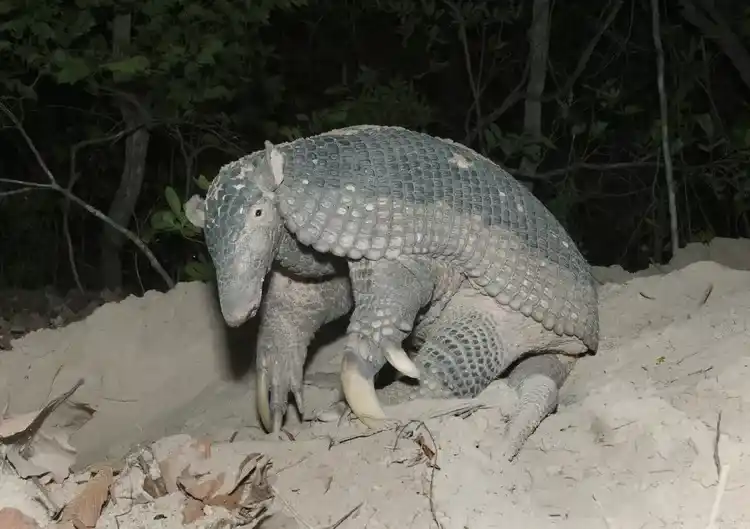
Their forepaws are particularly well-developed, with the middle claw reaching up to 8 inches in length, the longest claws of any mammal. The IUCN lists it as a "vulnerable species," primarily threatened by illegal hunting and habitat loss.
8. The smallest armadillo is only the size of a palm.
The Pink Fairy Armadillo gets its name from its tiny size and pink carapace. It is only about 10 to 15 centimeters long and weighs less than 100 grams. It has a vertical "shield" on its tail, which it uses to push soil backward when digging.
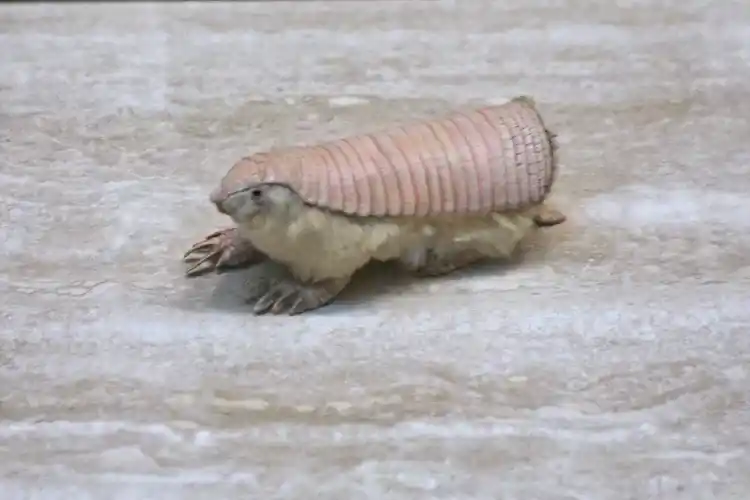
This species inhabits the dry sandy and grassland regions of central Argentina and is listed as "data missing" by the IUCN, but there are indications that it is nearing endangerment. Its adorable appearance and popularity on social media have led to an increase in illegal captures, with most captive individuals dying within eight days .
9. There's a type of armadillo that screams.
The hairy armadillo not only uses its armor for defense, but also its loud voice to intimidate enemies. When threatened, it emits a piercing scream similar to an alarm.
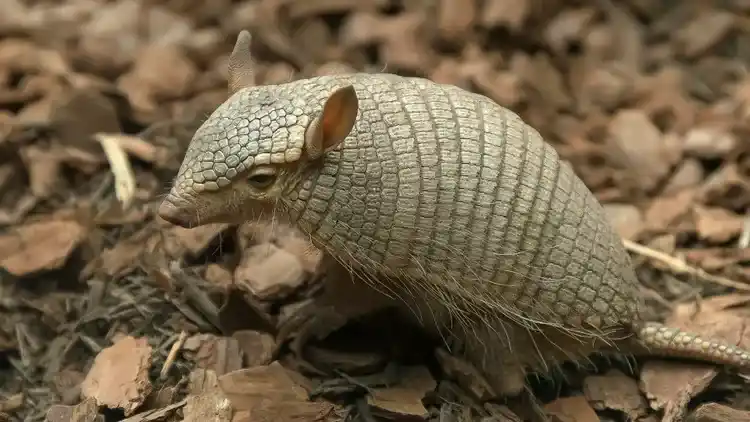
They are found in Bolivia, Paraguay, Argentina, and Chile. Although hunted for their meat and shells, their overall population status is currently "Least Concern".
10. Only the Pichi armadillo truly hibernates.
The Pichi armadillo (Zaedyus pichiy) of South America is the only known armadillo that hibernates . It stores fat before winter arrives, and its body temperature drops from about 35°C to around 14°C after entering its burrow.
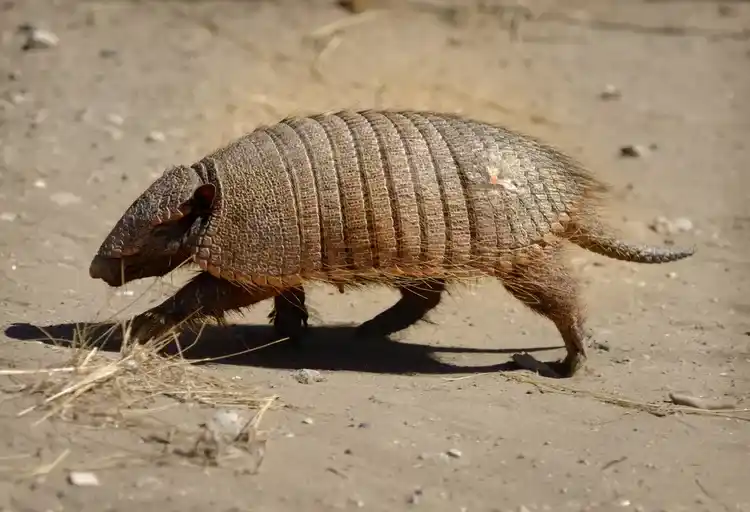
In addition to long-term hibernation, Pichi armadillos also enter a brief "semi-hibernation state" (called "sluggish state") during their daily lives, greatly conserving energy. They inhabit the dry grasslands of Argentina and Chile.
11. Many armadillo species are on the verge of extinction.
Despite the large population of the nine-banded armadillo, other species face crisis. The IUCN has listed the Brazilian three-banded armadillo and the giant armadillo as "vulnerable," while several other species, including the southern three-banded armadillo , the long-nosed armadillo , and the Pichi armadillo, are listed as "near threatened."
Habitat destruction and illegal hunting are the main threats, with activities such as mining, ranching and oil palm cultivation being key factors contributing to deforestation.
12. Armadillo shells were once used to make musical instruments.
In the Andes Mountains, armadillo shells were once used to make a ten-stringed instrument called the Charango , which is an important element of traditional folk music in Bolivia, Chile, Peru, and other regions.

For conservation purposes, more and more Charango are now being made from wood or gourd. Armadillo shells were also once used to make the "matraca," a carnival percussion instrument, but since 2015, the trade in such armadillo shell products has been banned in several countries.
13. Armadillos are actually excellent swimmers.
Despite their armor-like appearance, armadillos are actually excellent swimmers. They can hold their breath underwater for 4 to 6 minutes, and can even "walk" on the bottom of streams. When crossing small rivers, they swallow air to float and then paddle forward like dogs.
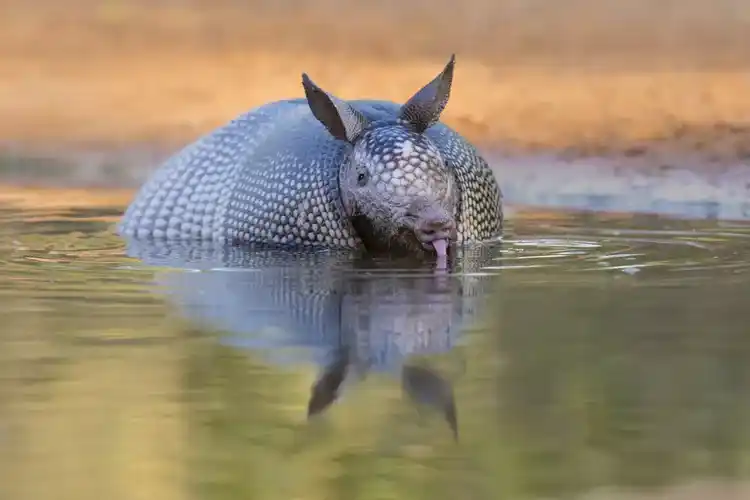
It was precisely because of this "amphibious" ability that they were able to successfully cross the Rio Grande River, allowing the nine-banded armadillo to gradually spread to most parts of the United States.
If you've ever thought armadillos were just oddly-looking "ground squirrels," you've seriously underestimated them. These little creatures, clad in natural armor, are not only evolutionary marvels but also hold countless fascinating little-known facts. Want to learn more about rare animals? Just look for me!