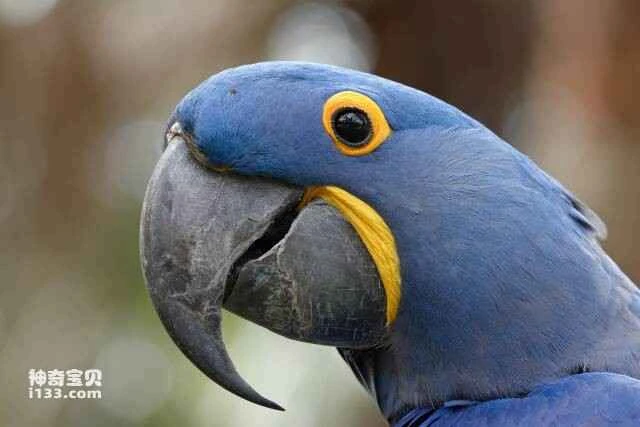
In the wetlands and swamps of the Americas, there is a bird whose colors seem to leap from a painter's brush. It is adorned with purplish-blue plumage, has exceptionally long green legs, a striking sky-blue frontal shield, and a fiery red beak. This is the Martinica (Porphyrio martinica), a beautiful and unique waterbird, whose stunning appearance and fascinating habits are also noteworthy.
Animal Kingdom
Phylum Chordata
Subphylum Vertebrata
Aves
Gruiformes
Rallidae
Purple Swamphen (Porphyrio)
Purple Moorhen (Porphyrio martinica)
1. Visually appealing: The colorful swamp sprites
The lilac tamarisk is a medium-sized waterbird, measuring approximately 26-37 cm in length, with a wingspan of 50-61 cm, and weighing between 150-300 grams. Its most striking feature is its magnificent plumage.
Its head and chest were a deep purplish-blue, gleaming with a metallic sheen in the sunlight.
Its back is covered in emerald-green feathers, like a magnificent cloak bestowed upon it by nature.
There was a sky-blue brow guard on his forehead, like a sapphire set in his forehead.
Its mouth is a bright red with a touch of yellow at the tip, like a splash of flame.
With its long, yellowish-green legs, it looks like a fashionable bird "on stilts".
The young birds have relatively understated plumage, mainly grayish-brown, which is not as dazzling as that of the adults. However, this helps them to hide in wetland environments and avoid predators.
2. Lifestyle: Tightrope Walkers in the Wetlands
The mongoose primarily inhabits freshwater wetlands, swamps, lake edges, and mangrove areas, and can be found from the southern United States to northern Argentina.
Lightweight "floating on water"
Although they are waterfowl, the lilac waterhen does not swim as often as ducks; they are better at walking on floating plants.
Their long toes distribute their weight evenly, allowing them to walk lightly on floating plants such as lotus leaves, water lilies, and water lilies, like a wetland "tightrope walker".
When in danger, they will quickly burrow into the reeds or fly a short distance to escape their enemies.
Superb climbing ability
Unlike typical wading birds that simply stand in the water waiting for prey, the purple wading hens are excellent climbers. They can use their long toes to firmly grasp plant stems, weaving among aquatic plants, and even hanging upside down on plants to feed, demonstrating remarkable agility.
3. Diet: A wetland gourmet who eats both meat and vegetables.
The mongoose is an omnivorous bird with an extremely diverse diet:
Plant part: tender shoots, seeds, fruits, flowers, etc. of aquatic plants.
Animals: Insects, snails, small fish, frogs, crustaceans, etc.
Clever foraging techniques
They use their mouths to turn over floating leaves and search for small insects hidden underneath.
Sometimes, they will also ambush small fish or frogs in the water like herons, showing their "raptor" side.
4. Social behavior: Both independent and cooperative
The purple-green waterhen has a somewhat complex personality; it can act alone or live in groups.
When foraging, they mostly go alone, occasionally encountering companions at the edge of the water.
However, during the breeding season, they become extremely territorial, and males may even fight for the best nesting spots and mates.
Amazing "family cooperative breeding"
The purple swamp hens exhibit a very special brooding method during breeding – “family brooding”.
A pair of parent birds will build a nest among the aquatic plants and lay 5-10 eggs each time.
Most amazingly, their adult offspring stay behind to help raise the newborn chicks, which is quite rare in the bird world!
After the chicks hatch, the whole family helps feed and protect them until they can survive independently.
5. Migration Mode: The Mysterious Traveler
The migration patterns of the purple-brown swamphen vary by region:
North American populations (such as those in Florida and Louisiana) migrate south during the winter to spend the winter in warmer regions of Central and South America.
South American populations are mostly resident birds, staying in wetlands year-round.
During their migration, they use wetlands along their route as transit points, so wetland protection is crucial for them.
6. Natural Enemies and Survival Challenges
Despite their intelligence and agility, the mongoose still faces many threats:
Main natural enemies
Birds: Eagles, falcons, cormorants and other birds of prey will prey on young or adult birds.
Reptiles: Crocodiles and large snakes (such as pythons) are their deadly threat.
Mammals: Raccoons, foxes, and wildcats may raid nests and eat bird eggs or chicks.
The impact of human activities
Wetland development: Human activities such as filling in wetlands and building dams lead to habitat loss.
Water pollution: Pesticides and chemical pollution affect water quality, leading to a reduction in food supply.
Climate change: Extreme weather causes water level fluctuations, threatening the stability of nest sites.
The good news is that the purple swamphen is very adaptable and can survive in some urban parks and artificial wetlands, but protecting wetlands remains the key to maintaining the stability of its population.
7. Conclusion: Shining Stars in the Wetlands
The purple-brown moorhen is not only a walking watercolor painting in nature, but also an important member of the wetland ecosystem. With its agile gait, ingenious foraging methods, and exquisite colors, it brings vitality and life to the wetlands.