The King Vulture is a magnificent bird of prey, not only large in size and with imposing plumage, but also possessing formidable hunting abilities and flying skills. Known as the "King of the Skies," the King Vulture is undoubtedly one of the most skilled predators in nature. If you have the chance to witness it soaring through the skies, you will surely be captivated by its aloofness. Today, let's delve deeper into this mysterious and powerful bird—the King Vulture.
Scientific Classification: The King Vulture's Place in the Animal Kingdom
Before learning about the King Vulture, let's first look at its scientific classification. The King Vulture belongs to the class Aves, family Accipitridae, and its scientific name is Sarcoramphus papa . This bird of prey is widely distributed in the grasslands, mountains, and some open forests of Asia, and is particularly common in parts of Tibet, Nepal, and China.
Wang Jiu's scientific classification
Kingdom : Animalia
Phylum : Chordata
Class : Aves
Order : Accipitriformes
Family : Accipitridae
Genus : Aquila
Species : King Vulture ( Aquila nipalensis )
English name: King Vulture
Other names: American vulture, king vulture, Brazilian vulture, or scavenging vulture
Wang Jiu's physical characteristics: a majestic figure
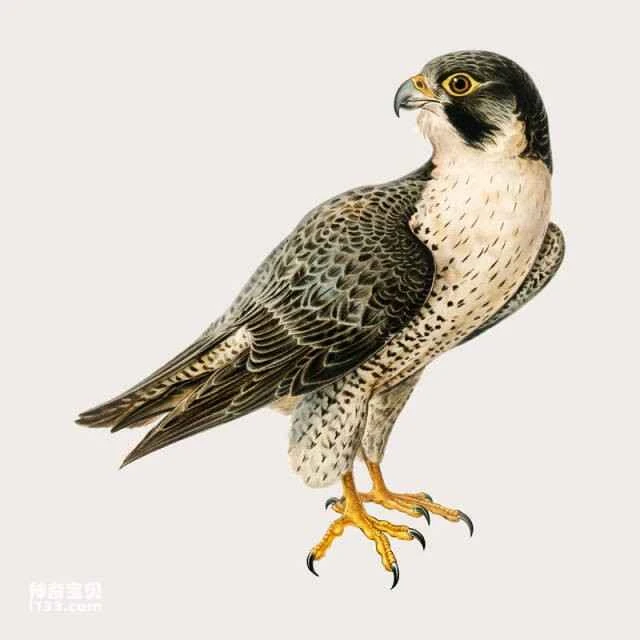
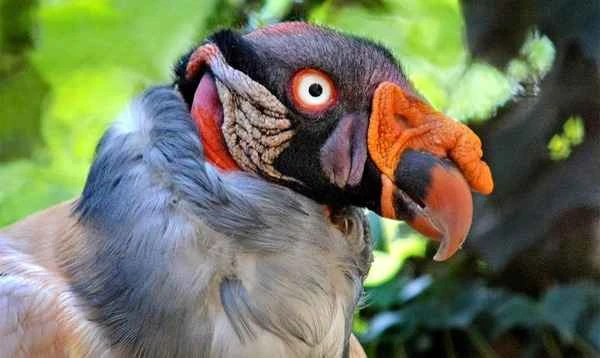
The king vulture is highly recognizable in appearance. They are enormous, with a wingspan of about 2 meters and a weight of 4 to 5 kilograms. Adult king vultures have dark brown or gray plumage, a relatively smooth head and neck, sharp eyes, and a hooked beak adapted for tearing prey.
The king vulture has long, broad wings that form a "V" shape during flight, perfectly suited for long-duration gliding. Its legs are relatively short but very strong, adapted for catching and grasping prey. Its most distinctive features are its sharp talons and curved beak, making it exceptionally efficient at hunting.
Wang Jiu's flying ability
King vultures are incredibly powerful fliers. Their broad, strong wings allow them to glide at high altitudes for extended periods with minimal flapping. They typically maintain altitude by gliding through thermals, enabling them to effortlessly cruise for tens of kilometers in search of food or to patrol their territory. They can reach speeds of up to 80 kilometers per hour and can rapidly change direction to precisely lock onto their prey.
King Vulture's Habitat: From Grasslands to Mountains
The king vulture is a widely distributed bird of prey with a very diverse range of habitats. They prefer open areas, especially grasslands and wastelands. As king vultures are carnivorous, they typically forage on the ground, thus requiring ample open space.
In these regions, king vultures typically choose towering trees, cliffs, or mountaintops as their habitat. These locations not only offer a wide field of vision, making them suitable for observing their surroundings, but also provide them with a relatively secluded breeding environment.
Habitat type
The king vulture has relatively broad requirements for its habitat, but there are several key characteristics that their habitats share:
Tropical and subtropical regions : King vultures prefer tropical and subtropical regions, typically inhabiting forests, grasslands, and semi-arid areas. They are mainly concentrated in Central and South America, but can also be found in some warmer areas of North America.
Open areas and forest edges : They often inhabit open grasslands, low shrublands, forest edges, and tropical rainforests. Especially at forest edges or near water sources, they can easily find carrion and other food sources.
Nesting on cliffs or in trees : King vultures prefer to nest at high places, usually on cliff tops, cliff crevices, or in tall trees. They use this choice to ensure the safety of their nests and keep them away from predators on the ground.
Arid and semi-arid regions : Although they are common in humid forest areas, they can also adapt and find food sources in some arid regions, such as northern Mexico and parts of the Amazon basin.
Distribution range
The distribution range of the king vulture is mainly concentrated in the tropical and subtropical regions of the Americas, as detailed below:
South America : The main distribution area of the king vulture is in South America, including countries such as Brazil, Argentina, Bolivia, Colombia, Peru, and Venezuela. They typically inhabit tropical rainforests and subtropical grasslands.
Central America : They are also found in some Central American countries, such as Costa Rica, Panama and Nicaragua, especially in areas near the coast or major river basins.
North America : Although they are mainly distributed in South America, king vultures can occasionally be found in some areas of the southern United States (such as Florida and Texas). They are usually found in warm climates.
Caribbean region : King Griffons are also found in some Caribbean countries, especially in tropical climate zones. They can find abundant carrion resources in these areas.
Factors in Habitat Selection
King vultures consider several key factors when choosing a habitat:
Food resources : As scavenging birds, the availability of food is crucial to their habitat selection. They prefer to inhabit places where carrion is easily found, especially where wild animals have died from natural causes or were hunted.
Safety : They prefer to inhabit cliffs or tall trees to avoid predators on the ground. High habitats allow them to clearly observe their surroundings, increasing their chances of survival.
Climate and temperature : They tend to prefer warm climates, especially tropical and subtropical regions. They are not adapted to cold environments, so their distribution is mainly concentrated in warm areas.
Breeding Site Selection : During the breeding season, males and females pair up to find secluded places to build their nests. They usually choose cliff edges or densely wooded areas to build their nests, so as to maintain a certain level of safety during incubation and raising of their young.
Breeding grounds and nests of the king vulture
King vultures typically build their nests in caves on cliffs or in trees, far from human habitation. They prefer quiet, secluded environments to better care for their offspring. The nests are usually sturdy, constructed from twigs, grass, and feathers. During the breeding season, male king vultures perform a series of courtship displays to attract females. After selecting a suitable mate, the female and male will lay the eggs together in the nest, and the male will incubate them.
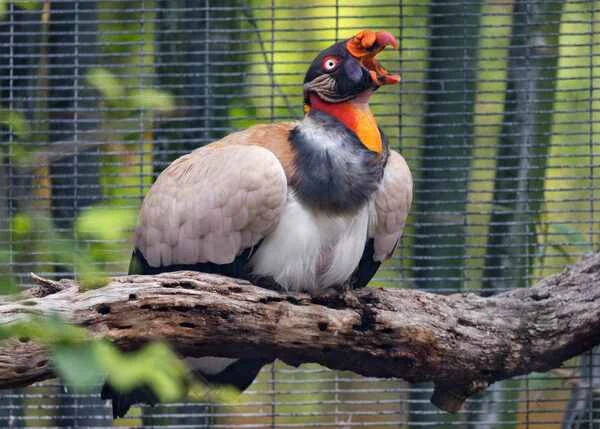
King Vulture's Reproductive Behavior: Intricate Courtship and Brood Care
The breeding behavior of the King Vulture is full of ritual and complexity. As the rulers of the skies, their courtship, mating, and chick-rearing processes demonstrate a strong survival instinct and sophisticated ecological adaptations. Let's delve into some of the King Vulture's key behaviors and habits during the breeding season.
Courtship and Pairing: A Grand Display
Every spring, as the king vulture enters its breeding season, males employ a series of unique courtship behaviors to attract females. First, male king vultures display their impressive flight capabilities, circling high in the sky to draw the attention of females. Their flight maneuvers are not merely for finding food; rather, they are a graceful aerial dance showcasing their formidable survival skills.
The courtship behavior of male monarch vultures typically includes wing displays and high-altitude flight. These flight maneuvers can sometimes be quite complex, with the male performing a series of movements such as soaring high, making sharp turns, and swooping down, all while exuding power and elegance. Through these flight techniques, the male demonstrates his physical strength and skill to the female, proving his ability to successfully raise offspring during the breeding season.
In addition, male king vultures will use their beaks to pick up twigs or food and offer them to females—a common courtship gift behavior, similar to "gift-giving" in other birds. Behind this behavior is the male's desire to demonstrate his strength, adaptability, and ability to provide food. By offering prey or food to females, males further increase their attractiveness, indicating that they can provide ample resources for their offspring.
Pairing and Nesting: Stable Families
Once a female king vulture chooses a male, they will work together to build a nest. King vulture nests are typically located on cliffs, in trees, or in secluded places, far from predators. Choosing a nest is crucial; it must ensure that the chicks can grow up in a relatively safe environment.
The king vulture's nest is typically built by both the male and female, usually using materials such as twigs, leaves, grass stems, and feathers. The nest is usually quite sturdy to withstand changes in the external environment. The nest's location not only needs to be concealed and far from predators, but also provides sufficient visibility so the king vulture can detect surrounding disturbances in a timely manner.
After the nest is built, the female bird usually lays one to two eggs, and each egg incubates for about 35 to 45 days. The royal vulture is a bird species in which both sexes participate in raising their young; the male and female take turns incubating the eggs to ensure a constant temperature until the chicks hatch.
Hatching and raising chicks: Parental care
The incubation process of the king vulture is very orderly. Once the eggs hatch, both parents begin actively caring for the chicks. Newly hatched chicks are very vulnerable; they are usually featherless and their eyes are not yet open, requiring continuous warmth and protection from their parents. The king vulture parents take turns guarding and feeding the chicks, ensuring they receive sufficient nutrition.
The chicks are typically fed by their parents upon returning to the nest, who then feed them directly. King Vultures are scavenging birds of prey, so when prey is scarce, they will also consume carcasses for energy. Parent birds bring small animals or carrion they have caught back to the nest to provide the chicks with the necessary food.
During the brooding process, the parents constantly teach the chicks how to catch food with their claws and beaks. As time goes by, the chicks' feathers gradually grow in and their strength increases. They begin to attempt short flights, and the parents patiently guide them in flight techniques and encourage them to explore their surroundings.
Leaving the Nest and Becoming Independent: Challenges and Growth
Once the chicks have fully grown their feathers and reached a certain level of physical strength, they leave the nest and begin their independent lives. This process can last for several months, during which time the chicks need to constantly practice flying and hunting skills. The king vulture's brooding process is relatively long, and the chicks need several months to fully master survival skills such as flying and hunting.
Typically, young birds learn to fly and hunt independently under the guidance of their parents, facing constant challenges along the way. King Vulture parents are very patient; they encourage their chicks to explore on their own, while also providing assistance and protection whenever needed.
As young king vultures grow up and learn survival skills, they gradually leave their original habitats to find their own territories and mates, beginning a new breeding cycle.
Wang Jiu's lifespan: A long-lived creature in the sky
As a bird of prey, the king vulture typically lives for around 20 years in the wild. However, in captivity, due to better living conditions, its lifespan can be even longer; some king vultures in zoos can live to be over 30 years old . The lifespan of a wild king vulture is influenced by many factors, such as the availability of food, the safety of its habitat, and the threat from predators.
King Vulture chicks take several months to learn to fly after hatching, and once fully independent, they begin to forage for their own food. Over these years, although their flying ability gradually improves, they still face threats from predators and environmental changes. Therefore, the lifespan of the King Vulture is constrained by many external factors, especially in the wild where survival challenges are even more severe.
King Vulture's Diet: Hunting Techniques and Food Chain Position
The King Vulture is a typical carnivorous bird of prey, primarily feeding on small mammals, birds, and reptiles. Their diet includes not only live prey but also carcasses, making them scavengers as well. With their sharp eyesight and powerful flight, the King Vulture can spot prey from great distances and even locate carcasses for scavenging.
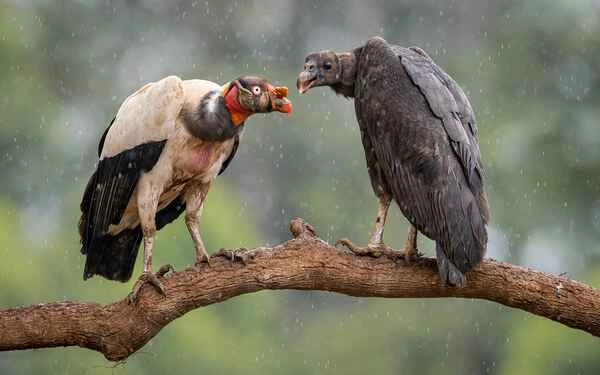
King Vulture's hunting methods
King vultures typically hunt by gliding, hovering high in the sky and searching for small mammals on the ground, such as rabbits, field mice, and squirrels. Once a target is spotted, the king vulture swiftly swoops down and snatches its prey with its sharp talons. Although the king vulture's hunting method is relatively simple, its rapid movements and precise judgment allow it to effectively capture its prey.
In addition, in some areas, king vultures also scavenge, eating the carcasses of dead animals. Their powerful digestive system allows them to quickly digest the decaying flesh, preventing the spread of disease. Therefore, they are not only predators but also scavengers, helping to clean up leftover carcasses in the natural environment.
How to determine the sex of a king eagle
The king vulture is a typical griffon vulture. There is no obvious difference in size and appearance between males and females; sexing is usually determined by the following characteristics:
Size differences : Males are usually slightly smaller than females, but this difference is not easily noticeable in the wild, especially to non-experts.
Behavioral differences : During the breeding season, males and females exhibit subtle behavioral differences. Males display more flight skills and courtship dances during courtship, while females focus more on nest selection and incubation.
Anatomical differences : Sex can be distinguished relatively accurately by observing the genitals, but this requires professional observation and anatomical knowledge.
In general, it is difficult to accurately distinguish the sex of Sarcoramphus papa in daily life, especially for non-professional bird enthusiasts.
Comparison of the King Vulture with other vultures
Below is a table showing the differences between the King Condor (Sarcoramphus papa) and other species of vultures, including the Condor (Aegypius monachus) and the Eurasian Condor (Gyps fulvus):
| feature | Wang Jiu (Sarcoramphus papa) | Condor (Aegypius monachus) | Eurasian vulture (Gyps fulvus) |
|---|---|---|---|
| body shape | Medium (wingspan approximately 2 meters) | Extremely large (wingspan up to 2.7 meters) | Large (wingspan approximately 2.6 meters) |
| Feather color | Black and red stripes, head without feathers. | Black, with a bare head and "hair" on the neck. | Gray or white, head exposed |
| Habitat | Tropical and subtropical forests or grasslands | grasslands, mountains, and wastelands | grasslands, mountains, and forest edges |
| Main food | They scavenge and occasionally prey on small animals. | Carrion feeder, occasionally preying on birds and mammals. | Primarily scavengers, occasionally preying on small mammals. |
| Breeding season | spring | Spring to Summer | Spring to Summer |
| life | 16-20 years | Around 30 years | 20-30 years |
| Flight capability | It is relatively strong and uses thermal airflow to glide during flight. | Extremely strong, capable of gliding for extended periods. | Strong, usually gliding at high altitudes |
| Gender differences | No significant gender differences | Males are slightly larger | No significant gender differences |
This table shows the differences between the King Vulture and other vultures in terms of size, plumage color, habitat, food preferences, and breeding habits. Although they are all vultures, they have significant differences in specific characteristics.
Wang Jiu's natural enemy: Challenges in the sky
Although king vultures are apex predators with virtually no natural enemies, they still face some threats during their juvenile stage. Large predators such as eagles and foxes may attack their chicks near the nest. For adult king vultures, the only threat usually comes from interspecific fighting, especially in areas where food resources are scarce.
In addition to human activities, the king vulture's habitat is also threatened. Habitat destruction, pollution, and poaching can all negatively impact king vulture populations. In recent years, king vulture populations have declined in many areas, making conservation efforts particularly important.
Wang Jiu's relationship with humans
Cultural symbol
The king vulture holds significant symbolic meaning in many cultures. In ancient times, it was often seen as a symbol of strength, courage, and nobility. Among some nomadic peoples, the image of the king vulture frequently appears on flags, totems, and ornaments. Its majestic presence and hunting prowess have made it a revered animal in many cultures.
Preservation of the status quo and challenges
Today, the king vulture population has been impacted to some extent by habitat destruction and the threat of illegal hunting. Particularly in densely populated and severely environmentally damaged areas, the king vulture faces increasing challenges to its survival. Therefore, protecting the king vulture has become a shared goal for many environmental organizations and governments.
Some countries and regions have taken proactive conservation measures, such as establishing protected areas, banning hunting, and strengthening ecological protection. Through these measures, the population of the king vulture has gradually recovered, but more effort and attention are still needed.
Although the American condor can find suitable habitats in many places, it still faces some habitat challenges, including:
Habitat loss : With increased human activity, especially the expansion of agriculture and urbanization, the habitat of the American vulture faces severe destruction. Deforestation and grassland clearing have caused them to lose many of their habitats and breeding grounds.
Pollution and Chemicals : Pesticide and chemical pollution pose a threat to the health of American vultures. Vultures rely on carrion for survival, and pollutants enter their bodies through decaying flesh, potentially leading to poisoning and reproductive difficulties.
Power lines and traffic accidents : With increasing human activity, power lines, vehicles, and other objects threaten the safety of American vultures. They are prone to colliding with these man-made obstacles during flight, resulting in injury or even death.
Protective measures
To protect the American vulture and its habitat, several international organizations and local governments have implemented conservation measures, including:
Habitat reserves : In some parts of the Americas, wildlife reserves have been established specifically to protect the habitats of vultures and other birds of prey. These reserves restrict human activity and help protect the vultures' breeding grounds.
Pollution control : Reducing the use of pesticides and chemicals in agriculture and promoting more environmentally friendly agricultural practices can reduce pollutants in the vulture's food chain.
Public education and research : Enhance public awareness of the ecological value of the American vulture, promote scientific research, and provide data support for further conservation of this species.
Five interesting facts
The King Vulture's Courtship Dance : Male king vultures attract females through spectacular aerial displays, including rapid dives and sharp turns, showcasing their flying skills. This courtship display is not only a demonstration of flying prowess but also a display of the male's physical strength and hunting abilities.
The King Vulture's Carrion-Eating Ability : Although king vultures are carnivorous birds, they don't just hunt live prey. They also scavenge, helping to clean up carcasses in their natural environment. They can use their powerful sense of smell to locate carcasses and tear the rotting flesh apart with their sharp beaks.
Amazing flight altitudes : King Vultures can glide effortlessly at high altitudes for hours, even exceeding 6,000 meters. This ability allows them to quickly cover vast areas in search of food.
King Vulture Nest Construction : King Vultures are very careful in choosing their nesting sites, usually building them on cliff edges or high in trees. This not only provides a good view but also avoids the threat of many predators. Their nests are often reinforced with materials including twigs, grass, and feathers.
The King Vulture and Culture : In many cultures, the king vulture is seen as a symbol of strength and courage. In some ancient cultures, the image of the king vulture appears in mythology, representing nobility and the role of a protector. Its majestic appearance and powerful hunting abilities made it a totem animal for many ancient tribes.
Conclusion
The American condor ( Sarcoramphus papa ) plays a vital ecological role in the wild, maintaining ecological balance by scavenging carrion. Although their habitats are widely distributed, they face threats such as habitat destruction and environmental pollution. Protecting these habitats and strengthening environmental management are crucial for ensuring the survival and reproduction of the American condor.