The bagworm, also known as the "fuzzy caterpillar" or "hairy caterpillar," is the larval stage of the bagworm moth (scientific name: *Megalopyge opercularis *), and is famous for its unique appearance, resembling a small, plush animal. Despite its cute appearance, don't be fooled—this caterpillar is actually highly venomous, one of the few poisonous moths. This article will provide an in-depth introduction to the bagworm's stinging mechanism, distribution range, and reactions and treatments after a bite, helping you better understand this special creature.
Characteristics of a hairy caterpillar
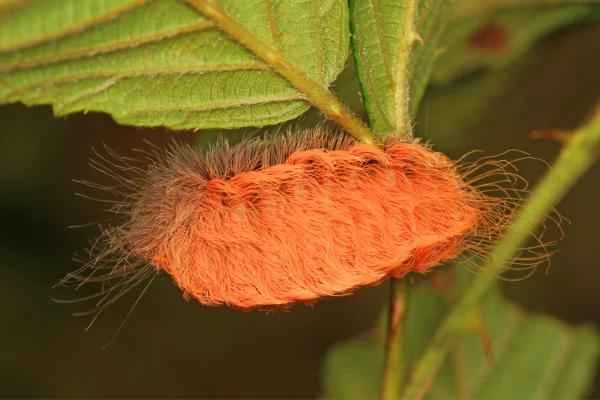
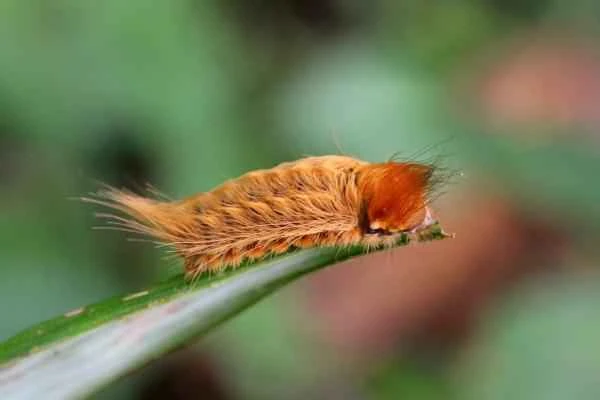
The hairy caterpillar is a larval stage of a moth, which will develop into a winged adult after metamorphosis. They are covered with long hairs, which are mostly brown, white, golden yellow or gray, and have a bright orange longitudinal stripe on their backs. The hairs are arranged in a peak-like pattern along their backs.
There are two types of downy hair:
Poisonous hairs : short and sharp, capable of penetrating the skin to release toxins;
Non-toxic downy hairs : longer and more colorful, non-toxic, and serve as protection and camouflage.
The velvety caterpillar has eight pairs of sucker-like pseudopodia (called "pseudopodia" or "prosthetics") on its sides, which help it move. Its body length is usually between 2.5 and 3.5 centimeters.
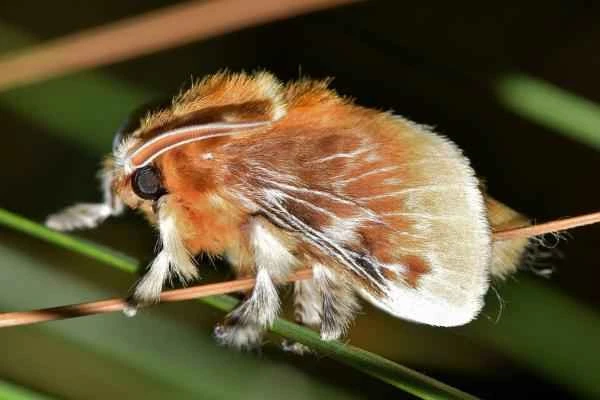
The adult caterpillar moth ranges in color from orange to yellow, with black leg hairs and a similar downy covering. Its appearance is similar to that of the larva and it is quite cute.
The stings and symptoms of the hairy caterpillar
The defense mechanism of the velvety caterpillar mainly relies on the toxic hairs covering its body. These hairs contain neurotoxins, proteolytic enzymes, and allergens, which can effectively protect it from lizards, birds, and other predators.
When the hairs pierce human skin, they release toxins, causing intense, localized pain, sometimes described as a bee sting or a bone fracture. Other common symptoms include:
burning sensation
Skin redness, wheals or bleeding
Local swelling
Transient paralysis
Nausea and vomiting
Chest pain, headache
People with allergies may experience difficulty breathing or even severe allergic reactions.
Historically, the ancient Mexicans called this caterpillar "chinaláhuatl," meaning "burnt hair."
First aid and treatment after a caterpillar bite
While there are folk remedies that use ice packs, baking soda, antihistamines, or oat dressings to relieve symptoms, it is recommended that you seek medical attention at a hospital or professional medical facility if you are stung by a hairy caterpillar.
The doctor will examine the wound to determine if it was caused by a caterpillar sting and will prescribe painkillers (such as codeine or morphine) and corticosteroids to relieve inflammation. If the stinger gets into the eye, you should see an ophthalmologist immediately.
Do not touch or try to remove the hair yourself to avoid the spread of toxins or infection.
Habitat distribution of hairy caterpillars
The fluffy caterpillar is mainly distributed in parts of North and South America, including the United States, Mexico, Central America, and northern South America.
They mostly inhabit:
forest
Citrus orchard
Eucalyptus tree
Acacia tree
oak
pine
Various ornamental trees
These caterpillars typically cluster on tree bark or leaves, releasing venomous stingers when they fall, posing a threat to human safety.
Diet of the hairy caterpillar
The main food of the hairy caterpillar is fallen leaves and shrub leaves, while adult moths lay their eggs on the plants that feed on their larvae to ensure a food source for the next generation.
Their diets encompass up to 41 different plant genera, varying according to developmental stage.
The reproductive process of caterpillars
The fluffy moth is a holometabolous insect, with both males and females. Its life cycle includes four stages: egg, larva (fluffy caterpillar), pupa, and adult.
The larvae reproduce twice a year, appearing during the dry and rainy seasons respectively. After hatching, the larvae grow by feeding on plant leaves and undergo metamorphosis to become moths.
The adult insects live for about a week before completing their reproductive mission.
If you would like to learn more about hairy caterpillars or explore more insect-related knowledge, please visit our "Wildlife" section.
References
Eagleman, DM (2008). Poisoning by Megalopyge opercularis. Clinical Toxicology, 46(3), 201-205.
Avilán, L., Guerrero, B., Álvarez, E., and Rodríguez-Acosta, A. (2010). Description of poisoning by the Venezuelan "chicken worm" caterpillar (Megalopyge opercularis). Clinical Research, 51(1), 127-132.
Rodríguez, WD, Valderrama, M., and Guapo, LA (2021). Specimen Caterpillar: A Gentle Yet Poisonous Butterfly. AMXSA Newsletter, Vol. 5 (1).