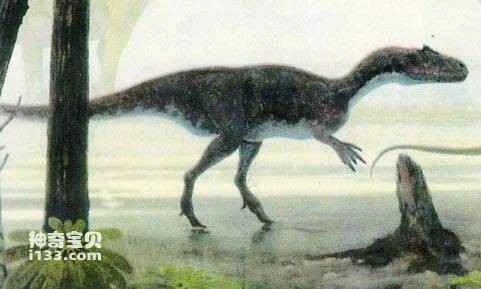
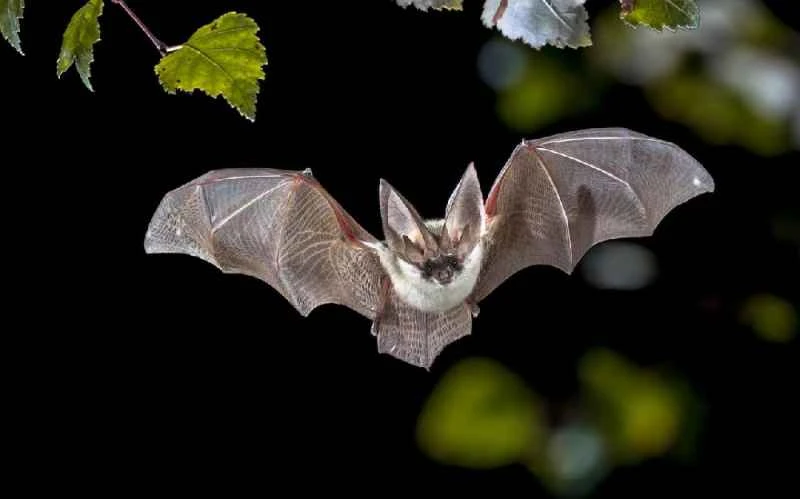
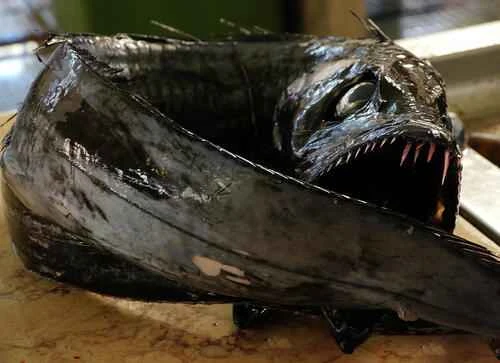
These were enormous prehistoric creatures that once inhabited Earth. They were ferocious and terrifying, even larger and more vicious than dinosaurs. Seeing them makes one only grateful that they didn't live alongside humans for a century, otherwise, just one of them could have wiped out humanity.
First Place: Prehistoric Giant Fish
This fish lived approximately 360 million years ago. Photos and simulations show that this prehistoric giant was an extremely ferocious creature, typically reaching lengths of around 10 meters and weighing up to 2 tons. Furthermore, it possessed incredibly strong jaws and powerful teeth, advantages that allowed it to dominate its marine ecosystem. Scientists have discovered fossils of this fish, and through a series of analyses and measurements, they have determined that it possessed the strongest bite force of any creature in Earth's history. Scientists have also conducted simulated tests on its bite force, indicating that it could reach up to 5000 kilograms. Scientists suggest that this fish may very well have been the first "king of beasts" on Earth.
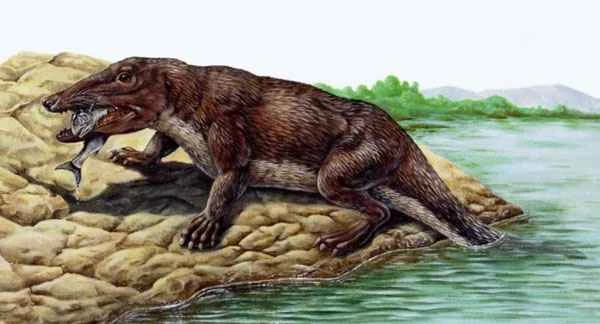
Second place: Basilosaurus
Basilosaurus, also known as the toothed whale, was an extinct ancient marine mammal and a close relative of modern whales. It lived during the Late Eocene epoch, 39 to 34 million years ago. Initially mistaken for a giant marine reptile fossil, it was named *Emperor lizard*. It was first discovered in Louisiana, USA, but paleontologists later identified at least two other species from fossils found in Egypt and Pakistan. Basilosaurus reached a maximum length of 16–18 meters and a weight of 8–18 tons, with some reaching as high as 21 meters, although those were only suspected to be Basilosaurus. It also possessed a more slender body than modern whales. Paleontologists are particularly interested in its short, vestigial hind limbs, as these could prove that modern whales evolved from terrestrial mammals. Basilosaurus is also a state fossil in Mississippi and Alabama.
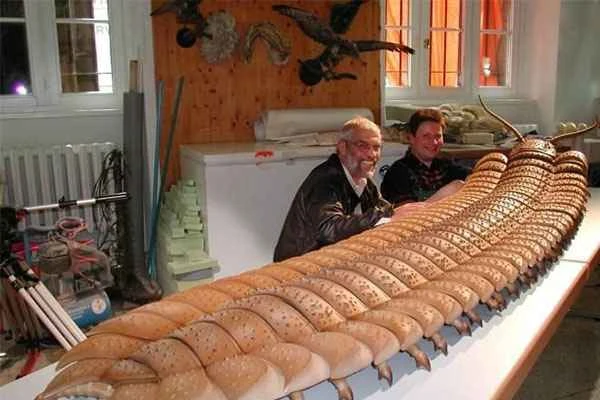
Third place: Ancient centipede
The ancient centipede lived during the Carboniferous period and went extinct during the Permian period, about 300 million years ago. Reaching up to 8.6 feet (approximately 2.59 meters) in length, it resembled a modern centipede in appearance, was quite frightening, and was enormous. Fortunately, this animal lived over 300 million years ago and will never suddenly appear next to anyone now. The ancient centipede likely lived during the Carboniferous period and went extinct during the Permian period, about 300 million years ago.
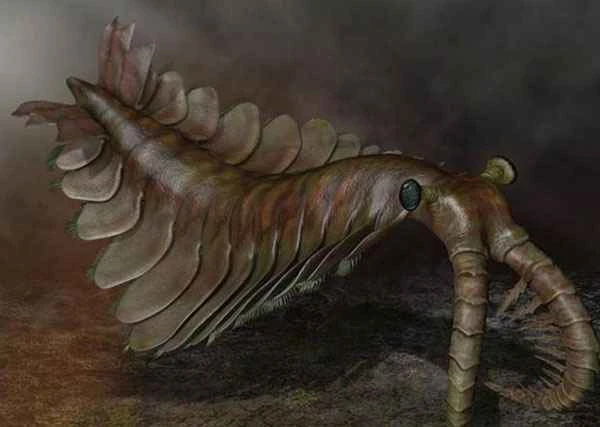
Fourth place: Anomalocaris
Anomalocaris, also known as the bizarre shrimp, is an ancient organism found in Cambrian sedimentary rocks in China, the United States, Canada, Poland, and Australia. It is the largest known Cambrian animal. It is speculated that this type of animal was most likely an active carnivore. In the oceans 530 million years ago, Anomalocaris was arguably the most ferocious predator. It possessed a pair of stalked, giant eyes, a pair of segmented, giant forelimbs for quickly capturing prey, a beautiful large tail fan, and a pair of long tail forks. Although not adept at walking, it could swim quickly. Its massive mouth, 25 centimeters in diameter, could prey on any large creature of the time, and its ring-shaped external teeth posed a significant threat to animals protected by mineralized exoskeletons. This was a highly aggressive carnivore; individuals could reach over 2 meters in length, while most other animals at the time averaged only a few millimeters to centimeters. Anomalocaris, reaching lengths of up to 2 meters, is considered one of the earliest apex predators in the Phanerozoic marine ecosystem and one of the most representative star animals of the "Cambrian Explosion."
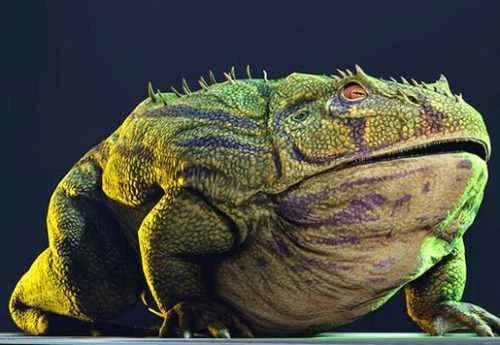
Fifth place: Devil Frog
The Devil Frog, also known as the Devil Toad, lived during the late Cretaceous period, approximately 70 million years ago. In the early 21st century, European scientists unearthed a 40.6 cm long fossil of this frog. Scientists estimate that its snout and anus were 43-45 cm long when alive, and its total length, when stretched, exceeded 1 meter. It weighed approximately 9-10 kilograms or even more. This frog lived 65 to 70 million years ago; it was the largest frog ever, extremely ferocious, and even capable of preying on newborn dinosaurs. The Devil Frog was 41 cm long and estimated to weigh around 4.5 kg. It was robust, with a wide mouth and powerful jaws.
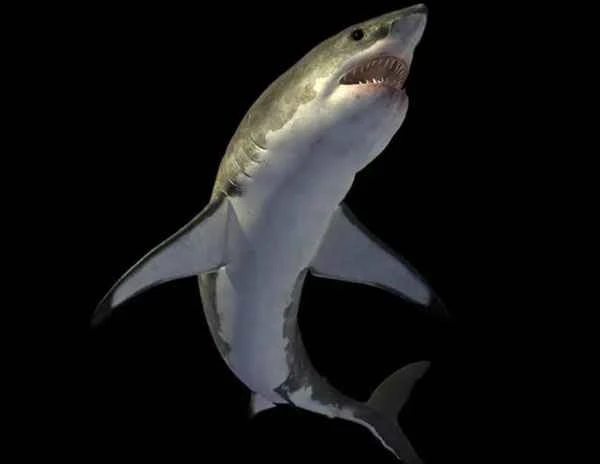
Sixth place: Cretaceous spiny shark
During the Late Cretaceous period, the spiny shark was the largest shark in the ocean and one of the most feared predators. Nicknamed the "golden chef shark," it could use its mouthful of sharp teeth, like kitchen knives, to slice its prey into thin slices or small pieces. Further evidence suggests that the spiny shark also preyed on mosasaurs, plesiosaurs, and even the swordfish, a ferocious carnivorous fish itself. The spiny shark never lost all its teeth, an adaptation to its lifestyle; it not only ate meat but also bones. Furthermore, if it had indigestible food, it would expel it through vomiting. The Cretaceous spiny shark could grow over 10,000 teeth in its lifetime.
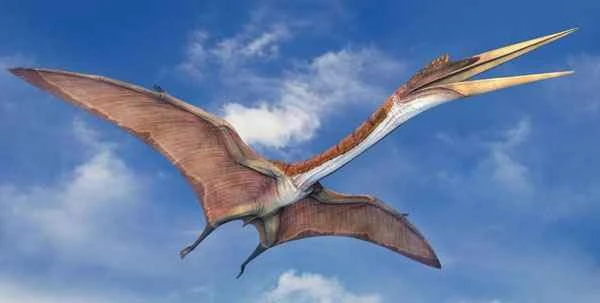
Seventh place: Pteranodon
Pteranodon was a pterosaur from the Late Cretaceous period, a type of flying reptile, while dinosaurs were terrestrial animals. Pteranodon was about the size of a turkey, weighing approximately 15 kilograms, but its body length was about 1.8 meters, with a wingspan of about 8.2 meters. It had a huge head, a long beak, a pouch around its throat, and no teeth, possibly using its large beak to swallow fish like a modern pelican. Perhaps for balance, it had a large, backward-protruding bony crest on its head. This pterosaur could not fly for extended periods, relying on high-altitude air currents to glide across the ocean. When resting, it may have hung upside down from branches like a bat, or folded its wings and crawled short distances on all fours.

Eighth place: Titanoboa
Titanoboa, a member of the python family, was an extinct boa constrictor, a close relative of the modern giant boa constrictor, and the largest known snake. They were like enlarged versions of modern pythons. Titanoboa averaged 12 meters in length and weighed over 1 ton, figures that speak volumes about their formidable nature. Their prey included 4.57-meter-long, half-ton blunt-nosed crocodiles, 3.05-meter-long lungfish, and some large contemporary turtles. Titanoboa went extinct nearly 58 million years ago. It was the largest land carnivore on Earth after the extinction of the dinosaurs, dominating the planet for millions of years. Titanoboa may have exceeded 15 meters in length, weighed over 1100 kilograms, and had a body width exceeding 1 meter at its thickest point.
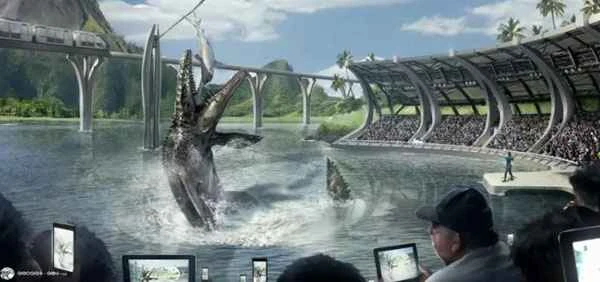
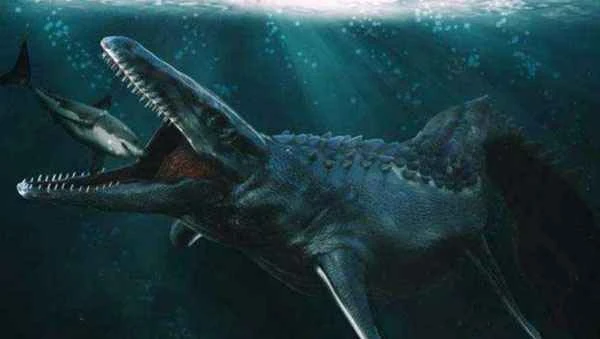
Ninth place: Mosasaurus
Mosasaurus was the largest apex predator in the Mesozoic oceans. The adult Mosasaurus Hoffmani reached 15 meters in length, with the largest generally accepted individual reaching 17 meters. Weight varies considerably depending on the reconstruction, with two main versions: the "lizard-like" version weighing approximately 13-16 tons, with a robust build similar to the Komodo dragon (this is the data commonly used in China); and the robust version weighing approximately 17-24 tons, based on a more recent reconstruction. Although mosasaurs have a relatively short history (evolving from terrestrial cliff lizards, appearing and rapidly multiplying in the late Cretaceous, then becoming extinct along with the dinosaurs), they were incredibly successful, largely due to the ecological niche vacancy created by the extinction of pliosaurs and ichthyosaurs.
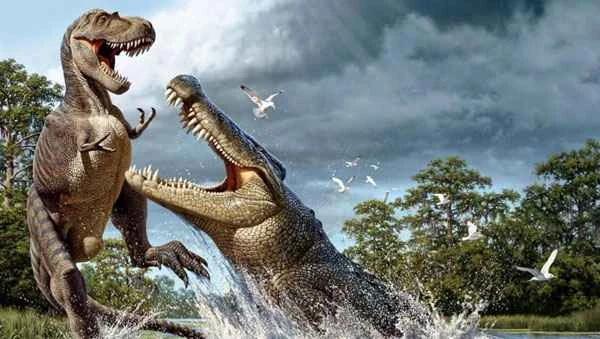
10th Place: Deinosuchus
The Deinosuchus, also known as the Muscular Crocodile, is an extinct crocodile species. They lived in Africa during the Early Cretaceous period and were among the largest crocodilians to ever exist. The Deinosuchus measured 8-13 meters in length and weighed 4-11 tons, primarily feeding on various prehistoric fish. Furthermore, the Deinosuchus possessed an exceptionally keen sense of smell, able to detect prey even in water. Combined with its massive, 1.8-meter-long jaws filled with sharp teeth, even a small dinosaur could become its prey in an instant.