It was recently learned from China University of Geosciences (Wuhan) that Professor Lai Xulong's team, in collaboration with researchers from home and abroad, has discovered a previously unknown and now extinct genetic lineage of tigers through ancient DNA research. The relevant findings were recently published in the prestigious international biology journal *Proceedings of the Royal Society B*.

Previously, an archaeological team from Jilin University unearthed a large number of ancient fossils in a karst cave in Da'an Town, Tonghua, Jilin Province, and provided some of the spotted hyena fossils to the ancient DNA research team of China University of Geosciences (Wuhan) for collaborative research. Through analysis and identification of the DNA remaining in the fossils, researchers unexpectedly discovered that one of the fragmented mandibles was not a spotted hyena, but belonged to a tiger (hereinafter referred to as the Da'an tiger), dating back more than 43,500 years.
In biological classification, the evolutionary history and current status of tigers have received widespread attention. Existing research suggests that all current geographical subspecies of tigers diverged from an ancestral population dating back approximately 110,000 years.
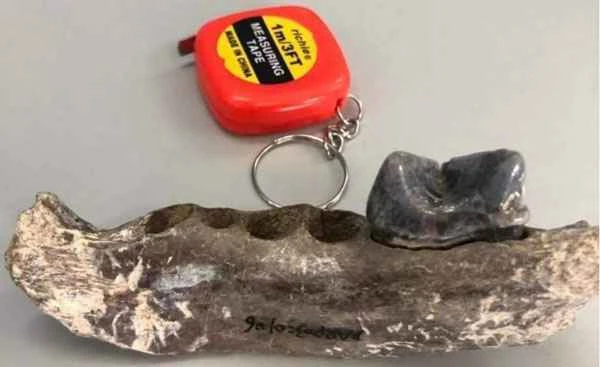
To explore the kinship between the Da'an tiger and various geographical subspecies of extant tigers, researchers intensified their efforts in extracting ancient DNA from the Da'an tiger mandible fossil and constructing next-generation sequencing libraries. From 24 sequencing libraries, they assembled nearly complete mitochondrial genome and partial nuclear genome information of the Da'an tiger.
Based on comparative analysis of the genetic components of the Da'an tiger and all extant tigers and the construction of a phylogenetic tree, it was found that the Da'an tiger is different from any extant tiger and belongs to a previously unknown and now extinct genetic lineage. This lineage diverged from the ancestors of extant tigers about 260,000 years ago.
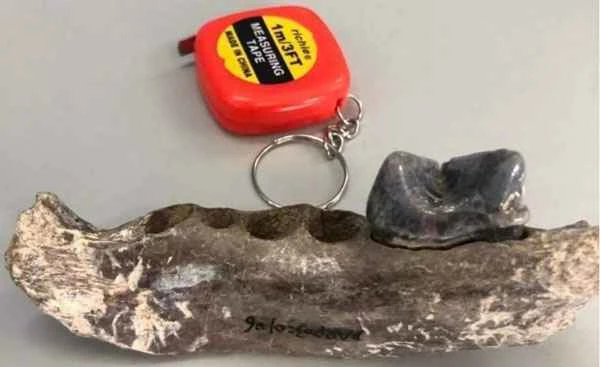
Studies of extant tigers can only reveal the evolutionary history of their direct ancestors. The determination and analysis of the Da'an tiger genome indicate that some genetic lineages were lost during the tiger's evolutionary process, and all modern tigers are descendants of only one of these lineages.
Researchers explain that modern tigers such as the Siberian tiger and South China tiger are like cousins, while the Da'an tiger and modern tigers are distant relatives. Before obtaining ancient DNA data, the genetic information of extinct tiger lineages remained buried in fragmented and easily misinterpreted fossils. Ancient DNA research has brought extinct tiger lineages back to light, providing a basis for a systematic and comprehensive exploration of the evolutionary history of tigers.