One of the harshest and most uninhabitable places on Earth for humans is undoubtedly the North and South Poles . Extreme cold, long nights, and barren vegetation make it difficult for humans to survive there long-term. However, many resilient organisms in nature have successfully adapted to these extreme environments and thrive there.
So, which animals can live in such extreme conditions as the Arctic and Antarctic? We will reveal the answer one by one and explain in detail the differences between the polar environments to help you understand why some animals can only live in the Arctic, while others can only live in the Antarctic.
The main differences between the Arctic and Antarctic
Although many people believe that the North and South Poles are not much different, they are actually quite different geographically and ecologically:
Geographical location : The North Pole is located at the northernmost point of the Earth, while the South Pole is located at the southernmost point.
Surrounding environment : The Arctic is surrounded by the Arctic Ocean, while the Antarctic is surrounded by the Southern Ocean (i.e., the southern Atlantic Ocean).
Continental differences : Antarctica is a single continent; while the Arctic has no land, only a huge floating ice sheet.
Climate conditions : Both poles are extremely cold, but Antarctica is colder, with summer (warmest period) temperatures still dropping to -25°C , making it more difficult to survive than the Arctic.
Biological distribution : Antarctica is almost barren, and life activities mainly depend on the ocean; while the Arctic, although less land, is richer in life.
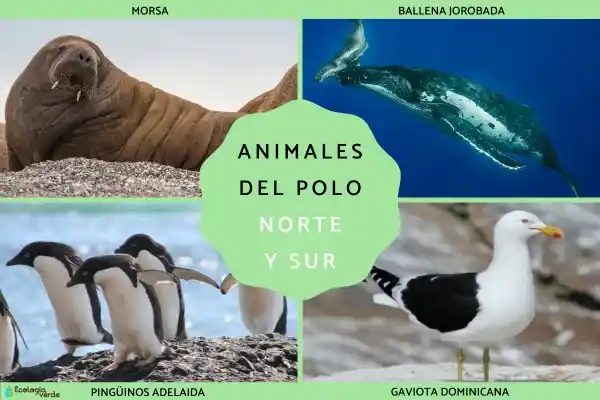
Species distribution : Penguins live only in Antarctica, while polar bears live only in the Arctic. They do not live in the same area, which is a common misconception.
Arctic animals
Although the Arctic is cold, it has a greater diversity of life than the Antarctic due to its relative "mildness." The following are typical Arctic animals:
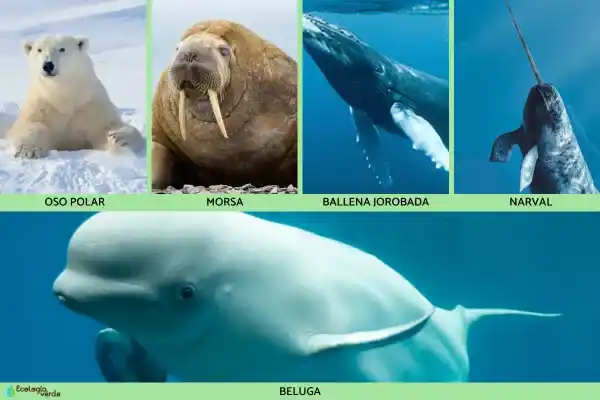
Polar bear ( Ursus maritimus ): Top predator and symbol of the Arctic, primarily preying on seals.
Walrus ( Odobenus rosmarus ): Known for its long tusks and thick layer of fat.
Humpback whales ( Metroptera novaeangliae ): migrate to Arctic waters every year to feed.
Narwhal ( Monodon monoceros ): A "sea unicorn" with a unique spiral tusk.
Beluga whale ( Delphinapterus leucas ): Pure white in color, often found in cold waters.
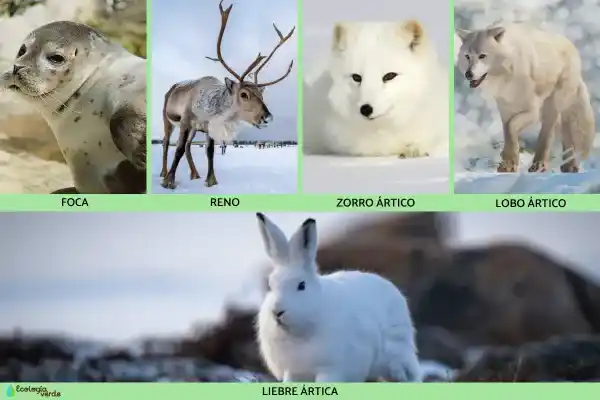
Seals ( Phocoidae ): The primary prey of polar bears.
Reindeer ( Rangifer tarandus ): an important herbivore, also closely related to the lives of local indigenous people.
Arctic fox ( Alopex lagopus ): has thick fur that changes color with the seasons.
Arctic wolf ( Canis lupus arctos ): hunts in packs and is adapted to extreme cold.
Arctic hare ( Lepus arcticus ): adept at camouflage in the snow.
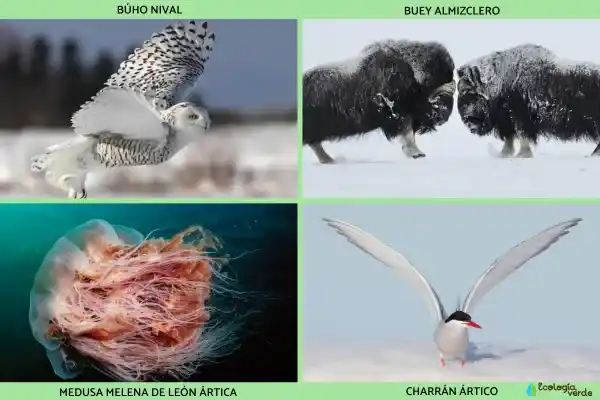
Snowy Owl ( Bubo scandiacus ): Its white plumage allows it to blend perfectly into the snow.
Musk ox ( Ovibos moschatus ): Lives in herds to defend against predators.
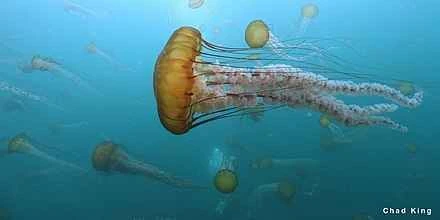
Arctic lion's mane jellyfish ( Cyanea capillata ): One of the largest jellyfish in the world.
Arctic tern ( Sterna paradisaea ): Known for its exceptionally long migration, flying from the Arctic to the Antarctic.
You can continue reading "Endangered Arctic Animals" to learn which Arctic creatures are facing extinction.
Antarctic animals
Unlike the Arctic, Antarctica has almost no land animals; life here depends primarily on the Southern Ocean . Most species here are closely related to the ocean.
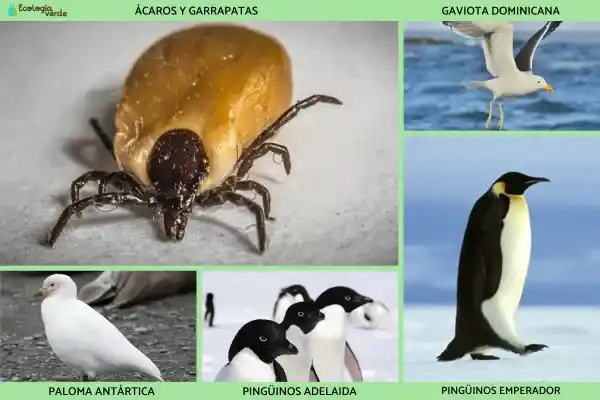
Mites and ticks : the few arthropods that can survive in Antarctica.
Antarctic gull ( Larus dominicanus )
Chionis alba (Antarctic Pigeon )
Adélie penguin ( Pygoscelis adeliae )
Emperor penguin ( Aptenodytes forsteri ): The only penguin species that can breed during the harsh Antarctic winter.
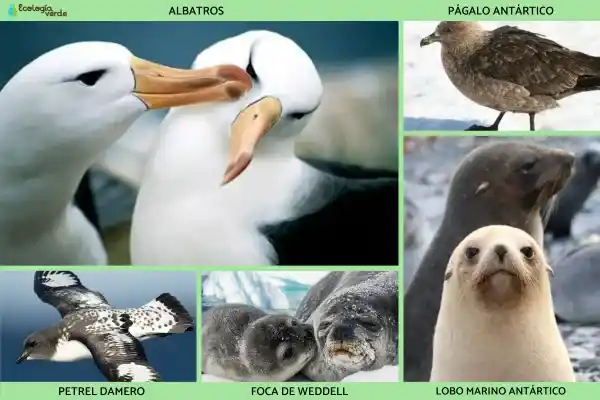
Albatrosses : Known for their large wingspan, they can glide for extended periods.
Antarctic skuas ( Catharanta skua )
Daption capense
Weddell seal ( Leptonychotes weddellii )
Antarctic fur seal ( Arctocephalus gazella )
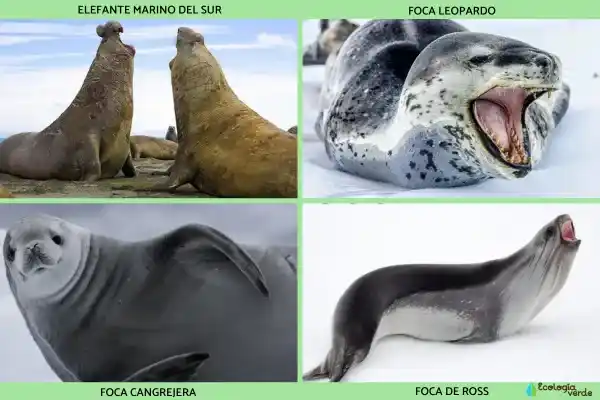
Southern elephant seal ( Mirounga leonina ): Large in size, with males weighing up to several tons.
Leopard seal ( Hydrurga leptonyx ): One of the most ferocious predators in Antarctica.
Crab-eating seal ( Lobodon carcinophagus )
Ross seal ( Ommatophoca rossii )
In addition, some large whales are not permanent residents, but rather migrate seasonally to Antarctic waters :
Blue Whale
Fin whale (common fin whale)
minke whale
Orca
Southern beaked whale
For further information, please refer to the article "Whale Habitat and Food".
Summarize
The Arctic : Represented by polar bears, walruses, reindeer, and Arctic foxes, it boasts a relatively rich diversity of life.
Antarctica : Mainly inhabited by penguins, seals, elephant seals, and albatrosses, life there is almost entirely dependent on the ocean.
Key differences : The Arctic is an icy sea, while the Antarctic is a frozen continent; penguins and polar bears have never met.
Recommended reading:
Antarctic flora and fauna
The Polar Permafrost: Climate, Flora and Fauna
Characteristics and Organisms of Polar Ecosystems