Over the past two weeks, we've compiled a list of noteworthy nature news and research:
1) Humpback whales have swum across three oceans, possibly in search of mates.
2) The longest-living crocodile celebrates its 124th birthday.
3) Corals only reproduce with their neighbors.
4) At what age do dogs begin to age?
5) Sea otters make a great contribution by eating crabs.
6) The most mysterious shovel-toothed beaked whale died from a head injury.

The furthest distance a humpback whale can travel
In search of a mate, a male humpback whale crossed three oceans , breaking the record for the longest distance ever recorded by its species.
This humpback whale swam 13,000 kilometers from the coast of Colombia in the eastern Pacific Ocean to the coast of Zanzibar in the southwestern Indian Ocean. It was first spotted in the eastern Pacific in 2013, and nine years later, it was recognized again in the Indian Ocean by a distinctive indentation on its tail. Coincidentally, when it was sighted, it was in another humpback whale pod, competing with a group of males for mating opportunities with females .
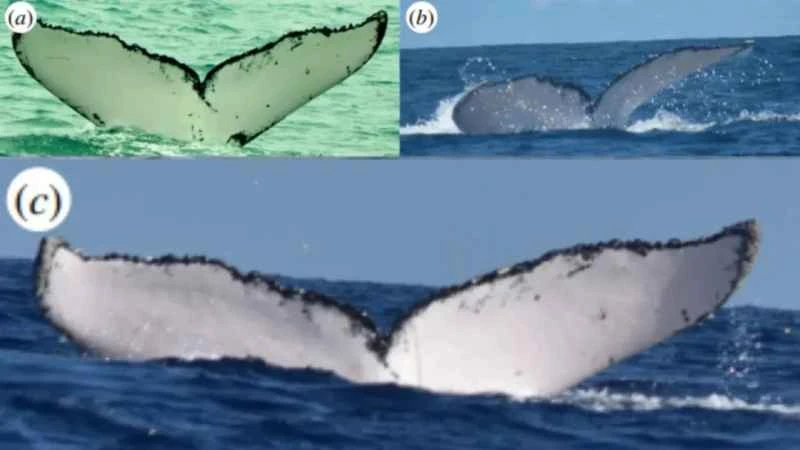
Researchers identified the humpback whale by its tail | Reference [1]
Researchers speculate that this male humpback whale's long journey was in search of a mate—it traversed three oceans, and upon encountering another humpback whale population, it would attempt to mate with the females. Another hypothesis is that changes in climate and environment have altered food distribution, thus affecting the humpback whales' migration routes.
Generally, humpback whales follow a very uniform migration pattern. They move primarily north-south between their feeding grounds near the poles and their breeding grounds in the tropics, sometimes covering distances of up to 8,000 kilometers; however, they rarely swim long distances east-west and seldom mingle with other populations . But the actions of this male humpback whale suggest that their migration patterns may be far more flexible than previously thought.
The longest-living crocodile
Let's wish this crocodile a happy 124th birthday!
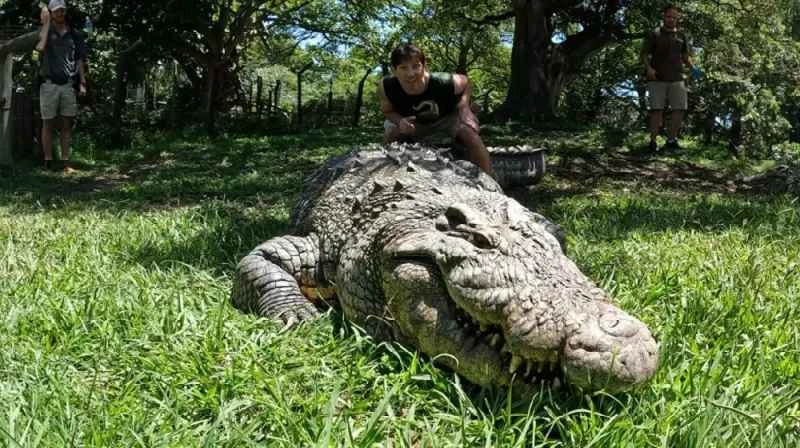
Nile Crocodile Henry | Wild Charles / Facebook
His name is Henry, a Nile crocodile captured in Botswana in 1903, and he has lived in a conservation center in South Africa for nearly 40 years. It is currently believed that Nile crocodiles can live up to 70 years in the wild, and even longer in captivity. Henry's exact birthday is unknown, but according to conservation center staff, he was likely born around 1900, making him the oldest known crocodile in the world . His birthday is celebrated annually on December 16th.
Henry now weighs approximately 700 kilograms and is 5 meters long, making him quite imposing for his age. Even at 124 years old, he remains vigorous and shows no signs of declining physical abilities. His love life is also very colorful— over the past 40 years, he has fathered more than 10,000 offspring with various mates .
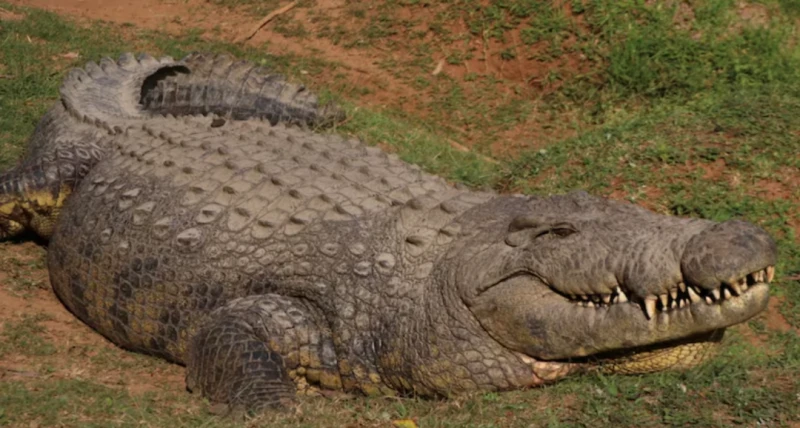
Henry, a man of longevity with a carefree and healthy lifestyle | Crocworld Conservation Centre / Facebook
Why has Henry lived so long? Scientists speculate that the Nile crocodile's gut microbiota may have created a powerful immune system, or proteins in its blood may have strong antibacterial properties, helping it fight infection. Captive living also meant Henry didn't have to worry about food and water, reducing the risk of disease and accidents, which could also extend its lifespan. However, studying the reasons for reptile longevity is not easy . Scientists need to tag them when they are young and then track them throughout their lives—but it's still uncertain whether they or the scientists studying them will live longer!

Corals only reproduce with their neighbors
As the saying goes, "A rabbit doesn't eat the grass near its burrow," but corals can only eat the grass near their burrow when they reproduce.
In a new study, scientists measured the distances between successfully fertilized coral individuals. They placed containers above 26 coral colonies, into which coral eggs could not escape. As the containers drifted with the current, coral sperm would also float in, fertilizing the eggs. After the containers had been floating for an hour, scientists recorded the proportion of fertilized eggs for each coral species and measured the distances between the corals.
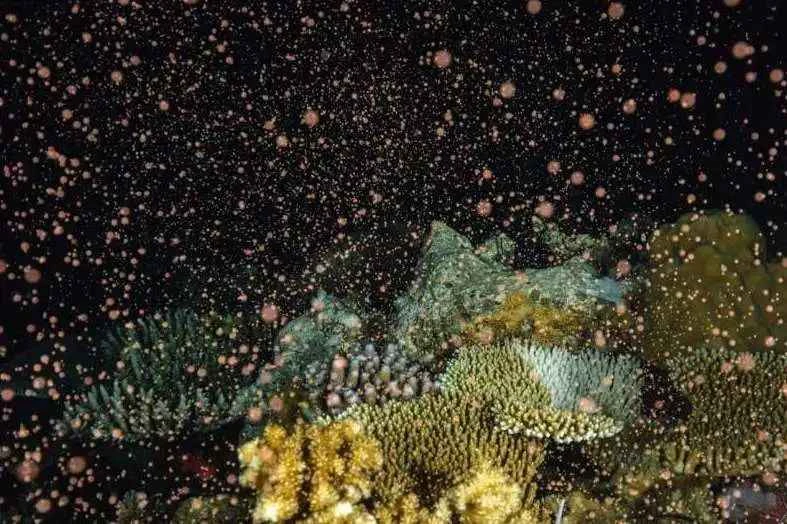
Coral Spawning | Peter Mumby
The study found that corals only reproduce with their nearest neighbors . When the corals are less than half a meter apart, their egg-laying synchronization is very high, with an average fertilization rate of 30%. However, when the distance between corals is around 10 meters, the fertilization rate drops rapidly to below 10%; and when the distance reaches 15-20 meters, fertilization is almost impossible. Weather also affects the success rate of fertilization. If the wind speed is too high, even if the corals are very close together, the fertilization rate is not high—the eggs quickly drift away, and the sperm cannot catch up.
Reproducing only with neighbors is not good news for coral populations. Coral bleaching caused by global warming is killing corals one after another, and their density is decreasing accordingly. Even if they want to reproduce, they may fail because they are too far away from other corals. Fortunately, this research provides a clear goal for coral restoration measures—to detect coral density and strive to restore the density to a critical value so that each coral has a neighbor within easy reach.
Dog aging
At what age are dogs considered to be senior citizens?
To understand this, scientists recently analyzed the medical records of 832 older dogs. They found that, on average, dogs are described as senior dogs by veterinarians at 12.5 years of age . However, this timeframe varies for different breeds: small breeds (such as Jack Russell Terriers) begin aging around 14 years of age, while large breeds (such as Labradors) begin around 12 years of age.

A 15-and-a-half-year-old dog | Tsaag Valren / Wikimedia Commons
This study also analyzed five of the most significant health problems in older dogs based on medical records:
1) Weight problems (accounting for 35%): overweight, underweight, or significant weight gain or loss.
2) Musculoskeletal system problems (33%): muscle stiffness, difficulty in movement, etc.
3) Dental problems (31%): including common tartar buildup leading to periodontal disease.
4) Skin problems (accounting for 28%): skin swelling and pain, infection, or severe hair loss.
5) Digestive system problems (accounting for 22%): including vomiting, diarrhea, etc.
The rate at which dogs age varies, and the health problems that gradually appear with age require more attention from owners. Scientists will use these findings to develop a " senior dog toolkit ," which includes a self-checklist for owners. By checking the checklist, owners can promptly seek veterinary care if they discover any age-related health problems in their dogs, allowing them to live happier and longer lives.
Sea otters have once again made a great contribution.
It was previously discovered that sea otters control sea urchin populations by eating them, thus maintaining the kelp forest ecosystem in the North Pacific. Recently, sea otters have done it again—this time, by eating!
Originally found in Europe, the common shore crab arrived on the west coast of the United States in the 1980s and has since become one of the most destructive invasive species in the region . They prey on juvenile fish and crabs, severely impact fisheries, and disrupt the entire coastline ecosystem, accelerating swamp erosion. Despite millions of dollars invested by various U.S. states in efforts to eradicate the shore crab and reduce its impact on the ecosystem, and encouragement for fishermen to increase their catch, the results have been minimal.
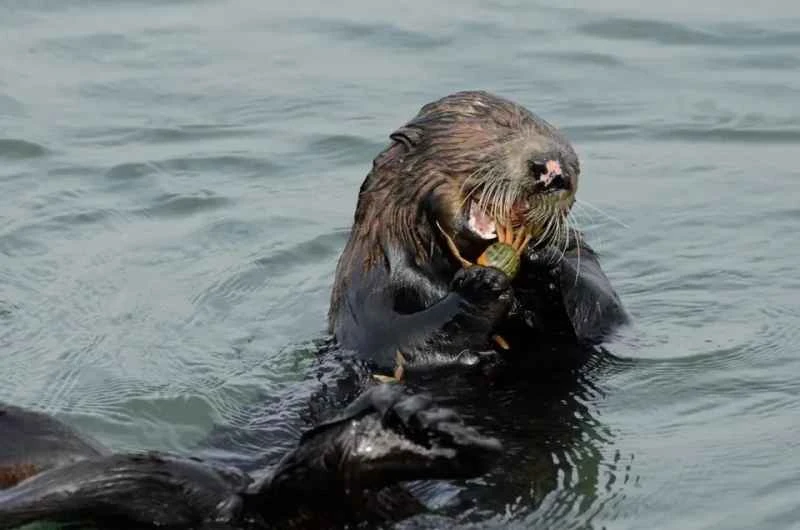
A sea otter is nibbling on a female shore crab covered in eggs | Michael Yang
But in Elkhorn Swamp, the only estuary in California inhabited by sea otters, something amazing has happened. Without human intervention, the crab population has been completely controlled thanks to the sea otters' voracious appetite . Sea otters lack blubber (the subcutaneous fat of marine mammals) for insulation and need to consume 25% of their body weight daily to sustain their energy needs—and crabs are one of their favorite foods. Researchers at the sanctuary estimate that the sea otters here consume 50,000 to 120,000 common shore crabs annually.
Through decades of close monitoring, researchers have found that as sea otter populations recover, even with increased pollution, the rate of coastal erosion in swamps has decreased by 80% to 90%, and some swamps are even expanding. This demonstrates that when we protect key species in an ecosystem, they stabilize the entire ecosystem and reduce significant economic losses for humans—all for free; all they do is happily nibble on crabs.
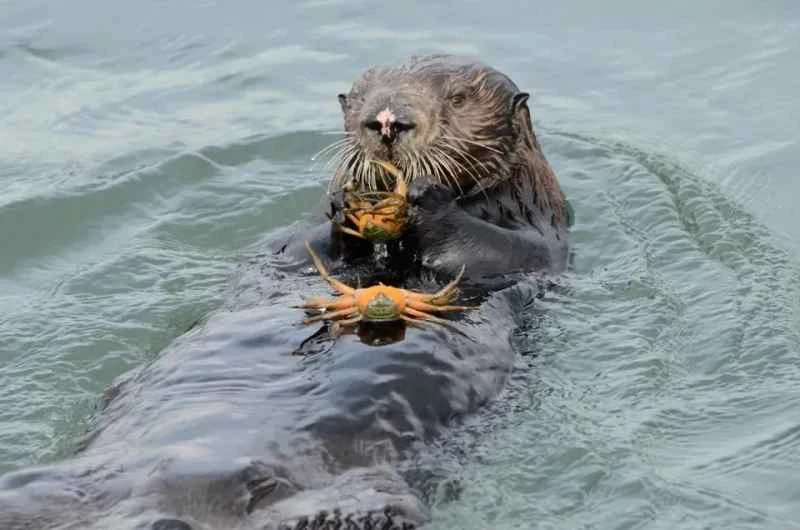
Let's say: Thank you, sea otters! | Michael Yang
The most mysterious whale
We finally have a better understanding of the world's rarest and most mysterious whales.
This whale, called the shovel-toothed beaked whale ( Mesoplodon traversii ), is one of the most mysterious and least understood large mammals in existence. In 1872, a jawbone of a shovel-toothed beaked whale was discovered and the species was reported; since then, no one has ever seen a live shovel-toothed beaked whale in the sea, only a few carcasses have been found stranded on beaches, but most of them were already decomposing.
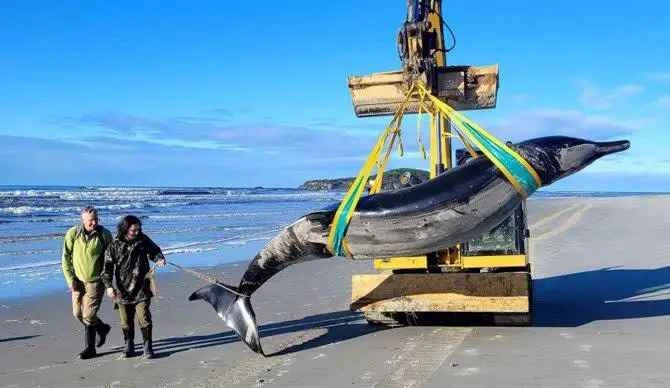
Male shovel-toothed beaked whale that washed ashore in July this year | NZ Dept. of Conservation
In July of this year, the carcass of a 5-meter-long male shovel-toothed beaked whale washed ashore on a New Zealand beach, the first complete specimen ever recorded . Recently, scientists performed an autopsy on the specimen and discovered a fractured lower jaw and bruises on its head and neck, which may have been the cause of its death.
Scientists also discovered that this shovel-toothed beaked whale had nine stomach chambers (most whales only have four), containing undigested squid and parasites. Its upper jaw contained vestigial teeth embedded in its gums, offering a glimpse into the whale's evolutionary history. Scientists also studied structures related to feeding and vocalization, measuring and describing its various organs. This helps us understand this enigmatic whale and speculate on its behavioral habits and lifestyle when it was alive.
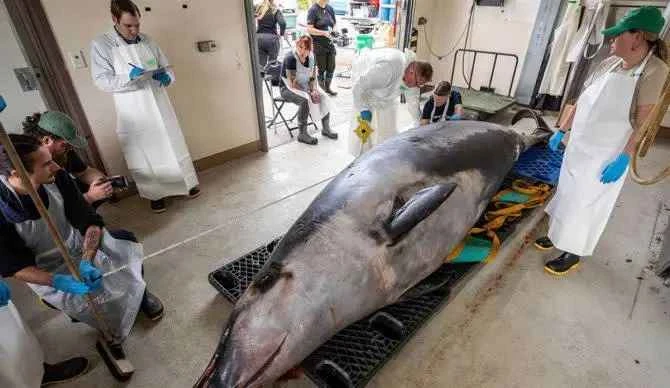
Specimens of the shovel-toothed beaked whale are being documented and analyzed | NZ Dept. of Conservation
After the dissection, scientists will use 3D printing technology to replicate the skeleton and teeth of the shovel-toothed beaked whale and exhibit it in a museum, allowing more people to see this rarest specimen.
References