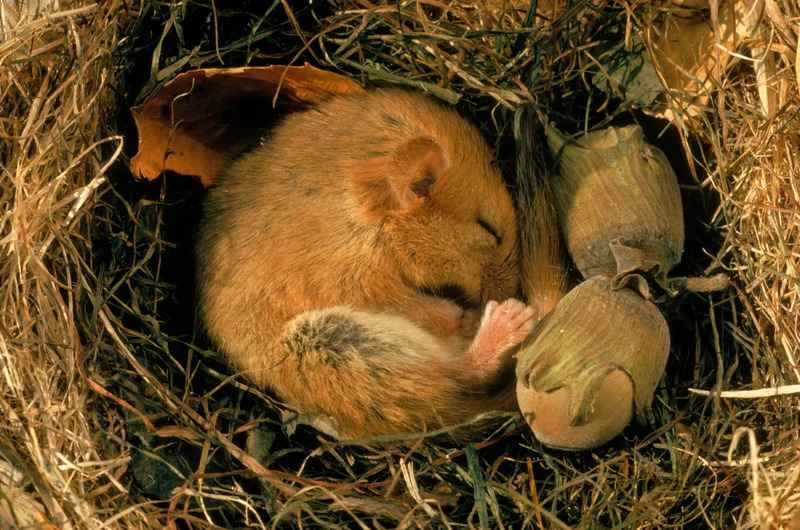
As early as the Chongzhen era of the Ming Dynasty, more than 300 years ago, a man named Zhang Huadong discovered a "monster" embedded in a rock in Dawenkou, Tai'an, Shandong. Its appearance resembled a bat with outstretched wings, so he named it "Bat Stone." In the 1920s, Chinese paleontologists conducted scientific research on the "Bat Stone" and finally determined that it was actually the tail of a trilobite. This trilobite lived in the Late Cambrian period, 500 million years ago, and was a type of arthropod in the ocean. To commemorate the first name given to a trilobite in the world, Chinese scientists retained the Chinese name for this trilobite, translated from its Latin name, as "Bat Stone" or "Bat Worm."
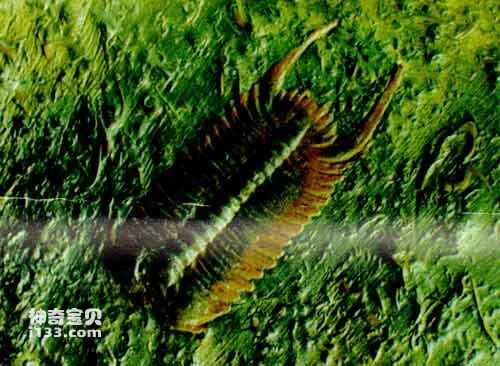
trilobite
The earliest record of trilobites studied abroad dates back to 1698. At that time, Rudd named a trilobite fossil with three round tubercles on its head "Trilobite". In 1771, Walch gave a fitting name to this animal based on its morphological characteristics, namely that its body could be divided into three parts in both directions: longitudinally into the head, thorax and tail, and laterally into the central axis and the lateral lobes on both sides.
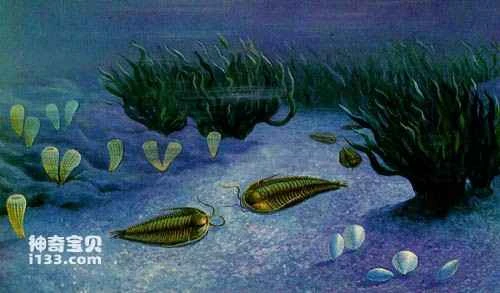
The Cambrian Trilobite World
In animal taxonomy, trilobites belong to the phylum Chordata, class Trilobites. They lived in ancient oceans, mainly appearing in the Cambrian period and reaching their peak in the Late Cambrian. Afterward, trilobites declined from their zenith, becoming extinct at the end of the Permian period, without entering the Mesozoic era. Throughout the more than 300 million years of the Paleozoic era, trilobites thrived, giving rise to numerous groups and a vast population, totaling more than 1,500 genera and over 10,000 species, of which approximately 500 genera have been discovered in my country.
Trilobites are mostly oval or elliptical in shape, but their sizes vary considerably. The *Ura-ribbed trilobite*, discovered in Ordovician strata in Portugal, is one of the largest trilobites, reaching up to 70 centimeters in length. Tiny trilobites such as *Gymnodontia* and *Gymnodontia* are less than 6 millimeters long. Common trilobites are generally 3 to 10 centimeters long and 1 to 3 centimeters wide. Those exceeding 20 centimeters are considered large. A 30-centimeter-long *Ledeliki* was once discovered in Early Cambrian strata in Kunming, my country.
Trilobite fossils are widely distributed throughout the world, making them crucial for stratigraphic analysis. However, many genera and species of trilobites also possess local characteristics, thus playing a significant role in defining marine zones at that time and reconstructing the biogeographical regions of that era.
Although trilobites lived a long time ago, scientists have a fairly comprehensive understanding of their morphology, structure, and other characteristics. The main reasons for this are as follows: First, trilobites were covered in a sturdy exoskeleton and underwent multiple molting processes during their development, resulting in a greater number of fossils left in strata than those of other organisms. Second, few animals larger or more ferocious than trilobites coexisted with them in the Cambrian oceans, allowing them to reproduce rapidly and spread widely. Furthermore, most trilobite fossils are preserved in fine-textured limestone or shale, so not only can the features of their exoskeletons be clearly observed, but sometimes their internal structures can also be clearly seen.
The main characteristics of trilobites are reflected in their exoskeleton structure, with a centrally located "saddle" on their head, possibly housing the brain. The surface of the saddle can be smooth and unadorned, or dotted with spots, and some have a varying number of transverse grooves called "saddle grooves." On either side of the saddle, there are usually pairs of eyes. Along the front and back of the eyes is a groove called the "facial suture," which is where the trilobite molts and emerges from its body during development. At the front of the ventral side of the head are a pair of segmented palps, which serve as both organs of movement and sensory organs. Behind the palps is the mouth, usually covered by a "lip." On either side of the mouth are numerous small, segmented appendages, covered with fine cilia, presumably for respiration.
Trilobites have segmented thoraxes, ranging from a dozen to just two. These segments are connected by overlapping structures (like roof tiles), facilitating curling and movement. Numerous segmented appendages with cilia on their ventral sides serve as both locomotion and respiration. Like the thorax, the tail of a trilobite is longitudinally divided into a central axis and lateral costal lobes, exhibiting diverse forms; the edges of the tail may be barbed or smooth.
Trilobites exhibited diverse lifestyles, with the most common fossils preserved in limestone or shale, indicating that they mostly lived on shallow seabeds or moved on silt. Some were capable swimmers, while others drifted with the current. The toothed worms of the Middle Silurian period were almost entirely surrounded by dense, long spines. These spines served as powerful propulsion for swimming, suggesting they were adept swimmers; simultaneously, they were also effective weapons against predators. This type of trilobite primarily appeared from the Ordovician to the Devonian periods. At that time, nautiloids, eurypterids, and fish, which coexisted with them, were formidable enemies. Without enhancing their swimming abilities and defensive weapons, how could trilobites have survived and reproduced in that highly competitive environment?
Some trilobites in the Ordovician period, such as gem beetles, squint beetles, and cryptids, also developed the ability to curl up. Their heads and tails could be completely joined together, with only the hard shell on their backs exposed. They could also burrow into the mud to protect their soft abdominal organs. This made it easier to defend against enemies and also allowed them to propel themselves forward by stretching and bending in a manner similar to that of inchworms.
Scientists typically study the ontogeny of trilobites by collecting specimens from the same stratigraphic layer at different growth stages of the same species. Trilobite ontogeny is broadly divided into three stages: juvenile, middle-aged, and adult. In the juvenile stage, the head and tail are not yet distinct, and there are no thoracic segments; the diameter is approximately 0.24–1.3 mm. In the middle-aged stage, the head and tail have separated, and the thoracic segments have developed, but the number of segments is one less than in the adult stage. In the adult stage, the number of thoracic and tail segments increases to its maximum, the body enlarges, and appendages such as spines and tubercles appear on the exoskeleton.
Since their emergence in the Early Cambrian, trilobites underwent gradual changes in their main structural features throughout their evolution. These changes can be summarized as follows: 1. Changes in the morphology of the head saddle: In the early Cambrian, the head saddle of primitive trilobites was mostly elongated conical with inconspicuous protrusions. Later, in the Middle Cambrian, the head saddle gradually shortened, becoming more parallel on both sides, eventually becoming cylindrical, and in some cases even spherical. In the Late Cambrian and beyond, the boundary between the head saddle and the cheeks on either side became unclear. 2. Changes in the location of the posterior branch of the facial suture: In early trilobites, the posterior branch of the facial suture (the segment of the facial suture behind the eyes) often intersected with the posterior edge of the head or the cheek angles; in later types from the Ordovician onwards, it often intersected with the lateral edges of the head. 3. Changes in the eyes: The eyes of some trilobites were initially crescent-shaped, gradually decreasing in size and eventually disappearing. Another type of trilobite has well-developed compound eyes, where the eyes gradually increase in size and eventually develop eyestalks, with the eyes located at the top of these prominent eyestalks. Many Silurian trilobites belong to this category. 4. Changes in the spines around the body: Cambrian and Ordovician trilobites rarely had spines, while Silurian and later types had more spines, which were also more complex than those of earlier periods. 5. Trends such as fewer thoracic segments, larger tails, and fewer transverse grooves on the head saddle are also observed in many types of trilobites.