In an aquarium, the colorful fish and the myriad of other aquatic animals will surely dazzle and overwhelm you. However, you'll definitely linger for a long time in front of some brightly colored, star-shaped creatures because they are so unique—while other animals have bilateral symmetry, these animals are so different. A closer look at the labels will reveal that they are starfish, belonging to the phylum Echinodermata, and this unique body shape is known by scientists as pentaradial symmetry.
sea cucumber
Echinoderms all live in the sea. Scientists have discovered through dissection that they possess an extremely complex "water vascular system" inside their bodies. The ends of this system typically form tube feet, which perform various functions such as locomotion, feeding, sensation, respiration, and nest building. Echinoderms also have an endoskeleton formed from secretions from the mesoderm. Their bony plates and the outer membrane covering them are covered with spines or tubercles of various shapes, hence the name "echinoderms."
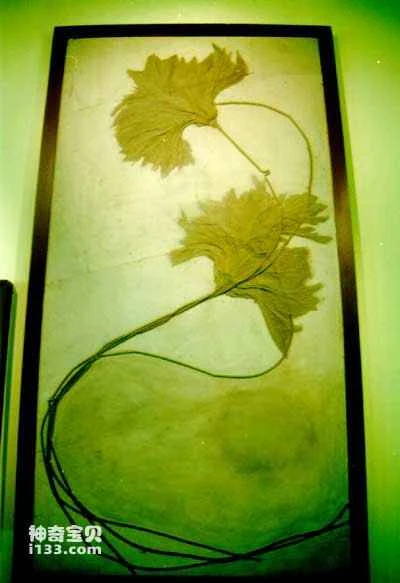
sea lily
In fact, the five-pointed star-shaped, pentagonally symmetrical animals we see are adult echinoderms. Even in their larval stage, echinoderms are bilaterally symmetrical. Based on this, along with other physical characteristics and embryonic development features, scientists believe that echinoderms and chordates may have evolved from a common ancestor. That is to say, echinoderms are the most advanced phylum of invertebrates, and they are most closely related to the phylum Chordata, to which our vertebrates belong. Echinoderm larvae develop from bilaterally symmetrical trochophore larvae into pentagonally symmetrical adults, a transition from a planktonic lifestyle to a sessile or largely immobile one. Some species, such as sea cucumbers, retain bilateral symmetry in their adult form, but their internal structures exhibit pentagonal symmetry.
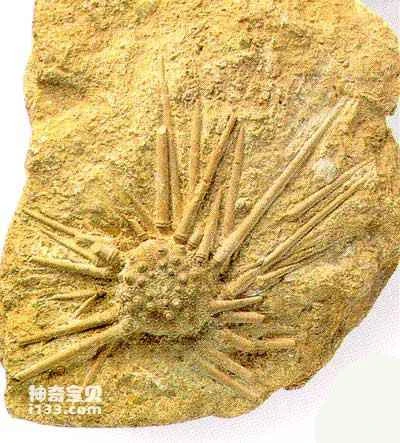
sea urchin
Echinoderm fossils have been found as early as the Cambrian period, and they remain abundant today. Scientists have estimated that there are approximately 20,000 species of extant and fossil echinoderms, representing about 2% of all animals. Of these, about 5,000 are extant. Among fossil echinoderms, crinoids and sea urchins are more numerous, while starfish fossils are less common. Scientists classify echinoderms into four subphyla: sea urchins, sea licorice, crinoids, and starfish. The subphylum Ulva includes 7 classes: Ulva, Ulva, Ulva, Ulva, Ulva, Ulva, Ulva, and Ulva; the subphylum Pliocybe includes 3 classes: Ulva, Ulva, and Ulva; the subphylum Crinoidea includes 8 classes: Crinoidea, Crinoidea, Crinoidea, Crinoidea, Crinoidea, Crinoidea, and Crinoidea; the subphylum Starfish has only one class: Starfish.
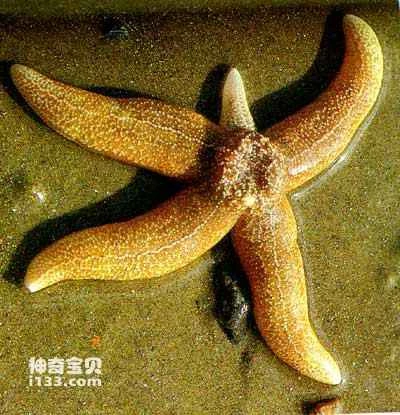
starfish
Echinoderms clearly have an extremely long evolutionary history, as numerous structurally complex echinoderms appeared as early as the beginning of the Early Paleozoic, proving that their origins predate the Cambrian. At the beginning of the Early Cambrian, sea spirochetes, sea spirochetes, and early crinoids appeared; subsequently, sea pupae and lepidopterans also appeared; from the Late Cambrian to the Early Ordovician, sea arrowheads, crinoids, starfish, and sea serpentines appeared; by the Middle to Late Ordovician, all other echinoderms, such as sea nymphs, appeared. Since then, in the long span of time until today, no new classes of echinoderms have been discovered. In fact, most classes of echinoderms became extinct at the end of the Paleozoic, with only a few surviving into the Mesozoic and continuing to the present day.