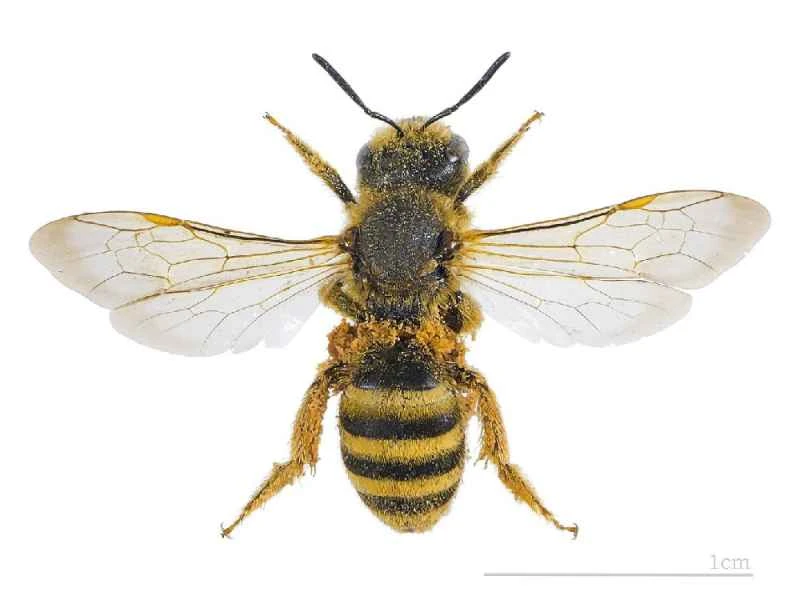
Mollusks are a very large and diverse group of invertebrates, with over 120,000 species discovered, including modern and fossil specimens, making them the second largest group in the animal kingdom after arthropods. Mollusks are highly adaptable and therefore widely distributed, with numerous members found in terrestrial, freshwater, and saltwater environments. Snails, clams, conches, and squid are some familiar examples.
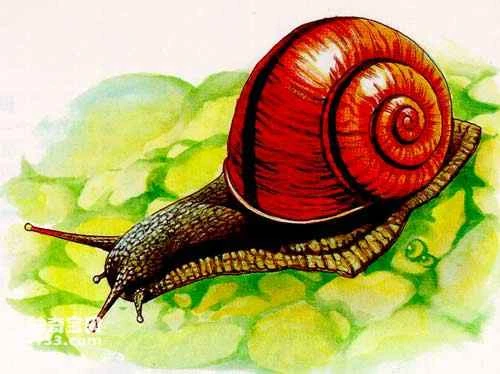
snails
Although various mollusks differ in form and habits, they share many similar basic characteristics: soft bodies, most of which are unsegmented, generally divided into four parts: head, foot, visceral mass, and mantle. The mantle usually secretes a hard, calcareous shell to protect the body. Because the shape of the mantle varies among species, the shells of different mollusks also vary greatly. However, except for most adult gastropods, their shells are bilaterally symmetrical. Scientists have classified mollusks into 10 classes based on these differences in shell and soft body structure: Monoplateria, Polyplateria, Aplatenria, Gastropoda, Scaphida, Bivalvia, Rhabdoidea, Cephalopoda, Bambusopoda, and Hylothorax.
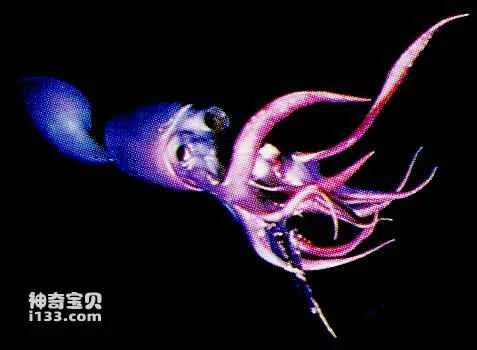
squid
Monoplacocephala mollusks are characterized by shells shaped like hats or spoons. They appeared as early as the Early Cambrian period and have continued to thrive to the present day; the modern pyrenoidosa is a prime example.
Polyplacoidea are bilaterally symmetrical, oval-shaped animals with a dorsal shell composed of eight bony plates. They appeared in the Late Cambrian period and continued to exist into the modern era.
Platycladus lack bony plates or shells, and their bilaterally symmetrical bodies resemble worms. However, their bodies are covered with a keratinous exoskeleton with calcareous, needle-like spines, which provides some protection. There are no fossil representatives of platycladus; modern examples include sea hares.
Gastropods are a class of mollusks that we are very familiar with; snails, river snails, and conches are all members of this class. Their soft bodies and shells twist during individual development, resulting in a single-helix shell shape. Gastropods appeared as early as the Cape of Good Hope period and have continued to thrive to the present day, distributed in terrestrial, marine, and freshwater environments.
Nautilus
The shells of scutopods resemble slender tubes, open at both ends and symmetrical on both sides. Scutopods appeared from the Ordovician period and have continued to the present day; representative animals include horned mollusks.
Bivalves are also familiar mollusks, including freshwater clams, sea fans, mussels, and most of the shells we can find on the beach. They are characterized by having two valves with a hinge between them; their soft body lacks a prominent head, and they have a foot on their ventral side. Bivalves have been distributed in both oceans and freshwater on Earth from the Cambrian period to the present day.
The shells of the Rhabranchidae class also appear to have two lobes, but they lack a hinge structure; their shells are actually single shells in a "pseudo-bival" form. They are extinct ancient organisms that lived only from the Cambrian to the Ordovician periods, and are represented by species such as the Hailart shell.

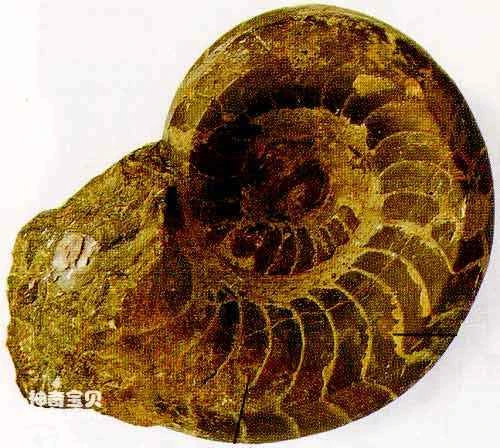
ammonite
Cephalopoda is the most developed and advanced class within the phylum Mollusca, encompassing nautiloids, skeletaloids, ammonites, belemnites, and modern octopuses and squid, all of which flourished and played a significant role in geological history. They are all marine carnivores, adept at crawling on the seabed or swimming in the water. Cephalopods are bilaterally symmetrical, with a prominent head positioned at the front of the body, large, well-developed eyes on either side, and a mouth in the center containing keratinous jaws; a ring of arms surrounds the mouth for capturing other animals. Some cephalopods have an outer shell, some an internal shell, and some have no shell at all. The evolutionary history of cephalopods is also very long, spanning from the Cambrian period to the present day.
Bambuseoids are a class of ancient mollusks with radial symmetry and a single conical shell, distributed from the Ordovician to the Devonian periods, and are represented by species such as Bambuseoids.
Hylocereus is also a class of ancient mollusks with a single conical shell, but they are bilaterally symmetrical and distributed from the Cape of Good Hope to the Ordovician period, represented by species such as Hylocereus.