Algae are a lower form of plant. They are incredibly diverse, with an estimated 18,000 species belonging to the green algae, diatoms, golden algae, red algae, and brown algae groups. They are widely distributed in various bodies of water on Earth.
Algae have cell walls composed of cellulose, which is an important characteristic of them as plants.
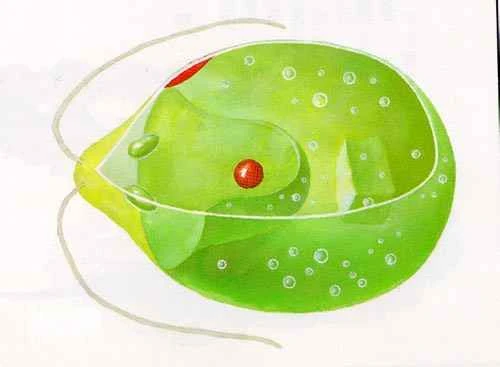
Chlamydomonas
Primitive green algae such as Chlamydomonas are single-celled plants with eyespots and two flagella, enabling them to move and reproduce via vegetative cells. During geological history, these primitive green algae evolved into more advanced green algae and other types of algae.
Green algae are widely distributed in slow-moving, shallow freshwater areas, with only a few species found in the ocean. Some green algae also live on soil surfaces and tree bark, while others form lichens in symbiosis with fungi. Some green algae can even form symbiotic relationships with animals; for example, the green hydra is green because it lives in symbiosis with single-celled green algae.
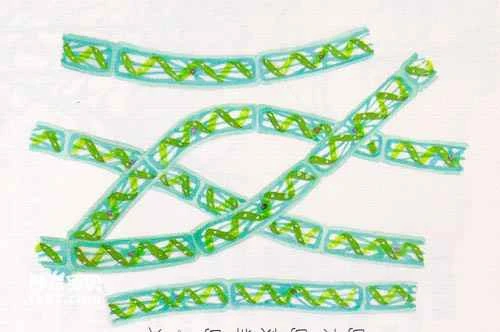
Spirogyra
Green algae exhibit a wide variety of morphologies and structures. Chlamydomonas, Protococcus, and Chlorococcus are unicellular, while Spirogyra, Scenedesmus, Erythrococcus, Hydrocotyle, and Volvox are multicellular organisms. More advanced green algae, such as Ulva and Ulva prolifera, form sheet-like or tubular structures from cell groups. Some green algae, like Tubulococcus, have multiple nuclei within a single cell; others, like Chara, exhibit preliminary differentiation in their morphology, such as the whorled branching of Chara.
Green algae are diverse, widely distributed, and reproduce rapidly, constituting the main primary producers in various aquatic environments on Earth. They utilize sunlight and inorganic nutrients in the water to synthesize organic matter from carbon dioxide through photosynthesis, playing a vital role in the energy flow and material cycle of the entire aquatic ecosystem.
The photosynthetic pigments and structural proteins of photosynthetic lamellae in green algae are the same as those in higher plants, so scientists believe that higher plants originated from green algae.
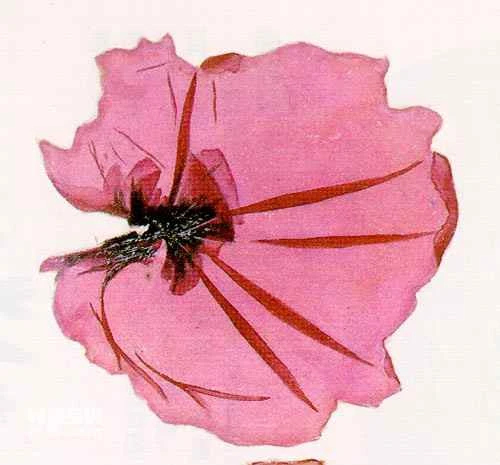
seaweed
Golden algae and diatoms have yellow to golden-brown thalli. This is because although their chromophores contain chlorophyll a, they also contain more β-carotene and fucoxanthin, which is similar to lutein. The latter two pigments are present in larger quantities, which makes the thalli more yellow.
Golden algae encompass a wide variety of species, some being single-celled while others are poorly differentiated cell populations. Some species have flagella, while others do not.
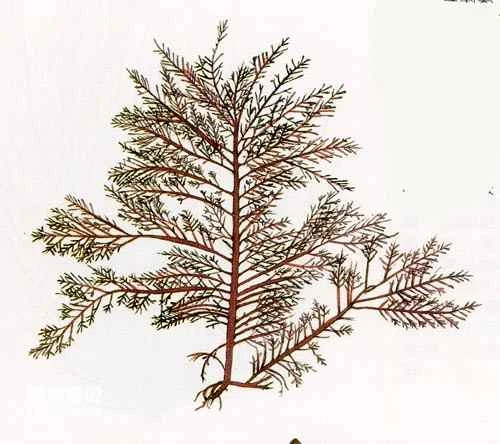
agar-agar
Diatoms have cell walls containing silica, and their cells are box-shaped, typically consisting of two overlapping shells. Silica deposits on these shells form various patterns. Diatoms are diverse, but all are single-celled phytoplankton or benthic plants. Diatoms have a high reproductive rate and strong photosynthetic capacity, making them important producers in aquatic environments, especially the ocean. Marine diatom reproduction exhibits significant seasonal variations. Furthermore, because diatom shells contain large amounts of insoluble or indigestible silica such as calcium silicate and silicon dioxide, the accumulated shells left on the seabed after their death can form diatomaceous earth.
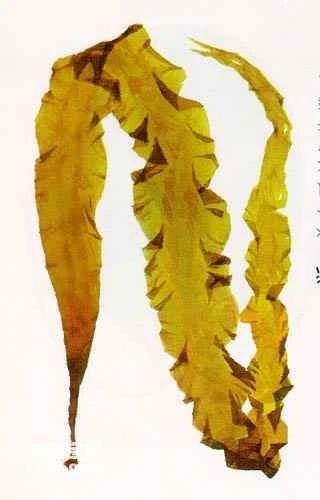
kelp
Red algae can be filamentous, sheet-like, or dendritic. The vast majority live in the ocean, and their cells have relatively strong cell walls, containing a high proportion of cellulose. The cell groups are encased in a gelatinous substance. Red algae cells contain chromoplasts, including chlorophyll a and b, as well as α-carotene, xanthophyll, and a large amount of phycoerythrin. The varying combinations of these pigments in different red algae give the algae their purple, purplish-red, or red color. Phycoerythrin is unique to red algae. Laminaria japonica, which we often eat, and Gracilaria, used to make agar, are both red algae.
Brown algae are all marine algae, with more than 1,500 species. They are all large or relatively large in size. For example, kelp, which is often eaten by humans, can grow to 2 to 4 meters in length. Giant kelp is figuratively called "forest in the sea". The sea area where Sargassum grows is called Sargassum Sea, and ships have to avoid it.
Brown algae contain a high amount of lutein, which gives them a brownish-yellow color; hence, they are also known as brown algae.