Reptiles are a group of animals widely distributed across the globe. However, according to data from the International Union for Conservation of Nature (IUCN) Red List, there are currently 658 species of reptiles endangered worldwide, and another 368 species critically endangered. This article will take you into depth to some representative endangered reptiles and explore the responsibilities humans bear and the possibilities for their rescue.
Introduction to representative endangered reptiles
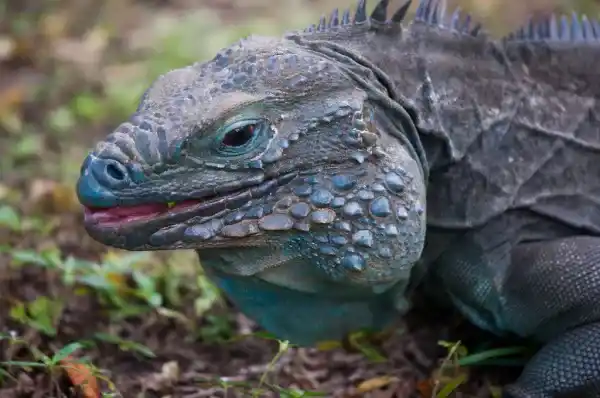
1. Blue iguana (Cyclura lewisi)
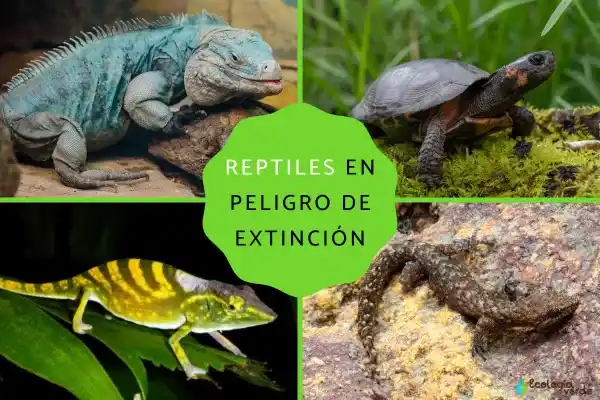
The blue iguana is a lizard species endemic to the Cayman Islands. Although once on the verge of extinction, thanks to the Blue Iguana Recovery Program launched in 2002, the adult blue iguana population has now recovered to 443. Scientists hope that the population will achieve stable growth over the next three generations.
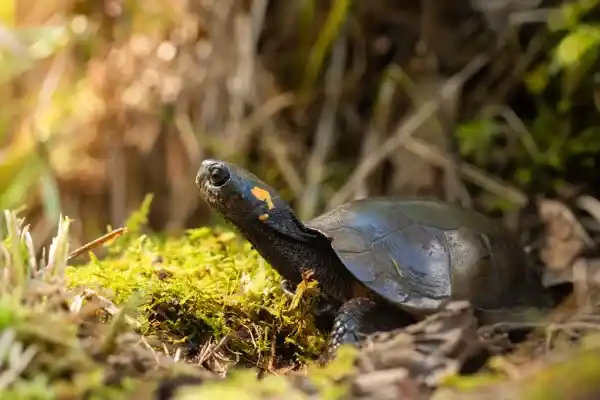
2. Swamp turtle (Glyptemys muhlenbergii)
Swamp turtles are endemic to the United States, and their population has declined by 50% in the past 20 years. Currently, 85% of individuals live on private land, and their survival is severely threatened by the illegal trade.
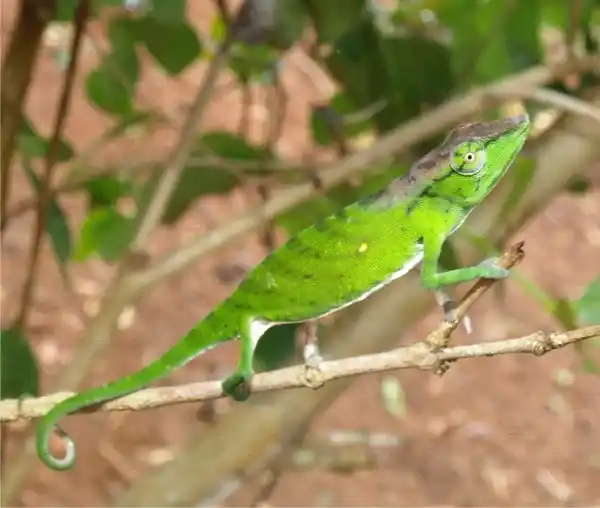
3. Tarzan Chameleon (Calumma tarzan)
This species, named after a Disney character, is endemic to eastern Madagascar and now exists in only two small, fragmented populations. It faces critical endangerment due to deforestation destroying its habitat and hindering gene flow.
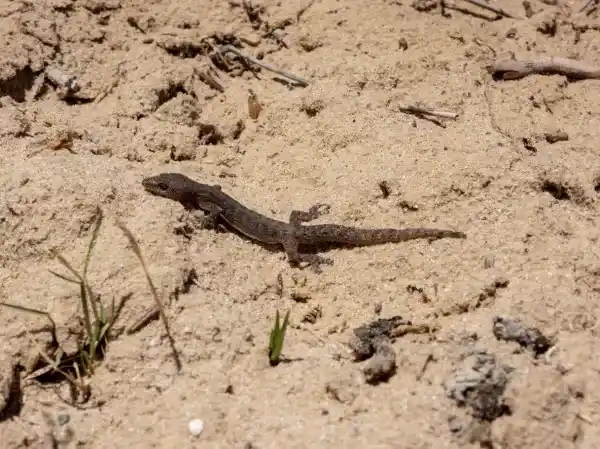
4. Marble Gecko (Oedodera marmorata)
Marble geckos are found on the islands of New Caledonia, where they face a survival crisis due to nickel mining and the illegal pet trade. They are characterized by large eyes and feet, a flat body, and a lack of spines and head ornamentation.
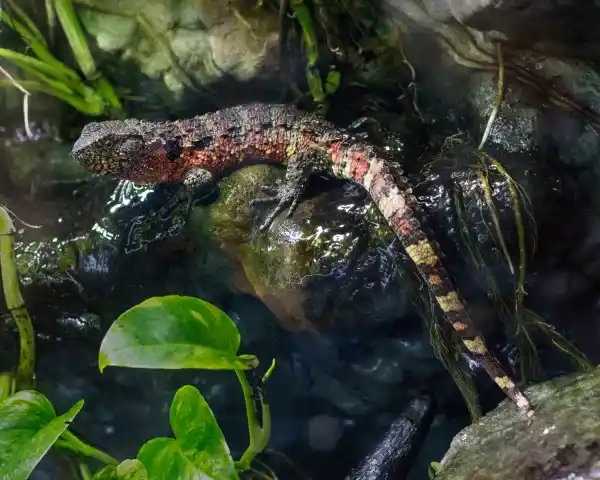
5. Crocodile Lizard (Shinisaurus crocodilurus)
A semi-aquatic lizard native to China and Vietnam, it is now extinct in Hunan Province. If not kept moist, it becomes unresponsive and vulnerable to predation, and is now listed as an endangered species.
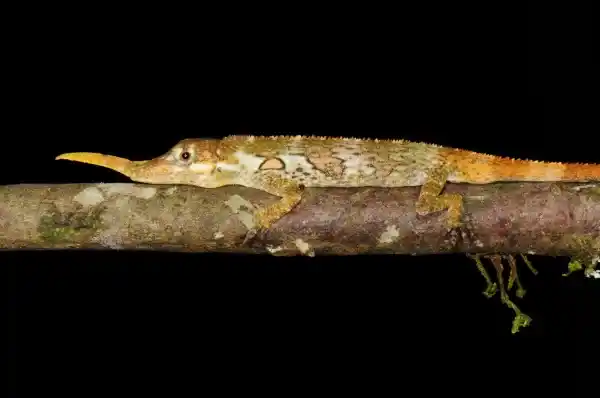
6. Mindohorn-nosed Chameleon (Anolis proboscis)
Living in the cloud forests of Ecuador, this species was once thought to be extinct, but surviving individuals were later discovered in the canopy. It is characterized by a long, pointed snout and an exceptionally long tail. Despite its scarcity, there is still hope for population recovery.
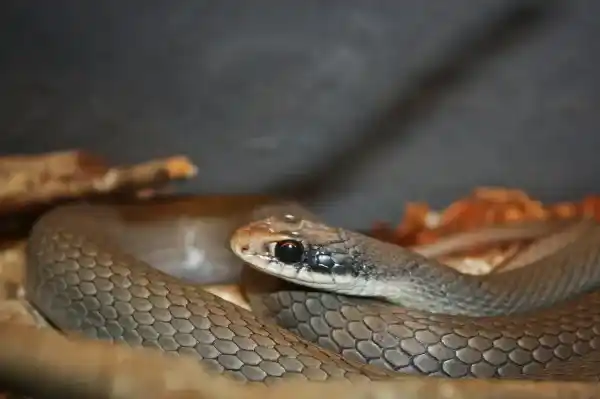
7. Gray snake (Hemiaspis damelii)
A small venomous snake native to Australia, measuring only 50-70 centimeters in length. Its numbers are declining rapidly due to habitat fragmentation and the impact of human activities.
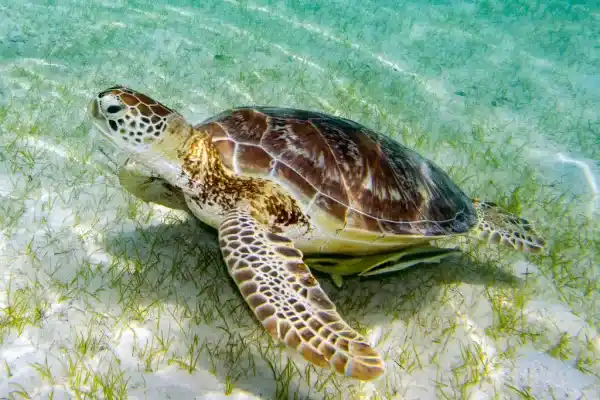
8. Green sea turtle (Chelonia mydas)
Green sea turtles are widely distributed in tropical and subtropical regions around the world. However, due to the illegal hunting of their eggs and meat, their populations have disappeared in many places (such as the Cayman Islands, Mauritius, and Israel), and they are listed as endangered.
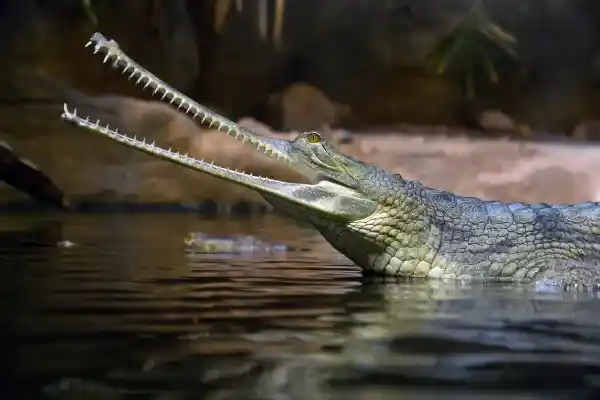
9. Ganges Crocodile (Gavialis gangeticus)
The gharial is a long-snouted crocodile found only in Bangladesh, India, and Nepal, and is extinct in Bhutan, Myanmar, and Pakistan. They primarily feed on fish, and although endangered, their population is recovering thanks to the efforts of protected areas and national parks.
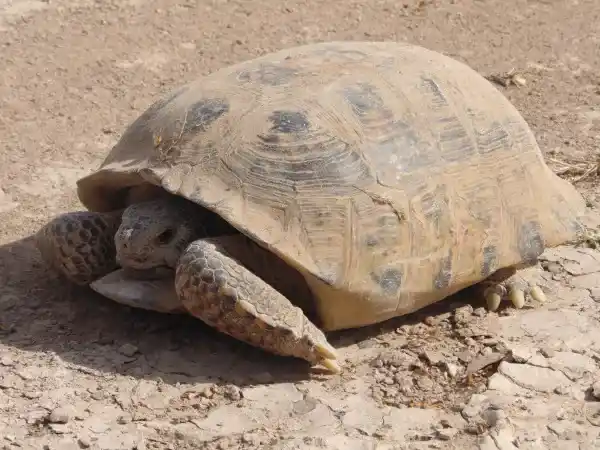
10. Savannah Tortoise (Gopherus flavomarginatus)
This species is a tortoise endemic to the Chihuahua Desert in Mexico. It is currently critically endangered due to climate change, earthquakes, and overhunting by humans since the Pleistocene.
Other endangered reptiles (selected list)
In addition to the species mentioned above, dozens of other reptile species are also at risk of extinction, including but not limited to:
Galapagos pink iguana (Conolophus marthae)
Cuban crocodile (Crocodylus rhombifer)
Chinese alligator (Alligator sinensis)
Caribbean iguana (Cyclura pinguis, Cyclura collei)
Cape Verde giant tortoise (Chelonoidis darwini, Chelonoidis hoodensis)
South American Orinoco crocodile (Crocodylus intermedius)
Bravoana monitor lizard (Gallotia bravoana)
More than 50 species, including various Asian and African freshwater turtles, lizards, chameleons, geckos, and venomous snakes.
Main reasons for the endangerment of endangered reptiles
1. Habitat destruction
One of the most serious threats from human activities is agricultural expansion and urban development, which damage native ecosystems such as forests, wetlands, and rivers, severely impacting reptile habitats.
2. Illegal wildlife trade
Brightly colored and uniquely shaped reptiles are often smuggled as pets, and illegal capture and transnational trafficking are rampant.
3. Invasive alien species
Invasive animals such as wildcats and invasive ants prey on reptile eggs or larvae, causing the decline of native populations.
4. Climate Change and Natural Disasters
Drought, torrential rain, fire, earthquake, and other factors can all affect the reproduction, migration, and survival of reptiles.
Why must we save reptiles?
Reptiles are an essential part of ecosystems. They are not only a crucial link in the food chain but also play a vital role in controlling pests and diseases and maintaining ecological balance. Their disappearance could trigger a chain reaction throughout the entire ecosystem, impacting our own living environment. Therefore, we must raise awareness of conservation, eradicate illegal trade, promote global cooperation, and save endangered reptiles!
If you would like to learn more, please continue to follow our website "Animal Encyclopedia," where we will continue to share professional knowledge and the latest developments regarding endangered animal conservation.
References
IUCN. (2021). Critically Endangered and Endangered Reptiles. IUCN Red List of Threatened Species. 2021-2. Accessible at: https://www.iucnredlist.org.
References
Burton, FJ (2012). Lewisite. IUCN Red List of Threatened Species 2012: e.T44275A2994409. Accessible at: https://dx.doi.org/10.2305/IUCN.UK.2012.RLTS.T44275A2994409.en
van Dijk, PP (2011). Mullenberg turtle. IUCN Red List of Threatened Species 2011: e.T4967A97416755. Available in en: https://dx.doi.org/10.2305/IUCN.UK.2011-1.RLTS.T4967A11103317.en
Jenkins, RKB, Andreone, F., Andriamazava, A., Anjeriniaina, M., Brady, L., Glaw, F., Griffiths, RA, Rabibisoa, N., Rakotomalala, D., Randrianantoandro, JC, Randrianiriana, J., Randrianizahana, H., Ratsoavina, F. & Robsomanitrandrasana, E. (2011). Karuma Taishan. IUCN Red List of Threatened Species 2011: e.T193482A8862229. Accessible at: https://dx.doi.org/10.2305/IUCN.UK.2011-2.RLTS.T193482A8862229.en
Sadlier, RA, Bauer, AM, Jourdan, H., Astrongatt, S., Deuss, M., Duval, T., Bourguet, E., McCoy, S., Bouteiller, A. & Lagrange, A. (2021). Marbled carpenter ant. IUCN Red List of Threatened Species 2021: e.T176174A123253917. Accessible at: https://dx.doi.org/10.2305/IUCN.UK.2021-2.RLTS.T176174A123253917.en
Nguyen, TQ, Hamilton, P. & Ziegler, T. (2014). *Shinisaurus crocodilurus*. IUCN Red List of Threatened Species 2014: e.T57287221A57287235. Accessible at: https://dx.doi.org/10.2305/IUCN.UK.2014-1.RLTS.T57287221A57287235.en
*Arteaga-Navarro*, *A.*, *Mayer*, *GC*, *Poe*, *S.* & *Cisneros-Heredia*, *DF* (2019). *Anolis proboscis*. 2019 IUCN Red List of Threatened Species: e.T178727A18975861. Accessible at: https://dx.doi.org/10.2305/IUCN.UK.2019-2.RLTS.T178727A18975861.en
Vanderduys, E., Wilson, S., Hobson, R., Venz, M. & Sanderson, C. (2017). *Hemiaspis damelii*. IUCN Red List of Threatened Species 2017: e.T102709908A102709925. Accessible at: https://dx.doi.org/10.2305/IUCN.UK.2017-3.RLTS.T102709908A102709925.en
Seminoff, JA (Southwest Fisheries Science Center, USA). (2004). Green sea turtle (Chelonia mydas). IUCN Red List of Threatened Species 2004: e.T4615A11037468. Accessible at: https://dx.doi.org/10.2305/IUCN.UK.2004.RLTS.T4615A11037468.en
Lang, J, Chowfin, S. and Ross, JP (2019). Ganges River Dolphin (Gavialis gangeticus). IUCN Red List of Threatened Species 2019: e.T8966A149227430. https://dx.doi.org/10.2305/IUCN.UK.2019-1.RLTS.T8966A1