Vultures are large birds of prey that primarily feed on scavenging carcasses, playing a crucial "scavenger" role in the ecosystem. However, since Darwin, they have often been misunderstood and disliked for their foraging methods, described as "disgusting." In reality, however, vultures possess a remarkable series of morphological adaptations perfectly suited to this unique way of life.
This article will introduce you to 11 major types of vultures and their characteristics, helping you to rediscover these awe-inspiring aerial cleaners.
Basic characteristics of vultures
Carrion feeding habits : Vultures feed on the carcasses of dead animals, so their beaks are hooked and adapted to tearing away carrion, but their claws are blunter than those of eagles because they do not need to catch live prey.
Bare head and neck : Most vulture species have no feathers on their head, neck, and legs, which helps keep them clean and reduces contamination from carrion residue after feeding.
Feathered collar : Many vultures have a collar of feathers below their bare neck, called a "neck collar".
Extremely strong stomach acid : In order to safely digest putrefied flesh, their stomach acid has an extremely low pH value, which can quickly break down high-risk tissues.
Featherballs (egagrópila) : They expel swallowed feathers, hair, nails, or other indigestible substances in the form of balls.
They have exceptional gliding abilities : they can use updrafts to glide for extended periods of time to conserve energy and search for carrion from high altitudes.
Gathering and competition : Although some vultures are social, they often fight fiercely after finding food, and different species of vultures will also gather at the same carrion to compete for food.
Two major groups of vultures
Despite their similar appearance, vultures can actually be divided into two completely unrelated groups, making them a classic example of "convergent evolution":
Old World vultures (Accipitridae family) : living in Europe, Asia and Africa, characterized by their excellent eyesight, such as the griffon vulture and bearded vulture.
New World Vultures (Cathartidae family) : Living in the Americas, they are known for their keen sense of smell and include the American Black Vulture, Red-headed Vulture, and various other condors (such as the Andean Condor and the California Condor).
Introduction to 11 common types of vultures
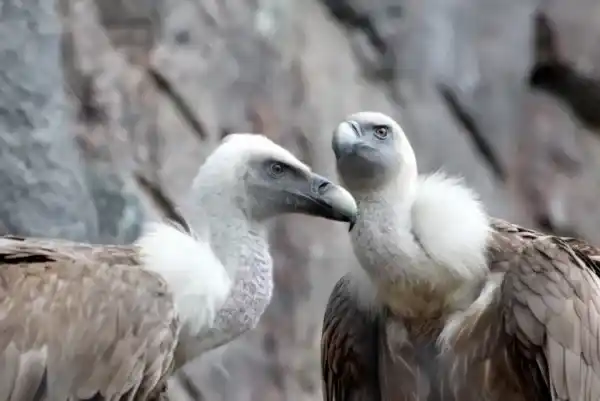
1. Vulture (Gyps fulvus)
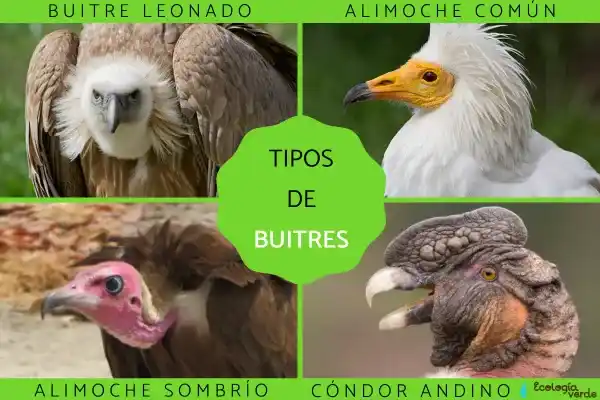
It inhabits high-altitude regions of southwestern Europe, Asia, and northwestern Africa. Its wingspan can reach 2.3-2.65 meters, and its body length 0.95-1.10 meters. It is a large animal with strong flying ability, preferring to glide at high altitudes. The feathers on its neck turn white with age.
2. Bearded Vulture (Gypaetus barbatus)
Also known as the "bone-crushing vulture," it carries bones high into the air and drops them to extract the marrow. It has a unique appearance, with black wings, diamond-shaped tail feathers, a white body, and a black "mask" on its face. It lives in the mountainous regions of Europe, Africa, and Asia.

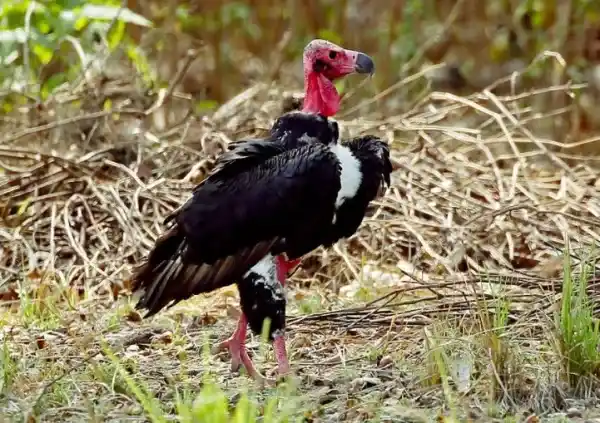
3. Red-headed vulture (Sarcogyps calvus)
Also known as the "Black King Vulture," it has a bare, bright red head. It primarily feeds on livestock carcasses and is commonly found near human settlements in India. Due to declining wildlife populations and improved waste management leading to food shortages, it is now an endangered species.
4. Egyptian Vulture (Neophron percnopterus)
Possessing extremely high intelligence, they can use stones to crack open ostrich eggs. When building nests, they wrap twigs around their wool. Besides scavenging, they also hunt small animals. They are distributed in Africa, Southern Europe, and West Asia.

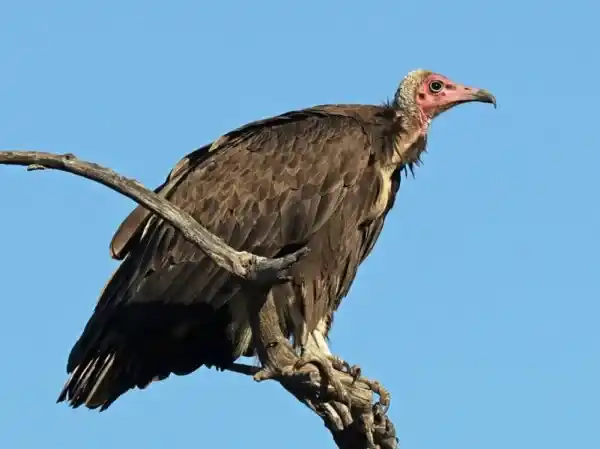
5. Shadow Vulture (Necrosyrtes monachus)
A small, Old World vulture of Africa, with dull plumage, a square tail, and a featherless neck. It is almost entirely non-migratory, feeding on carrion, insects, and even human excrement. Its numbers have drastically declined in some parts of Africa, putting it at critically endangered.
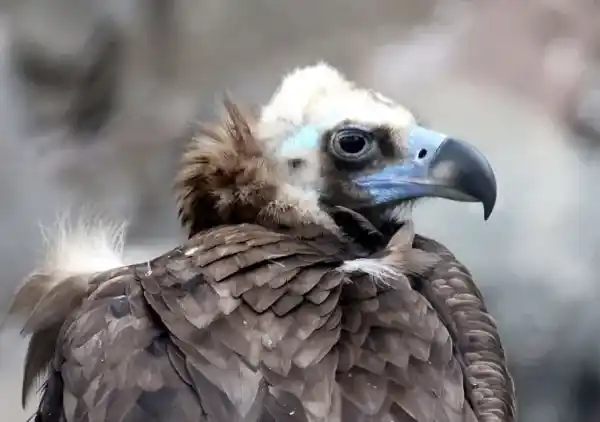
6. Black vulture (Aegypius monachus)
Also known as the "Iberian Black Vulture," it has a wide distribution, from the Iberian Peninsula to Central Asia. It has dark brown plumage, prefers to hunt muscle tissue, but will also hunt small animals. It is relatively solitary, but its mates are loyal.
7. American Black Vulture (Coragyps atratus)
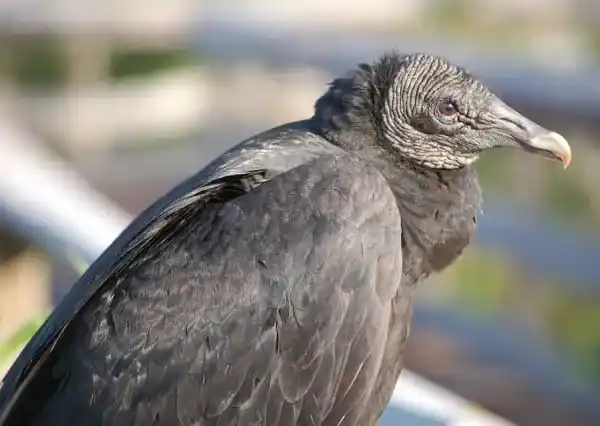
Commonly known as the "zopilote," it is entirely black with prominent facial wrinkles. It measures about 60 centimeters in length, is highly gregarious, and often glides in flocks over valleys. Its range extends from the southern United States to South America, and it is divided into three subspecies.
8. Red-headed American Vulture (Cathartes aura)
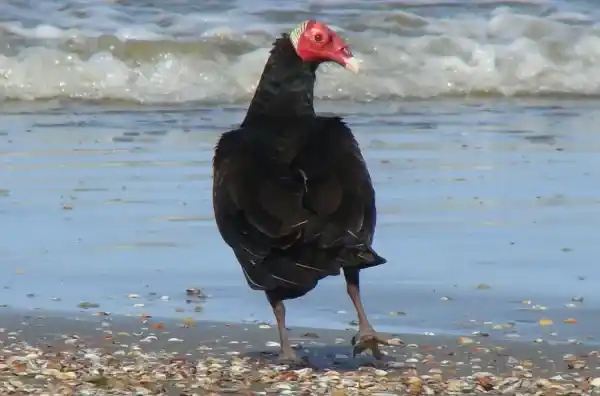
Also known as the "turkey vulture," it has a bare, red head and a sharp beak adapted for tearing away carrion. It is docile and often basks in the sun with its wings spread at dawn. It has a wide distribution and migrates to northern Canada during the breeding season.
9. Andean Condor (Vultur gryphus)
With a wingspan of up to 3 meters, it is one of the largest land birds in the world. Living along the Andes Mountains in South America, it is a symbolic animal in the Southern Cone culture. It can go for many days without food but can consume several kilograms of food at a time. It is monogamous and extremely patient.

10. Forest Bald Eagle (Sarcoramphus papa)
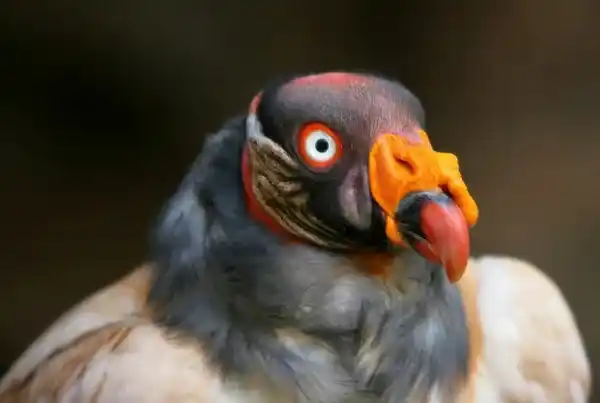
Also known as the "King Vulture," it has white plumage, but its head is featherless yet richly colored (red, yellow, orange, and black). With a wingspan of up to 2 meters, it can easily scare away other scavengers. It relies primarily on other vultures for guidance in finding food and inhabits the tropical rainforests from Mexico to Argentina. It is an endangered species.
11. California Condor (Gymnogyps californianus)
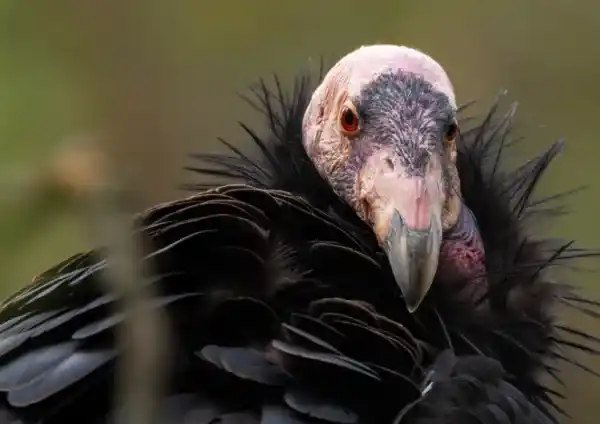
The largest bird in the New World, with a wingspan of up to 3 meters, it was once an important totem for the Native Americans of the American Southwest. It was nearly extinct in the wild in the 20th century, but was later successfully reintroduced into the wild through captive breeding in American zoos. It was distributed from Arizona in the United States to Baja California in Mexico.
Interesting trivia about vultures
African vultures can remove 70% of decaying flesh, preventing the spread of pathogens.
Vultures weigh between 1.5 kg and 12 kg.
“Cathartidae” means “purifier”, and “Accipitridae” means “bird of prey”.
They help dispose of carcasses of dangerous pathogens, making a positive contribution to human and animal health.
Several species of vultures, including the African white vulture (Gyps africanus), are facing extinction due to poaching, persecution, and habitat loss.
To learn more about birds, we recommend reading:
[Bird Classification]
[List of Endangered Birds]
bibliography
African Wildlife Foundation (2021) Wildlife Conservation, *Vulture*. Accessible at https://www.awf.org/wildlife-conservation/vulture
Beatty, R., Beer, A., and Deeming, C. (2010) The Book of Nature. Dorling Kindersley, UK.
National Geographic (2018) "Andean Condors". Available at https://www.nationalgeographic.es/animales/condor-andino
Global Raptors (2010) Species Description: Red-headed Vulture (Sarcogyps calvus). Accessible at: http://www.globalraptors.org/grin/SpeciesResults.asp?specID=8319
SEO Bird Life (2008) Little Black-headed Vulture. Accessible at https://seo.org/ave/alimoche-sombrio/
Autonomous University of St. Louis Portosi (nd) Cathartes aura. Accessible at http://evirtual.uaslp.mx/Agronomia/clubdeaves/Falconiformes/Paginas/Aura.aspx
Ormiston, D. (2003) *Sarcoramphus papa*. Available at: https://animaldiversity.org/accounts/Sarcoramphus_papa/
California Condor Fossil (ND), National Park Service (NPS). Accessible at: https://www.nps.gov/articles/california-condor-fossil.htm