When we talk about the ocean, corals are often associated with beautiful underwater scenes and colorful coral reefs. Coral reefs are habitats for a wide variety of marine life and boast rich ecosystems. However, many people often misunderstand the nature of corals, thinking they are plants or inanimate rocks. So, what exactly are corals? The answer is, corals are animals , and very special marine invertebrates at that.
1. Basic Concepts of Coral
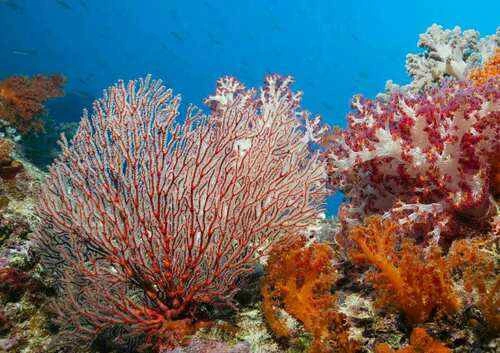
Corals are a group of marine invertebrates belonging to the phylum Cnidaria, and are closely related to organisms such as jellyfish and sea anemones. Corals are composed of thousands of individual small organisms called coral polyps. These small organisms have a simple body structure, including a mouth, tentacles, and a stomach cavity. Each coral polyp obtains food by capturing tiny plankton through its tentacles.
Although individual coral polyps are extremely small, they gather in the thousands to form massive coral colonies. Each polyp secretes a hard calcium carbonate skeleton, and these skeletons together form the coral reef structure we see on the seabed.
2. Animal characteristics of corals
Nutrition : Corals are heterotrophic organisms , meaning they cannot produce their own food through photosynthesis. Coral polyps obtain nutrients by preying on plankton in the ocean. This is a significant difference from plants, which are autotrophic organisms capable of generating energy through photosynthesis.
Physiological structure : Coral polyps possess a simple nervous system, mouth, stomach cavity, and tentacles, typical animal structures that help them capture and digest food. Each coral polyp captures prey through the nematocysts of its tentacles and then brings it to its mouth for digestion.
Reproduction methods : Corals can reproduce asexually and sexually. Asexual reproduction allows coral polyps to divide and form new individuals, which helps coral reefs expand rapidly. In sexual reproduction, corals release sperm and eggs, forming larvae (planulas). These larvae swim for a period of time before attaching to the seabed and gradually developing into new coral colonies.
3. Symbiotic relationship between corals and plants
Although corals are animals, they have a close symbiotic relationship with plants. Coral polyps in coral reefs typically harbor a type of tiny, single-celled algae called **zooxanthellae**. These zooxanthellae provide the corals with a large amount of energy through photosynthesis, meeting 70-90% of their nutritional needs. This symbiotic relationship is crucial for the survival of corals, especially in nutrient-scarce tropical waters.
Due to the presence of zooxanthellae, corals often live in shallow waters, as these algae require ample sunlight for photosynthesis. Therefore, corals typically grow in warm, sunny tropical or subtropical oceans.
4. Formation and Function of Coral Reefs
Corals secrete calcium carbonate to form a sturdy exoskeleton, which accumulates over time to eventually create massive coral reef structures. Coral reefs are known as "rainforests of the ocean" because they provide habitat and food for a wide variety of marine life. Coral reefs have a significant impact on marine ecosystems, primarily in the following ways:
Biodiversity : Coral reefs are among the most biodiverse ecosystems on Earth. Although they cover less than 1% of the ocean surface, they provide habitat for more than 25% of marine life. Fish, shellfish, invertebrates, and algae all find suitable habitats in coral reefs.
Ecological barrier : Coral reefs also act as a natural barrier, mitigating the force of ocean waves, protecting coastal areas from the impact of storms and tsunamis, and reducing coastal erosion.
Fisheries resources : Many fisheries rely on coral reefs as important fishing grounds. Coral reef ecosystems support a variety of economically important fish populations and serve as a vital food source for coastal communities.
5. Threats to Corals
While coral reef ecosystems are vital to the ocean, they also face a number of threats, including climate change, pollution, and overfishing.
Climate change : Global warming is causing seawater temperatures to rise, which is extremely detrimental to coral survival. High temperatures can trigger coral bleaching, a phenomenon where the symbiotic relationship between corals and zooxanthellae is disrupted, causing the corals to lose their color and potentially die.
Ocean acidification : As atmospheric carbon dioxide levels rise, the ocean absorbs more carbon dioxide, leading to increased seawater acidity. Acidified seawater weakens corals' ability to secrete calcium carbonate skeletons, directly impacting the formation and stability of coral reefs.
Pollution and overfishing : Marine pollution (such as plastic waste, pesticides, and heavy metals) and overfishing also cause serious damage to coral reefs. Pollutants affect coral growth, while destructive fishing methods such as blast fishing and trawling directly damage coral structures.
6. Measures to protect corals
To protect corals and their habitats, various conservation measures have been implemented around the world:
Establish marine protected areas : By designating marine protected areas, human activities can be restricted, overfishing and pollution can be prevented, and coral reef ecosystems can be protected.
Reducing carbon emissions : A key measure to address climate change is to reduce greenhouse gas emissions and slow the rate of global warming, thereby alleviating the stress on corals.
Ecological restoration : In some regions, scientists are restoring damaged coral reefs by artificially cultivating corals. These "coral farms" help cultivate and plant new corals to restore damaged ecosystems.
Public awareness education : Raise public awareness of the importance of coral reef ecosystems, encourage environmentally friendly behaviors such as reducing plastic use and avoiding destructive fishing, and promote coral conservation.
Corals, though resembling plants or rocks, are actually living animals. They survive through a symbiotic relationship with algae and provide irreplaceable support to the global marine ecosystem. However, coral reefs are currently facing severe threats. Protecting coral reefs is not only about maintaining marine biodiversity but also about protecting the marine resources and environment upon which we humans depend for survival. The role of corals as animals reminds us of the interconnectedness and interdependence of all things in nature.