Ambergris is an extremely rare waxy substance derived from the intestines of sperm whales . Ancient texts often refer to it as "whale vomit," but the more widely accepted explanation today is that it is more like a stone or fecal impaction in the digestive system , which can, to some extent, "encapsulate" the indigestible and potentially damaging squid beak. Most of the smaller fragments are excreted with the feces and sink directly; only a very few larger clumps are expelled and float on the surface , thus beginning their journey of "marinating at sea."

From a "stinky mass" to the "soul of perfume"
Freshly expelled ambergris is typically soft, dark in color, and has a pungent odor (often compared to dried cow dung). After years or even decades at sea, exposed to sunlight, oxidation, and sea salt , it gradually hardens and lightens , its appearance changing from dark brown to gray, golden, or even nearly white . Its aroma also transforms from a fishy, pungent smell to a warm, sweet, salty, leathery, and tobacco-like musky note . This "maturation" of flavor and texture is precisely why high-end perfumers are so eager to acquire it.
The "magic" of ambergris lies in its components such as benzoin. It is almost odorless on its own, but after oxidation, it produces molecules with a marine musky scent. More importantly, it acts as a powerful fixative , allowing the easily dissipated top notes to linger on the skin longer, making the entire formula more rounded, lingering, and spacious .
Why is it so expensive (and so sensitive)?
First, it is rare . Only sperm whales produce it; the production rate is extremely low; even when it does, most sink to the seabed, and those that are pushed ashore by the wind and waves and undergo full maturation are extremely rare. Second, it has a unique function . Although modern fragrance chemistry can synthesize many "ambergris-like" molecules (such as Ambroxide/Ambroxan, Cetalox, etc.), natural ambergris is still regarded as an irreplaceable fixative and "soulful highlight" in a very few top-tier perfumes.
The sensitive aspects lie in legal and ethical considerations . In the United States and other countries, ambergris is considered a derivative of protected marine mammals and is subject to regulations such as the Marine Mammal Protection Act, making its sale and possession potentially illegal . In some countries or regions, ambergris that has naturally washed ashore can be traded under specific conditions, while in other places it is explicitly prohibited. Remember: check local regulations first before discussing identification or disposal, and never sell it rashly.
How it was formed (Simplified Biology)
Sperm whales primarily feed on squid, whose beaks are hard and difficult to digest. Research suggests that whales secrete substances that bind these sharp fragments into waxy clumps to reduce the risk of injury. These unusually large clumps, provided they are expelled and can float , have the opportunity to be carried far away by the waves, slowly "becoming fragrant" during their long journey.
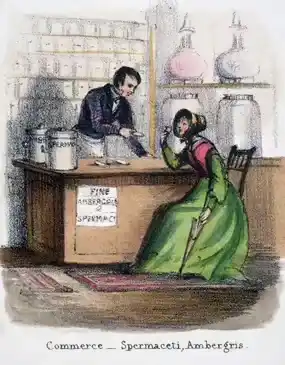
Found suspicious "ambergris" on the beach? Learn basic identification first.
More credible clues include a light feel (lighter than paraffin of the same volume), a waxy and slightly oily tactile feedback, a rounded shape polished by seawater , and aging color gradations from black to gray to golden yellow and near white . Gently warm a small piece between your fingertips; aged, high-quality samples will emit a soft musky sea aroma , rather than a pungent fecal odor. Some cut surfaces may show a granular or crystalline structure , occasionally with small, encapsulated fragments —however, self-cutting is not recommended.
The most commonly mistaken "substitutes" include wax (ship wax, candle wax, carnauba wax), solidified animal and vegetable oils, resins, tar/asphalt, plastic fragments, pumice, etc. Folk methods such as the so-called "hot needle test" are both unreliable and may destroy the sample . Authoritative identification usually combines experiential olfactory identification with laboratory analysis (such as benzoin/cholesterol spectra), and further chemical confirmation may be necessary.
Is it really possible to find ambergris? The right next step.
Do not damage the sample : do not cut, burn, or melt. Take clear photos , record the location and time of discovery , and contact the local marine/wildlife management agency first to inquire about regulatory requirements. Within the bounds of the law, then consult with a qualified laboratory or a reputable raw material broker/spice dealer for testing and assessment. Be wary of offers of "high prices for immediate purchase"; quality, maturity, and legality are far more important than weight in determining value.
Price, supply, and choices in modern perfumery
Market prices are extremely volatile, depending on color (the lighter the color, the older and rarer), aroma quality, cleanliness, block integrity , and legal risks . Aged ambergris that is golden to nearly white with a clean and clear aroma is often overvalued; fresh black blocks are worth far less. Due to uncontrollable supply and compliance difficulties, modern brands rely more on bioequivalent/synthetic alternatives such as Ambroxan/Cetalox : they are stable, compliant, traceable , and can provide a fairly close "ambergris aura."
The bottom line of safety, ethics and conservation
The responsible approach is to avoid harming whales . Ambergris naturally washed ashore is considered " whale offspring " in some jurisdictions and does not involve hunting; any deliberate harassment or sourcing from carcasses should not be accepted. If local regulations prohibit the trade , ethics and law align: do not participate . Even in areas where trade is permitted, traceability and non-interference should be the bare minimum; many perfumers, based on conservation principles, prefer to use synthetic alternatives throughout the entire process .
Quick Q&A (for those curious)
Is it vomit or fecal impaction? It's more like a fecal impaction/gallbladder-like digestive byproduct than typical vomit.
Why does it "get better with age"? Long-term floating allows benzoin alcohol to oxidize and generate molecules with a musky aroma, while also providing a top-notch fixative effect.
Whether it's legal to sell depends on the country/region . Buying, selling, and holding may be illegal in places like the United States ; other places may allow compliant transactions of assets that naturally drift ashore. Always check the law first .
Do perfumes still use real ambergris? A few top luxury and niche products may use it (in compliant regions); the vast majority have adopted alternatives such as Ambroxan/Cetalox , which are both stable and compliant.