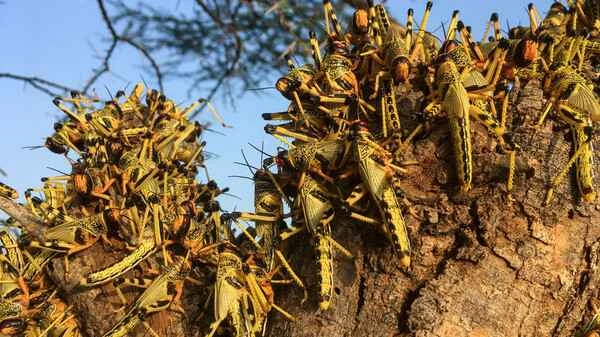
Historically, locust plagues have been a global disaster, often causing widespread crop damage and reduced food production, leading to famine. This article will introduce some famous historical locust plagues, demonstrating their severe impact on various parts of the world, as illustrated by the following examples:
The 1875 locust plague in the western United States: This disaster affected large areas of the western United States, causing great damage to local agriculture and resulting in large-scale crop failure and economic losses.
2020 East African Locust Plague: This was a severe locust plague in East Africa that had a serious impact on agriculture in countries such as Kenya, Ethiopia, and Somalia, causing huge economic losses.
The 1986-1989 African locust plague: This locust plague lasted for several years, affecting many countries on the African continent and severely impacting local food production and agriculture.
2016 Locust Plague in Southern Russia: This disaster broke out in southern Russia, causing catastrophic damage to local agriculture and severe economic losses.
The 2002 locust plague in Afghanistan: This disaster affected Afghanistan's agricultural industry, and the large-scale locust invasion caused serious damage to the local economy and food supply.
These well-known locust plagues highlight the serious threat they pose to global agriculture and food security, with their economic losses and humanitarian crises shocking the world. Strengthening locust monitoring, early warning systems, and effective control measures is crucial to addressing this global challenge.
1. The locust plague in the western United States in 1875
(The largest locust swarm in human history)
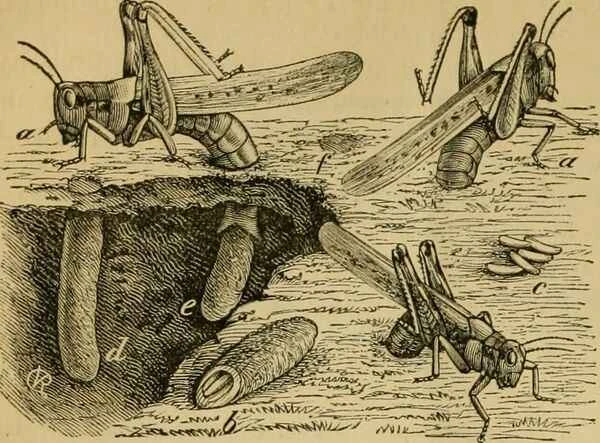
In 1875, the western United States was hit by an unprecedented locust plague, one of the largest locust swarms ever recorded in human history. It is said that trillions of Rocky Mountain locusts swept in (some sources say 12.5 trillion), forming a sky-covering swarm that stretched approximately 177 kilometers wide and 2,900 kilometers long, leaving no green vegetation unscathed in its wake.

An 1875 cartoon depicted Kansas farmers battling a giant grasshopper.
However, miraculously, 28 years later, this Rocky Mountain locust mysteriously disappeared. The reason for its disappearance remains controversial. Some scientists studying genetics claim that, faced with the crisis of extinction, this locust, constrained by genetic defects and a lack of variation, was unable to effectively cope with environmental changes, thus accelerating its extinction process.
2. The 2020 East African locust plague
(A locust plague worth hundreds of billions has swept across Africa and Asia)
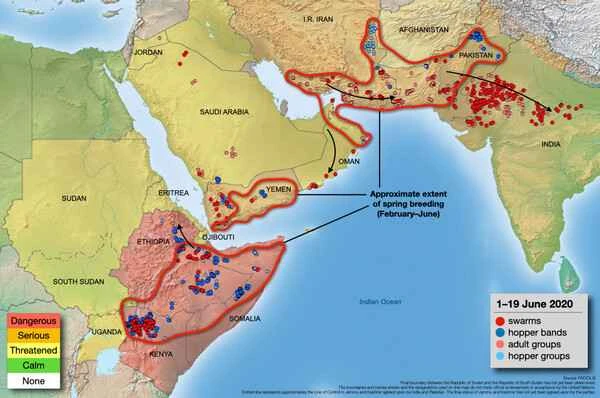
Since the beginning of 2020, many countries in East Africa have been hit by a severe locust plague, the worst in decades. This disaster has spread to Asia, causing a serious food security crisis for tens of millions of people. In East Africa, Kenya has experienced its worst desert locust invasion in 70 years, while Somalia and Ethiopia have also experienced their worst locust invasions in 25 years.
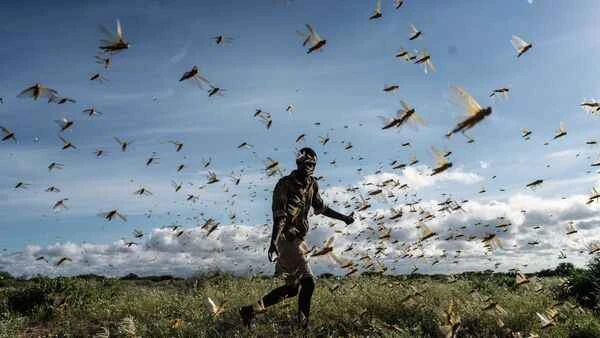
Moreover, in Asia, Pakistan suffered its worst locust plague in 27 years, leading to a nationwide state of emergency; while Rajasthan in India was attacked by as many as 400 billion locusts, a disaster that destroyed vast amounts of crops. This series of events became one of the most notable locust plagues in 21st-century history, drawing widespread attention and concern worldwide.
3. African locust plague of 1986-1989
(More than 30 countries affected)
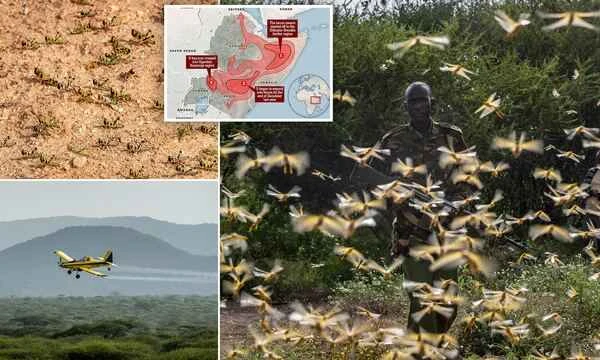
A locust plague occurred globally. This plague took place from 1986 to 1989, with swarms of locusts, consisting of both African desert locusts and native locusts, attacking parts of Africa and Asia, affecting more than 30 countries, including Mauritania, Morocco, Saudi Arabia, Mali, Chad, and Niger, with an affected area of over 16.8 million hectares.
4. The African locust plague of 2003-2005
(Sweeping through 20 North African countries)
Between 2003 and 2005, Africa suffered an unprecedented locust plague. Hailed as the worst locust infestation in 15 years, the plague swept across 20 North African countries, affecting millions of hectares. Control efforts consumed 13 million liters of pesticides and over $500 million. It is estimated that crop losses due to the locust plague amounted to $2.5 billion.
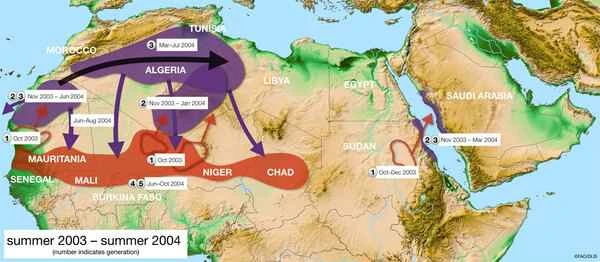
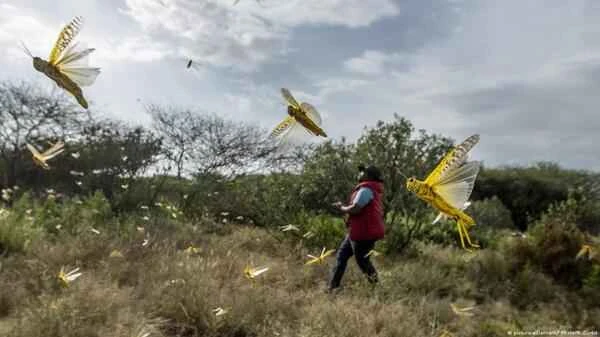
During the locust plague, African countries devoted enormous efforts and resources to control it, while unfavorable weather conditions also facilitated the locusts' spread. Ultimately, through control efforts and fortunate weather conditions, the plague was brought under control. However, the disaster left severe consequences, causing millions to lose food and livelihoods. Furthermore, it presented environmental damage problems, as the extensive use of pesticides potentially harmed the local ecosystem.
5. Locust plague in southern Russia in 2016
(The worst locust plague in the area in 30 years)
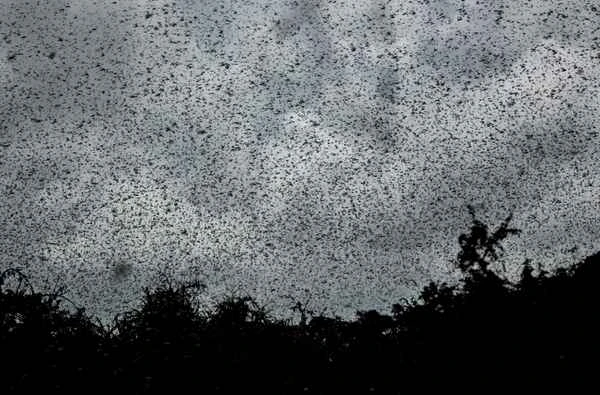
In 2016, a severe locust plague struck southern Russia. According to a report in the British Daily Mail on May 30, 2016, the plague was described as the worst in southern Russia in 30 years, causing devastating damage to local crops, and prompting the local government to declare a state of emergency. The affected area reportedly reached 70,000 hectares, with at least 10% of farmland destroyed. A video circulating online showed swarms of locusts flying overhead, darkening the sky, forcing drivers to swerve to avoid them; the scene was shocking and resembled an apocalyptic landscape.
6. The 2004 locust plague in Eilat, Israel
(Israel's worst locust plague since 1959)
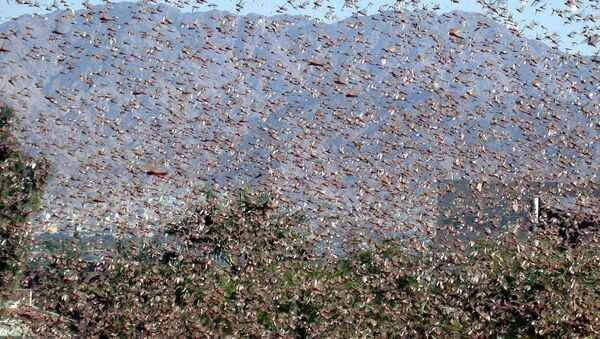
On November 21, 2004, millions of locusts attacked the southern Israeli city of Eilat, causing immense destruction and devastating crops and flowers. Israel was forced to use aerial spraying of pesticides to control the spread of the locusts. According to Reuters, this was the first time Israel had faced such a severe locust plague since 1959.
Local residents described how the swarms of locusts, darkening the sky, not only devoured palm leaves but also wiped out all the flowers in the garden. They satisfied their needs by eating everything in sight, even covering and destroying the roadside lawns.
7. The 2002 locust plague in Afghanistan
(This was the worst locust plague in nearly 30 years at the time)
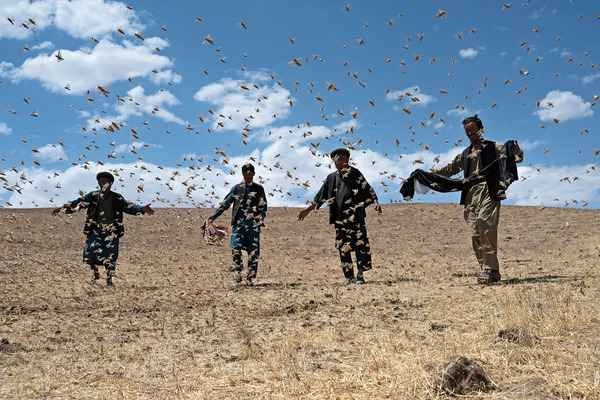
On April 23, 2002, the Food and Agriculture Organization of the United Nations reported on one of the world's ten largest locust plagues, occurring in Afghanistan. Due to long-standing poverty, war, and drought, Afghanistan faced its worst locust plague in nearly 30 years. Swarms of locusts were devouring parts of Afghanistan, bringing immense suffering to the local people.
Vast swathes of newly sprouted saplings and crops were devoured by locusts. Villagers could only rely on simple tools like bags and blankets to catch the locusts and then stomp them to death. However, this simple method was not very effective; the locusts were too numerous to be controlled effectively using traditional methods.
8. The 1958 Somali locust plague
(400 million locusts eat the food of 400,000 people in one day)
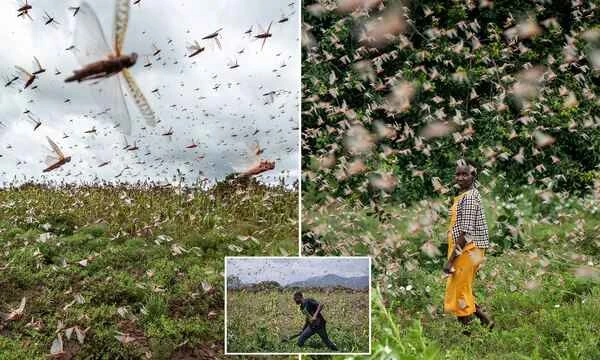
In 1958, Somalia was ravaged by 400 million desert locusts, which spread over an area of 1,000 square kilometers. Desert locusts, among the world's most destructive pests, feed on crops and cause enormous losses to humans. In Somalia that year, these locusts destroyed approximately 80,000 tons of grain in a single day—equivalent to the annual food supply for 400,000 people. This event is considered one of the worst locust plagues in the world.
9. Locust plague in Xinjiang in 2000
(100,000 ducks eat locusts)

In May 2000, a locust plague broke out in northern Xinjiang. To combat this disaster, in addition to chemical treatments, a large number of chickens and ducks were introduced as a biological control method. Chickens and ducks played a crucial role in biological locust control due to their large numbers. Although the number of locally raised chickens was substantial, it was still insufficient to completely eradicate the locusts, and the attrition rate was high. Therefore, 100,000 ducks were also deployed to help combat the locust infestation.
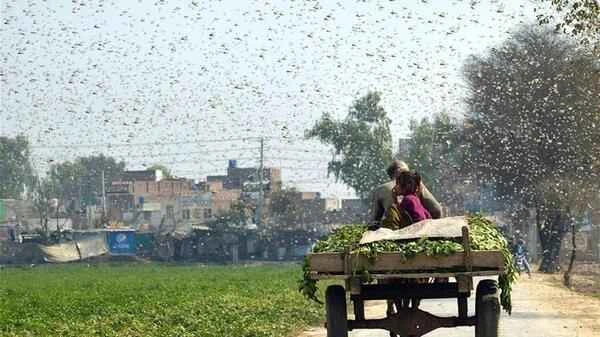
By the end of August of the same year, these chickens and ducks had successfully cleared nearly 1 million mu (approximately 66,667 hectares) of locust swarms in Xinjiang, achieving remarkable results. It is understood that at that time, a single duck could consume more than 100 locusts in a short period, demonstrating the high efficiency of chickens and ducks in controlling locust populations.
10. The 2010 Australian locust plague
(The worst locust plague in the area in decades)
In 2010, Australia experienced an unprecedented locust plague, which rapidly spread and covered almost the entire country. In some areas, locust eggs accumulated for up to 20 kilometers, covering an area equivalent to the size of Spain—a truly astonishing sight. A significant contributing factor to this plague was the unusually hot and humid climate in eastern Australia, which ideally promoted locust reproduction.
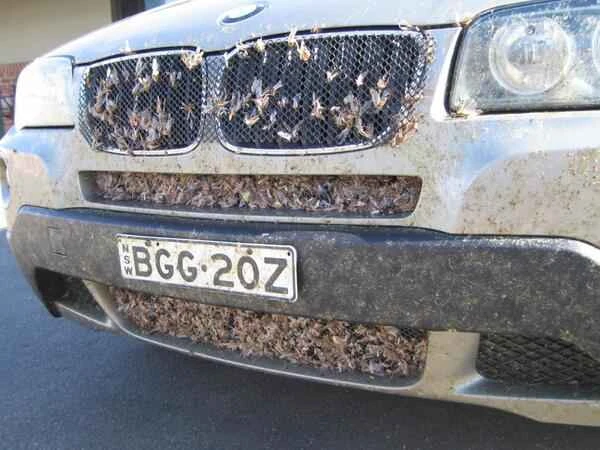
Reports indicate that the locust plague has devoured approximately a quarter of Victoria's crops, causing agricultural economic losses of up to AU$2 billion. This is one of the world's largest locust plagues and has severely impacted the local agricultural economy.
More terrifying locust plagues:
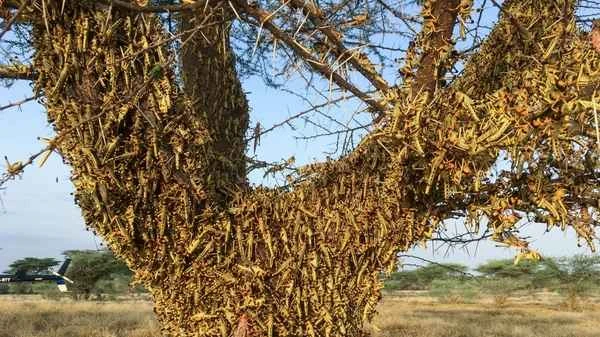
The 2003 locust plague in the western United States, with Idaho experiencing the worst outbreak since World War II.
The 2000 locust plague in Kazakhstan affected 81.1 million hectares of land.
In 1979, a locust plague swept across the United States, covering farmland and ranches in 14 states west of the Missouri River. In places like Yakima, Washington, locusts even carpeted roads, forcing traffic disruptions for several days.
In May 2017, the Greek island of St. Evstratios was overrun by locusts, and a state of emergency was declared across the island.
From 1996 to 1998, locust plagues broke out on both sides of the Red Sea, affecting the Saudi Arabian region.
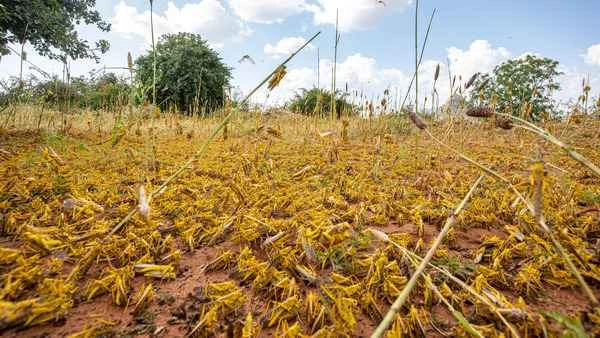
The ranking of the world's top ten locust plagues is based on a comprehensive assessment of factors including media reports, affected areas (countries/regions), locust numbers, duration, damage (food crops/plants/livestock/living environment), economic losses, emergency measures, and social impact. This list provides a reference for demonstrating the impact of different locust plagues on various parts of the world. Data is current as of March 22, 2024. Comments and corrections are welcome.