Looking south from the T-junction between the Beijing Planetarium and the Beijing Zoo, west of the Beijing Planetarium, a blue-gray castle-like building nestled among tall poplar trees can be seen on the east side of the road – this is the mysterious Paleozoological Museum of China. It displays world-class, and among the best in Asia, fossils of ancient creatures, including more than twenty species of dinosaurs: from the colossal Mamenchisaurus, 22 meters long, to smaller dinosaurs about a meter long and the size of a turkey; from gentle, slow-moving herbivores to ferocious carnivores with sharp teeth and claws. There are also various prehistoric monsters, including the complete skeleton fossil of the ancient Yellow River elephant described in the fifth-grade textbook lesson "The Ancient Yellow River Elephant." In addition, the museum houses fossils of ancient fish and birds, as well as many lifelike anthropomorphic dinosaur models. Countless mysteries of the ages can be solved at the Paleozoological Museum of China.

Paleozoological Museum of China
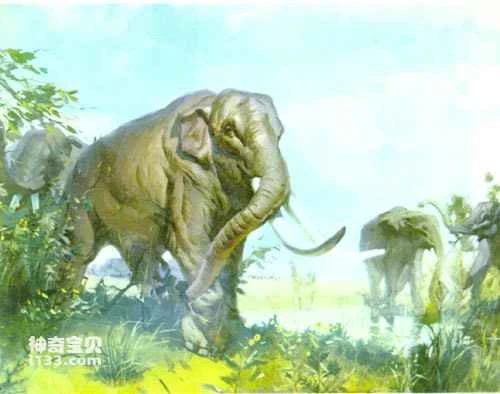
Yellow River Elephant
In 1999, the Paleozoological Museum of China opened its newly built "Shuhua Paleoanthropology Museum" to the public. The Peking Man, Upper Cave Man, and other ancient human fossils that once caused a sensation worldwide are on display here; through them, you can learn when and where humans came into this world; you will also learn how humans have gradually evolved into what we are today.
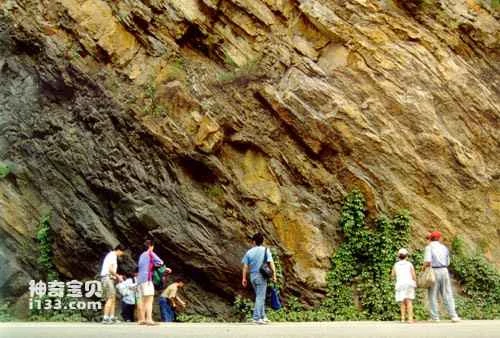
"Little Darwin Club" Field Expedition
The Paleozoological Museum of China also provides a place and opportunity for teenagers to "play with science." We have established the "Little Darwin Club," which organizes primary and secondary school students interested in geology and paleontology to participate in geological and paleontological scientific expeditions and research activities during their spare time and holidays (their parents can also participate). The "Little Darwin Club" will enable teenagers to experience the spirit of science, understand scientific processes, master scientific methods, and increase their scientific knowledge while touring the magnificent landscapes of our motherland and exploring the mysterious and interesting origins of the past; at the same time, it will enhance their survival skills and cultivate their character and elevate their personality.