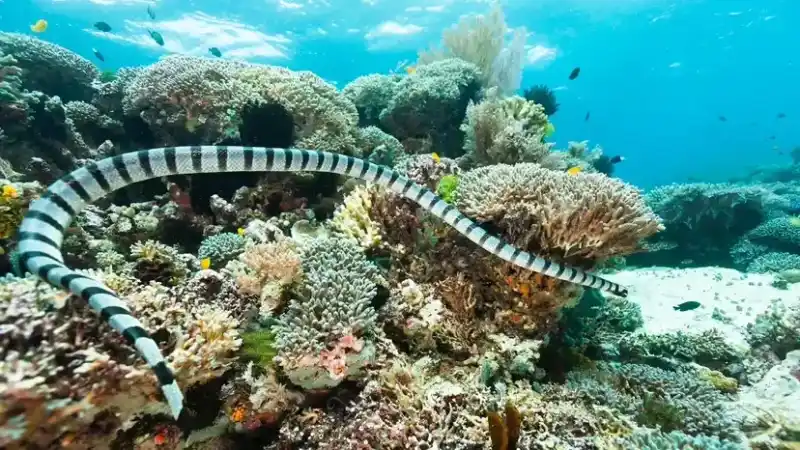
Sea snakes are not just any swimming snakes; they are actually two of the most thoroughly adapted snake species to the marine environment: the true sea snake (Hydrophiinae) and the sea krait (Laticaudinae) . Both belong to the Elapidae family, have paddle-shaped tails , and are adept swimmers and divers, but they differ significantly in their ability to come ashore, their reproductive methods, and their methods of obtaining water. Below, we'll use a simplified explanation to help you understand, learn about, and protect yourself from sea snakes.
Sea serpent vs. ringed serpent: Different paths, same origin.
True sea snakes are entirely aquatic : they never need to go ashore, giving birth to their young directly in the sea; their ventral scales are degenerate, and they "lie dormant" out of the water, barely able to crawl on their own if thrown onto a beach. Cleveland Bay in Australia is also known as their "marine birthing ground."
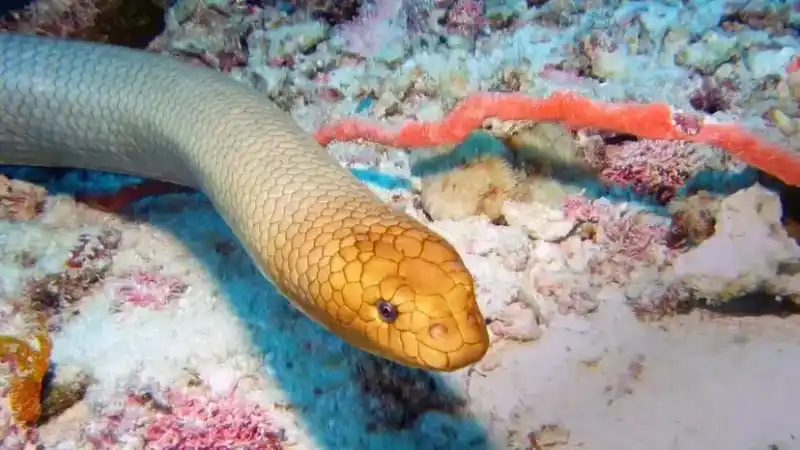
The marine ringed snake also "works part-time" on land: retaining the broad ventral scales of snakes, it can mate, molt, and digest on land , and lay eggs on beaches; its main occupation underwater remains hunting. Although they look somewhat "clumsy," they gain survival resilience through this "dual land and sea" lifestyle.
Toxicity and Risks: Terrifyingly potent, but not fatal in most cases.
Sea snake venom is primarily neurotoxin , and its theoretical toxicity can exceed that of many terrestrial venomous snakes . However, in reality, it is rarely fatal to humans .
Temperament : Most sea snakes are relatively docile, but they will bite defensively when trapped or stressed (entanglement in fishing nets is a common scenario).
Dry bite : To conserve venom, sea snakes often employ a "dry bite" (without injecting venom).
Symptoms of poisoning : Neurological symptoms such as muscle weakness/paralysis and difficulty breathing may occur . In severe cases, medical attention should be sought as soon as possible and supportive breathing should be provided .
The golden rule : Do not grab, block, or provoke ; keep your distance. If bitten , immediately get ashore to call for help, immobilize the injured limb, avoid running , and wait for medical treatment and antivenom (availability varies by region).
Sea Hunting Techniques: Experts in ambushing, probing, and specifically targeting fish roe.
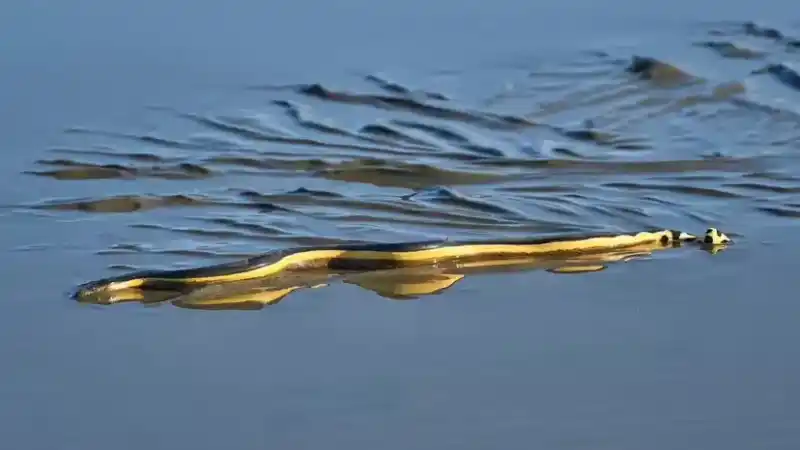
Surface ambush : For example, yellow-bellied sea snakes will place "floating logs" on the sea surface to lure fish close to the shadow of their bodies before striking.
Crack hunters : Many species burrow along coral reefs to pull out hidden small fish or eels; the sea snake especially loves moray eels , using its highly venomous substance to quickly paralyze them before swallowing them whole.
"Fish roe predators" : such as the sea snake with small teeth and weak venom , they specialize in eating fish roe, which are "foods that cannot escape". They are experts in ecological niches with an extreme division of labor.
An ingenious method for drinking "fresh water" at sea: collecting water from a "mirror" after rain.
Sea snakes cannot drink seawater directly. Their water-conserving techniques include:
Licking water ashore : The sea snake comes ashore to lick water droplets from plant leaves or to drink puddles after rain.
Drinking water through rain mirrors : In the early stages of a rainstorm, a temporary layer of fresh water "mirrors" will form on the sea surface; yellow-bellied sea snakes will rise to the surface to drink water before it is stirred up by the waves.
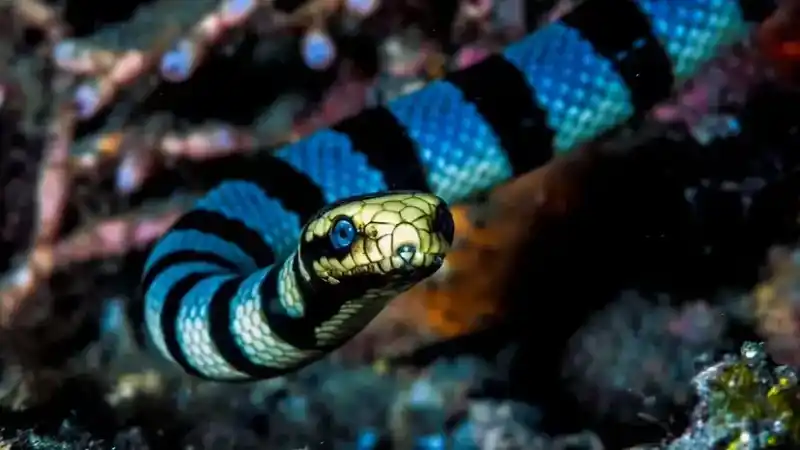
Diving and breathing : Both types of sea snakes have nasal valves that can close the nostrils to block water; some species can dive for several hours . Studies have found that the dense blood vessels in the head of the blue-banded sea snake can directly absorb small amounts of oxygen from the water , which can be considered a "partial cheat code".
Distribution Map: Why There Are "No Sea Snakes" in the Atlantic Ocean
Sea snakes are mainly distributed in the warm waters of the Indian Ocean-Pacific region, and even form independent populations in semi-enclosed saltwater lakes such as Taal Lake in the Philippines and Tenago Lake in the Solomon Islands .
The absence of the Atlantic Ocean is related to geological history and climate : the ancestors originated in the Western Pacific ; by the time they spread to the New World, the Isthmus of Panama had closed; it was almost impossible to go around the cold Cape Horn in South America; and the southeastern coast of Africa has little rainfall , so sea snakes also face long-term water shortages and find it difficult to settle.
Natural enemies and "mimicry": The "drama queen" of the snake world who can disguise itself as having two heads.
Sea snakes are preyed upon by sharks, saltwater crocodiles, and birds of prey. To confuse their pursuers, the yellow-lipped sea snake has a **"false face" pattern** at the end of its tail, resembling a second snake head from a distance, making it difficult for enemies to determine the direction of attack or defense.
On the other end, the mimic octopus changes color and buries its tentacles, disguising itself as a sea snake to scare away predators—a rather clever way to "ride on the coattails" of sea snakes.
Molting and Parasitism: Even in the sea, they need to "scrub" themselves.
Snakes need friction to shed their skin, but there's nowhere to rub against on the open sea. Sea snakes will:
They rely on rough surfaces such as reefs, shipwrecks, and seaweed to "scrape" the skin.
Friction is created by repeatedly traversing the crack ;
It helps to remove attached parasites and dirt in a timely manner, maintaining fluid balance and skin function.
Encounters with others: Key points for safe sea viewing
Do not touch : Do not handle a docile animal, especially do not grab its tail or force it to stop .
It is best to observe from a distance : When diving or snorkeling, maintain a distance of several meters or more to avoid blocking or surrounding the area for taking photos.
Fishing gear risks : Fishing nets and longlines pose a high risk to sea snakes; if accidentally caught, handle with wet hands/wet cloth as soon as possible, wear cut-resistant gloves , and release them quickly and without injury .
Treatment for a bite : Immobilize the limb, restrict movement, and transport the victim as quickly as possible ; do not apply ice/cut/suck/stun. Describe the species' appearance and location to healthcare professionals to help select the appropriate antivenom and supportive therapy.
Ecology and Threats: More Than Just "Venomous Snakes," They Are Indicators of Ocean Health
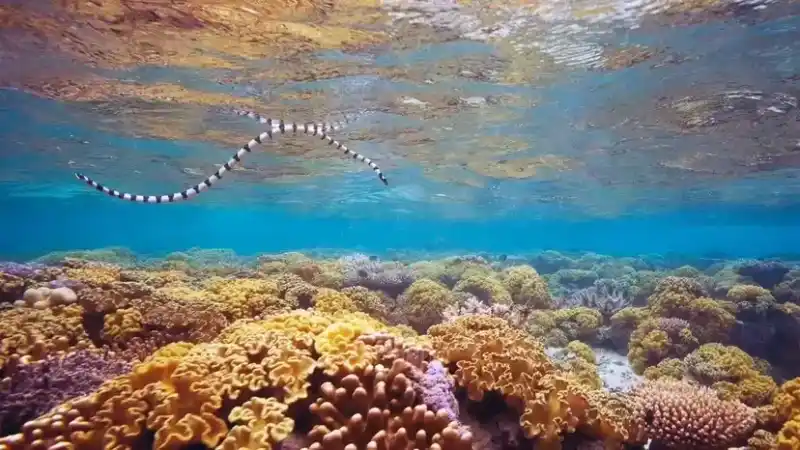
Sea snakes control small fish and eel populations, maintaining the ecological balance of coral reefs ; they are highly sensitive to low salinity/pollution and are often "biological indicators" of nearshore environmental degradation .
The main threats include:
Bycatch and accidental injury in fisheries ;
Nearshore pollution, heavy metals and oil spills ;
Habitat degradation and seagrass/coral decline;
Extreme weather has led to prolonged freshwater shortages .
In conclusion: Respect for boundaries is the best way to get along.
Sea snakes maximize the possibilities of "snakes adapting to the sea": their potent venom is merely a hunting tool; they are more like sophisticated amphibious systems at sea —they can drink rainwater, dive for extended periods, play dead, and even feign death. By maintaining distance, respecting boundaries, and minimizing disturbance , you can safely appreciate their elegance and "ruthlessness."