When people think of rabbits, they often picture small, fluffy, adorable creatures. However, the rabbit family also includes several enormous members, whose size rivals that of some domestic dogs. This article introduces the 10 largest rabbit breeds in the world, such as the Continental Giant, Giant Fawn, American Rabbit, Perumezo, Beagle Rabbit, Villante, and Belgian Rabbit, whose size is truly astonishing. Let's take a look.

1. Giant Chinese Rabbit (weighing 25 kg)
Some speculate that the Continental Giant Rabbit may be a descendant of the Flemish Giant Rabbit and the European wild rabbit. Since the late 19th century, the Continental Giant Rabbit has been widely recognized as a distinct breed in Europe. Sometimes also known as the German Giant Rabbit, its lineage dates back to mid-16th century Belgium. Although little is known about the exact origins of this extra-large rabbit breed, it has been a prominent player in British rabbit racing since the early 20th century. Described as "powerful, large rabbits," the famous Continental Giant Rabbit Darius is a prime example, having broken the Guinness World Record four times, reaching a length of 129 cm and a staggering weight of 25 kg, making it arguably the world's largest rabbit.

2. Giant Flandres rabbit (weighing 12.7 kg)
The Giant Dist. Rabbit holds a prominent position on the list of the largest rabbit breeds. By standard, a Dist. Rabbit should weigh 6 kilograms, making it 3 to 4 times larger than a typical pet rabbit weighing less than 3 kilograms—equivalent to the weight of a 3-4 month old baby. Besides its enormous size, the Giant Dist. Rabbit also possesses large ears and a long, thick tail, with ears exceeding 5.75 inches in length and a height of approximately 20 inches, making it a truly colossal creature. Historically, the heaviest Giant Dist. Rabbit weighed a staggering 12.7 kilograms. Known for its gentle temperament, the Giant Dist. Rabbit is nicknamed the "gentle giant," and its uses are diverse, serving as a pet, for exhibitions, for breeding, and for meat or fur—making it a versatile breed.

3. American rabbit (weight 9-12 kg)
The American hare is a standard giant rabbit breed, with a standard weight of 9 to 12 kilograms. They are mainly distributed in North America and typically come in two colors: white and dark blue-gray. White hares have pink eyes, while dark blue-gray hares have blue-gray eyes. American hares have a semi-arched body, long legs, and erect ears. In winter, their fur blends in with the snow, a feature that helps them better camouflage themselves when searching for food.
4. Bermuda Rabbit (weight 8-11 kg)
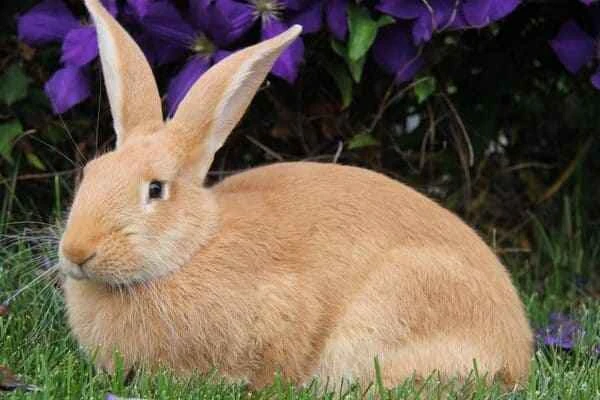
The Perumezo rabbit is a typical bred breed among large rabbit breeds. Although originally intended as a meat breed, the Perumezo has become a popular pet rabbit. This large rabbit weighs approximately 8 to 11 kilograms, has a relatively small head, and a plump, rectangular body. Their fur is mostly brown and coffee-yellow, with two eye variants: gray-blue and brown. Furthermore, the Perumezo's chin, paw pads, belly, and tail are cream-colored, and its upper lip is split in the middle, forming a distinctive three-lobed mouth, making it very cute.
5. Begonia Rabbit (weight 8-11 kg)
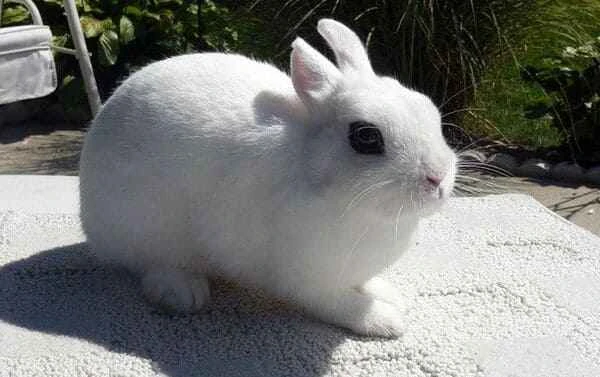
The Begonia rabbit is a type of giant rabbit breed, which may surprise many readers, as the Begonia rabbits most people are familiar with are dwarf Begonia rabbits. After investigation, we found that the Begonia rabbit actually includes two breeds: the dwarf Begonia rabbit and the large Begonia rabbit, with the large Begonia rabbit weighing between 8 and 11 kilograms.
The Begonia rabbit has a rather unique appearance. Its body is pure white, with only the fur around its eyes being jet black, giving it the appearance of dark circles under its eyes. Its two ears open in a V-shape, indicating excellent physical fitness. At the same time, its distinctive black and white eyeliner often reminds people of pandas, making its appearance quite endearing.

6. Villante Rabbit (weight 6.5~10 kg)
The Vieira rabbit, originating in Germany, is one of the oldest tricolor rabbit breeds. They have a cylindrical body, an agile appearance, spots on their sides, a long black stripe down their back, and black fur around their eyes and nose. The most distinctive feature of this rabbit is its coat color. The Vieira rabbit has a pure tricolor coat, typically with a white base covered in black and yellow markings, a pattern relatively rare among rabbits. Generally kept as a pet, their standard weight is 6.5 to 10 kilograms.
7. Belgian rabbit (weighing 7-9 kg)
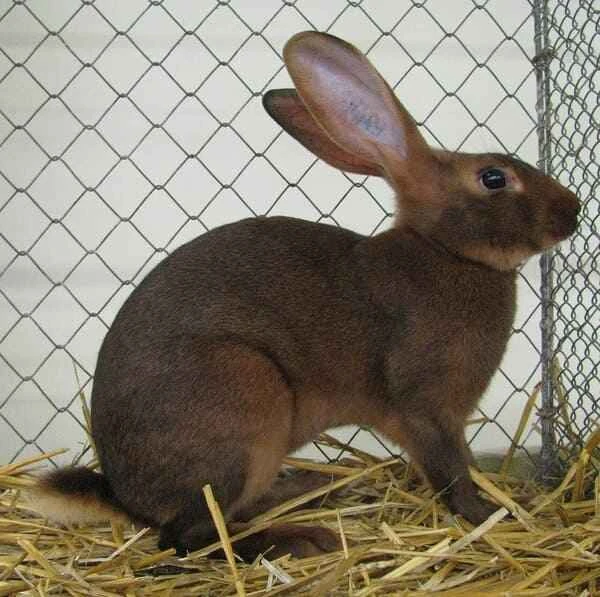
The Belgian Giant rabbit, also known as the Flemish Giant rabbit, is a breed of rabbit renowned worldwide for its large size, robust physique, rapid growth, high slaughter rate, delicious meat, and excellent fur. Newborn rabbits of this breed weigh 60 to 70 grams, with some reaching over 100 grams; adult males weigh 5.5 to 6.0 kg, while females weigh 6.0 to 6.5 kg, with some reaching 7 to 9 kg. In the United States, steel-grey Belgian rabbits are relatively common, while in the United Kingdom, the white variety has red eyes, a relatively large head and ears, and thick, glossy fur. In China, the Belgian rabbit is known for its excellent production performance, rapid growth, strong adaptability, and outstanding milk production, making it highly popular among breeders.
8. Male rabbit (weighing over 8 kg)
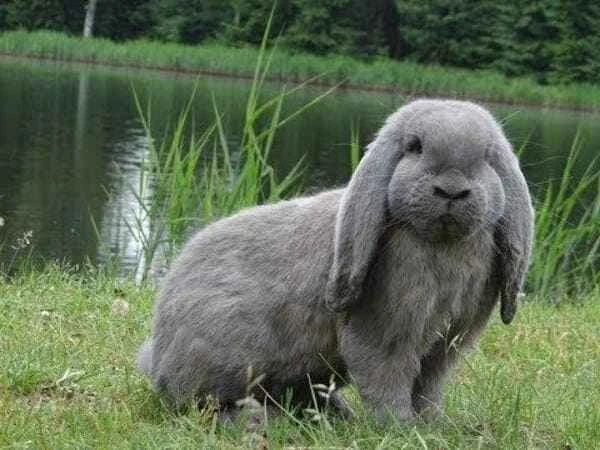
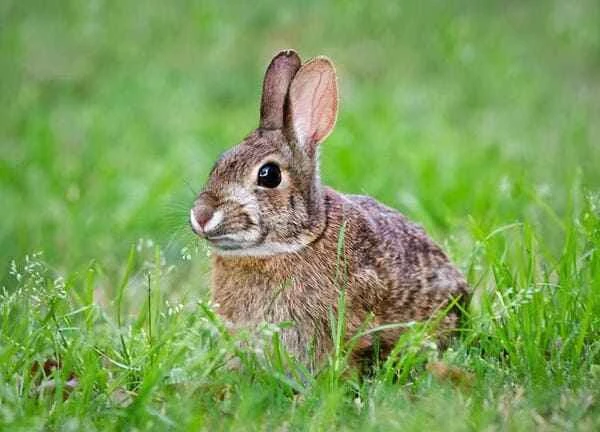
The lop-eared rabbit, named for its long, wide, drooping ears and ram-like head, is a large meat rabbit breed. They are robust and well-proportioned, truly the giants of the rabbit world. The lop-eared rabbit typically has yellowish-brown fur, large, drooping ears, a large, short, and broad head, a slightly protruding forehead and nose resembling a ram, a full rump, and sturdy limbs. Although the lop-eared rabbit is similar in fur color to the hare, it is much larger, earning it the title of the "Titan" of rabbits. Adult lop-eared rabbits can reach 0.8 to 1 meter in length and weigh 5 to 8 kilograms. Domesticated lop-eared rabbits generally weigh over 7 kilograms, with some larger ones exceeding 8 kilograms.
9. Northern Rabbit (Weight 7.5~8.0 kg)
The Saibei Rabbit is a large, dual-purpose rabbit breed, developed by Zhangjiakou Agricultural College through a two-way crossbreeding of French Ram Rabbits and Belgian Giant Rabbits. After ten years of arduous breeding, including crossbreeding innovation, selection and sizing, and improvement, the rabbit has achieved its current size. Under normal feeding and management conditions, adult Saibei Rabbits weigh an average of 5.0 to 6.5 kg, with a maximum weight of 7.5 to 8.0 kg. They are highly prolific, producing 7 to 8 offspring per litter, with some litters reaching 15 to 16. Their main advantages include a large size, rapid growth rate, high fertility, strong disease resistance, low morbidity, tolerance to roughage, adaptability, docile temperament, and ease of management. Notably, the Saibei Rabbit has an extremely high lean meat content, sometimes exceeding half of its total body weight.
10. Giant Chinchilla Rabbit (weight 5.5~7.25 kg)
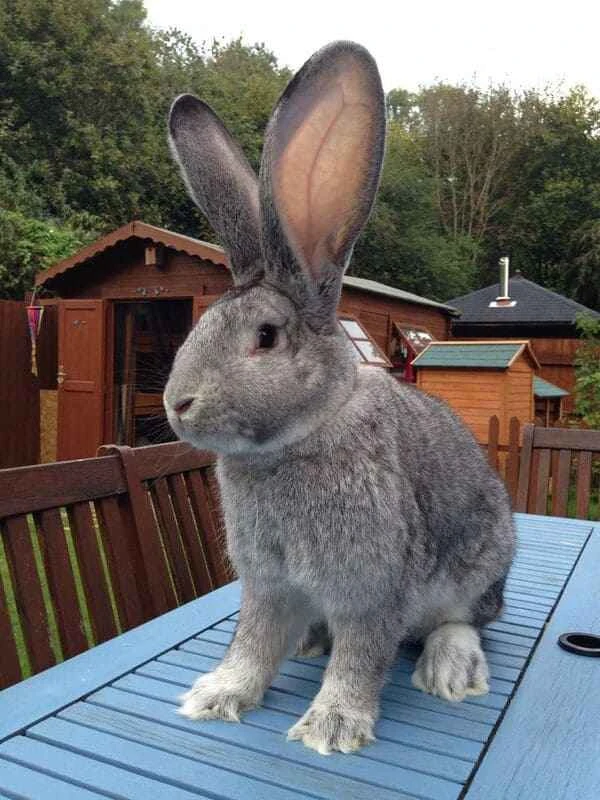
The Giant Chinchilla rabbit is a breed developed through crossbreeding the Standard Chinchilla and the Giant Distributor rabbit, naturally resulting in a large breed. This breed was first developed in the United States in 1921 by Edward H. Stahl. His initial goal was to create a breed that could produce a large quantity of the prized Chinchilla coat color. By 1928, he had achieved this goal, and the Giant Chinchilla was officially recognized by the American Rabbit Breeding Association (ARBA). The Giant Chinchilla is also known as the "Million Dollar Rabbit" because Edward H. Stahl was the first (and perhaps only) person to earn $1 million by selling stock of the breed. Giant Chinchilla rabbits weigh between 5.5 and 7.2 kilograms. Despite their large size, most individuals do not develop dewlaps, and their meat is very firm.
The list of the world's 10 largest rabbit breeds is primarily based on breed weight/length and also references relevant internet rankings/lists. This list is for reference only, and the data is current as of December 12, 2023. If you have any questions, please feel free to comment/criticize at the end.