Who is the most intelligent animal in the land? Some might think it's the chimpanzee. But in the ocean, there are quite a few intelligent animals as well. This article will list ten of the most intelligent marine creatures, including killer whales, dolphins, octopuses, sea otters, humpback whales, hogfish, groupers, remoras, manta rays, and nautiluses. We'll then detail their intelligence in more detail. Let's take a look.
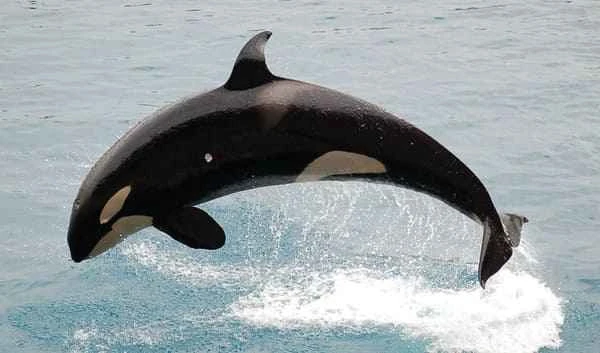
1. Orca (Language Master)
Orcas are massive whales, reaching 8-10 meters in length and weighing approximately 9 tons. They have slightly rounded heads with inconspicuous beaks; their dorsal fins are tall and straight, curving up to 1 meter long; and their bodies are black and white. Orcas are highly social animals, and their families, organized into groups, are among the most stable in the animal kingdom. Orcas exhibit many complex social behaviors, hunting techniques, and vocal communication, which are considered evidence of a unique culture within the orca population.
In fact, orcas are known as the "language masters" of the whale world because they can produce up to 62 different sounds, each with a specific meaning. For example, when hunting fish, they emit intermittent "sneezing" sounds, much like the sound of forcefully pulling on the hinges of a rusty iron door. When fish hear this sound, they feel threatened, causing their behavior to become erratic.
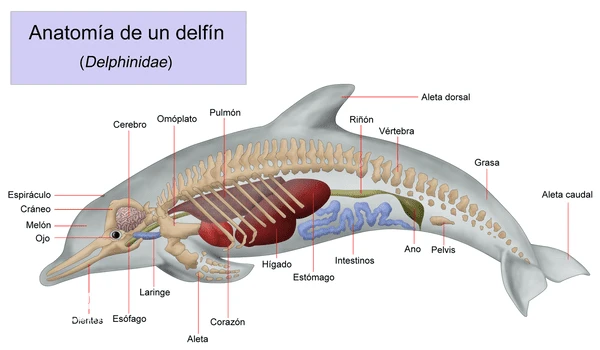
2. Dolphins (with highly developed brains)
Dolphins possess typical toothed whale morphological features, such as a spindle-shaped body, a single crescent-shaped blowhole, overlapping skulls, a maxilla extending backward and overlapping with the frontal bone, a left-leaning asymmetry at the top of the skull, and conical or peg-shaped teeth. They are renowned for their exceptional intelligence and dexterity, thanks to their highly developed brains and the abundance of cerebral sulci.
Generally, the more sulci an organism has, the more developed its intelligence. The average adult dolphin's brain weighs 1.6 kg, while a human's brain weighs about 1.5 kg, and a chimpanzee's brain weighs less than 0.25 kg. In absolute weight, dolphins have the largest brains, but in terms of brain weight as a percentage of body weight, the human brain accounts for 2.1%, a dolphin's for 1.17%, and a chimpanzee's for only 0.7%.
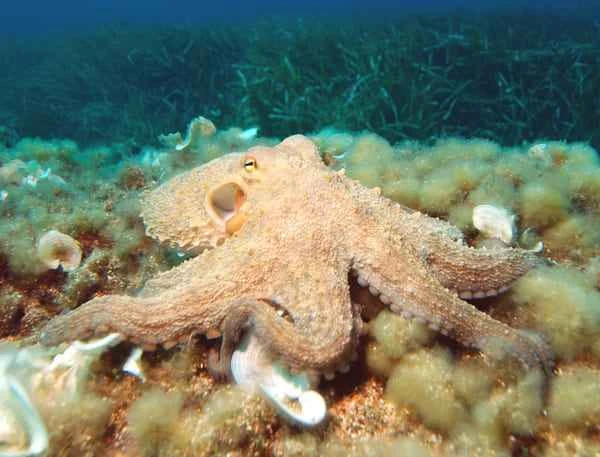
3. Octopus (cunning)
Octopus is the common name for 252 species of marine mollusks belonging to 26 genera of the family Octopidae. They typically have oval or egg-shaped bodies, possess strong muscles, relatively narrow mantle openings, and usually lack water pores on their bodies. To evade predators, octopuses not only employ well-known camouflage techniques and strategies such as losing an arm to escape, but scientists have also discovered that some octopuses in the Indian Ocean can even "walk" using two legs to escape danger, demonstrating a high level of intelligence.
Reports indicate that octopuses can use human-set lobster traps to catch lobsters, and sometimes even steal bait to make their own traps. In aquariums, some octopuses are even able to escape their own tanks, venture into other tanks to prey on fish, and then quietly return to their original tanks before being detected.
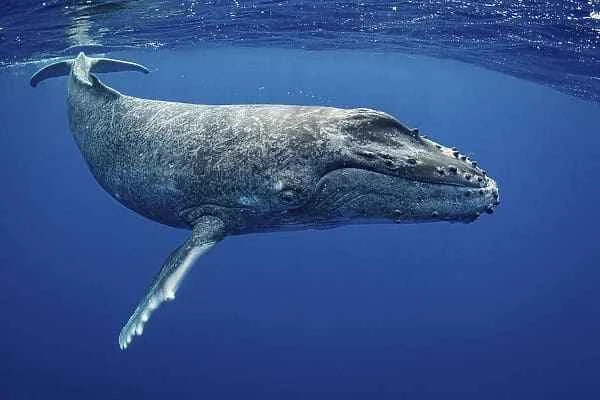
4. Humpback whales (will engage in artistic exchange)
Humpback whales, whose name comes from the Japanese word "zatou," meaning "biwa" (a type of lute), refers to the shape of their backs. They are known for their spectacular breaching maneuvers, their very large pectoral fins, and their complex vocalizations. They mostly live in pairs or small groups, are gentle in nature, and prefer migratory migrations, although they are relatively slow swimmers.
Researchers have even discovered that humpback whales exhibit remarkable talent in singing. They are adept at using an "A-B-A" pattern similar to that used by human singers, beginning with a melody, developing the theme further, and finally returning to a slightly modified version of the original melody. Even more interestingly, they engage in "artistic exchange." Reports indicate that after humpback whales from the Indian Ocean migrated to the Pacific waters off Australia, the native Australian humpback whales abandoned their traditional whale songs and began singing new tunes brought by these new arrivals within three years.
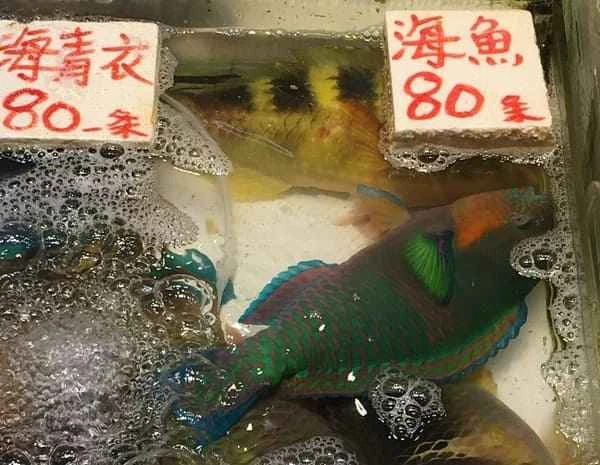
5. Shu's hogtooth fish (the only wild fish that uses tools)
*Schönensis* is a unique fish species belonging to the genus *Schönensis* in the family Labridae. It has an elongated oval body shape, with a prominently rounded dorsal profile of the head; the upper jaw is relatively short, not extending to the front edge of the eye; both the upper and lower jaws have four sharp canine teeth. The head is quite broad, with a slightly steep dorsal margin and a uniformly rounded outline; the caudal fin is truncated. *Schönensis* lives in the waters near the Great Barrier Reef off the northeast coast of Australia and is the only known wild fish species that uses tools. Divers have filmed them carrying clams and other mollusks, repeatedly ramming against seabed rocks to open the shells and obtain the meat inside.
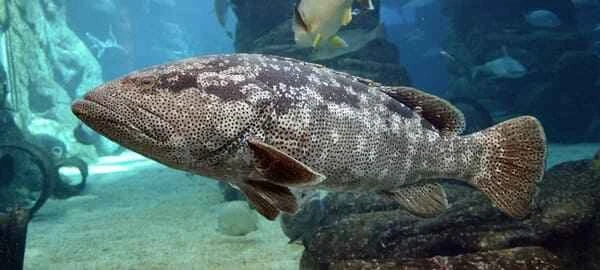
6. Grouper (cooperative predation)
Grouper is a general term for fish in the subfamily Serraninae, belonging to the class Osteichthyes, subclass Actinopterygii, superorder Spinopterygii, order Perciformes, suborder Perciformes, and family Serranidae. They are common warm-water, medium to large-sized marine fish in tropical and subtropical seas. In China, grouper are mainly distributed in the Taiwan Strait and the South China Sea. Records show that some grouper species exhibit cooperative hunting behavior with moray eels or other fish. For example, the spiny sea bass and leopard sea bass have been observed cooperating with Java moray eels, wavy-lipped wrasse, and blue octopuses. Grouper guide their partners to hunt together by swaying their bodies and making "nodding" motions.
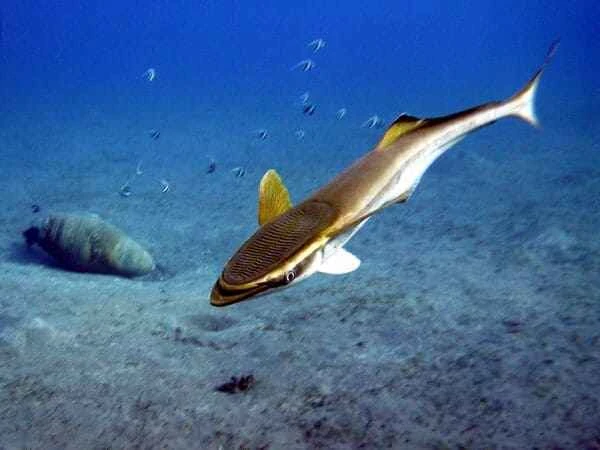
7. Remora (parasite)
The remora has an extremely elongated body, a flattened head that gradually becomes cylindrical towards the rear, and a sucker at the top formed by a modification of the first dorsal fin. This sucker splits open from the center to the sides, forming approximately 21-28 fin-like structures, also known as laminaes. Its caudal peduncle is relatively thin, cylindrical at the front and gradually flattening at the rear. As a carnivorous marine fish, the remora often uses its sucker to attach to the bottom of ships or other large fish for migration and foraging. It feeds on other fish and invertebrates. When they reach food-rich waters, they detach from their host to forage, then attach to a new host and continue migrating to another area.
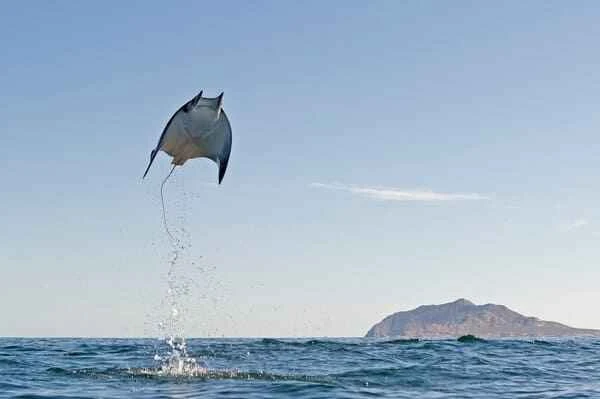
8. Manta ray (lively temperament)
Manta rays, also known as devil rays or blanket rays, belong to the family Mophaniidae in the class Chondrichthyes, encompassing the genera *Manta* and *Manta*. They have a rhomboid body shape and can reach over 6 meters in length. Manta rays exhibit rather peculiar behavior. They are lively and often play pranks. Sometimes they deliberately swim to the bottom of small boats sailing at sea, tapping the hull with their fins, making a "whooshing, pattering" sound, causing fear and unease among the crew. Other times, they swim to anchored boats and hook their cephalic fins onto the anchor chain, thus pulling up the small anchor and leaving crew helpless. Still other times, they use their cephalic fins to attach themselves to the anchor chain and then drag the boat back and forth rapidly across the sea, leading fishermen to mistakenly believe it is the work of a "devil," when in reality it is the manta ray playing its pranks.
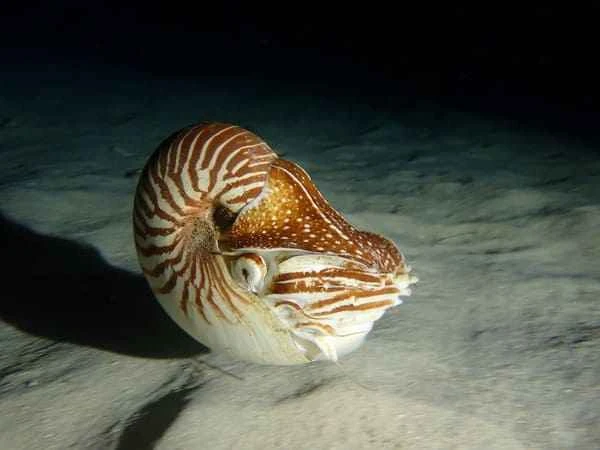
9. Nautilus (unique structure)
Nautiluses are marine mollusks belonging to two genera and six distinct species. They possess a coiled, pearl-like shell composed of multiple chambers, with the mantle located inside. These chambers are separated. Nautiluses have two pairs of gills and approximately 63-94 arms, but lack suckers. Their eyes are relatively simple, lacking both a lens and an ink sac.
The nautilus shell resembles an equiangular spiral.
Marine biologists describe nautiluses as jet propulsion machines of the ocean. They propel themselves forward by continuously expelling water through their mantle and then using the expansion of tubular muscles and soft tissues within their bodies to eject the water. Humans imitated the nautilus's method of rising and sinking by expelling and drawing in water, using this principle to create the earliest submarines.
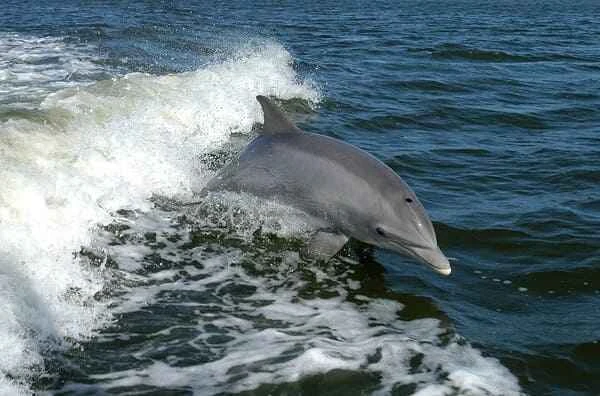
10. Bottlenose dolphin (gentle temperament)
Bottlenose dolphins, also known as sharp-nosed dolphins or gall-nosed dolphins, are mainly distributed in temperate and tropical oceans, including the Yellow Sea and Bohai Sea in China. They typically inhabit shallow waters near land and rarely venture into deeper waters. Like other dolphins, bottlenose dolphins have streamlined bodies, smooth, hairless skin, and a bluish-steel or slate-grey back, with a prominently protruding belly. They have relatively long snouts and small mouths, which often appear to be smiling. This species is listed as a Class II protected animal in China. Bottlenose dolphins generally exhibit a gentle temperament, especially those that have been domesticated. However, they can sometimes display aggression.
The list of the ten smartest marine animals is based on their behavior and other relevant information, and also references various online rankings and lists. This list is for reference only and aims to help you understand which animals in the ocean are the most intelligent. If you have any questions, please feel free to comment or offer corrections at the end.