Amphibians are a biologically significant group of animals because they were among the first vertebrates to live on land. They possess many remarkable and fascinating adaptations. Today, we will focus on an amphibian mainly distributed on the Iberian Peninsula—the Iberian newt (scientific name: Pleurodeles waltl ), commonly known as the "Gallipato".
Did you know that this animal is not only a member of the salamander family, but also the largest tailed amphibian in all of Europe? This article will take you deeper into understanding what the Iberian newt is, its physical characteristics, habitat, breathing methods, reproductive behavior, and its unique defense mechanisms.
What is the Iberian newt? — Detailed explanation of its morphological characteristics
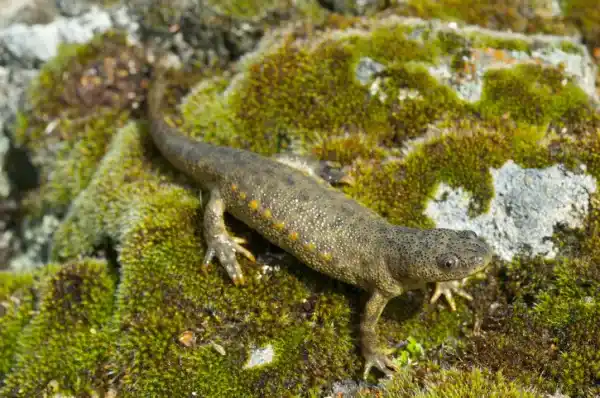
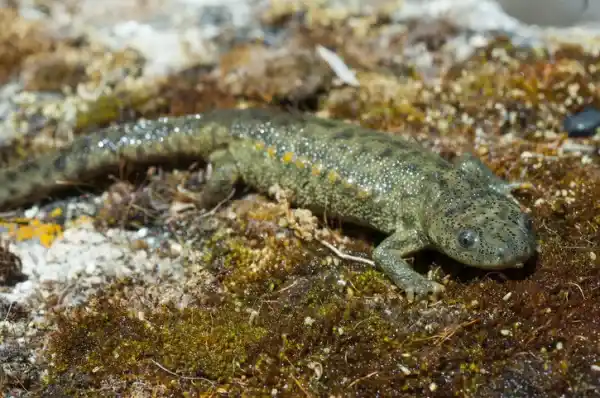
The Iberian newt ( Pleurodeles waltl ) is the largest known salamander in Europe, belonging to the family Salamandridae. Its characteristics include:
Significant body length : Males can reach 31 cm in length, while females are slightly smaller, around 29 cm. However, under artificial breeding conditions, their body length is generally between 15 and 25 cm.
Retaining a tail : As tailed amphibians (Urodela), they retain a distinct tail even after completing larval development.
The tail is adapted to aquatic life : the tail length accounts for 46% to 55% of the total length and is flattened from side to side, which is conducive to swimming in water.
The limbs are short and asymmetrical : the forelimbs have four fingers and the hindlimbs have five toes.
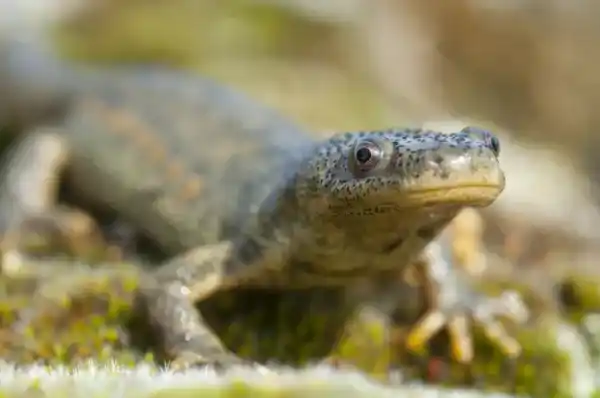
Head features : The head is flat and broad, with a small fold in the throat, small but upward-facing eyes, and round pupils.
The skin changes are obvious : in the aquatic stage, the skin is smooth and moist, while in the terrestrial stage, it becomes rough and bumpy, with a granular texture.
Varying body colors : Common colors are olive brown or gray with irregular black spots, and 7 to 10 small orange or yellow spots arranged on each side of the body. The abdomen is always lighter in color than the back.
Poison glands protruding on both sides of the body : These protrusions play a key role in its defense mechanism (detailed later).
Habitat of the Iberian newt
The Iberian newt is endemic to the Iberian Maghreb region, primarily distributed in central and southern Spain, as well as northern and western Morocco. Its habitat characteristics include:
Habitat duality : There are two activity phases throughout the year—an aquatic phase and a terrestrial phase, the duration of which varies depending on the region and climate.
Prefers wetlands and still water : They prefer permanent or semi-permanent water bodies, such as wells, troughs, pools, reservoirs and abandoned swimming pools, where the water flow is usually slow or even still.
Nocturnal animals : They hide under rocks, tree roots, or piles of fallen leaves during the day, and are active at the edge of water or on wet land at night.
It has a wide range of diets : it feeds on aquatic invertebrates, small vertebrates (such as tadpoles and small fish), and carrion.
The breathing method of the Iberian newt
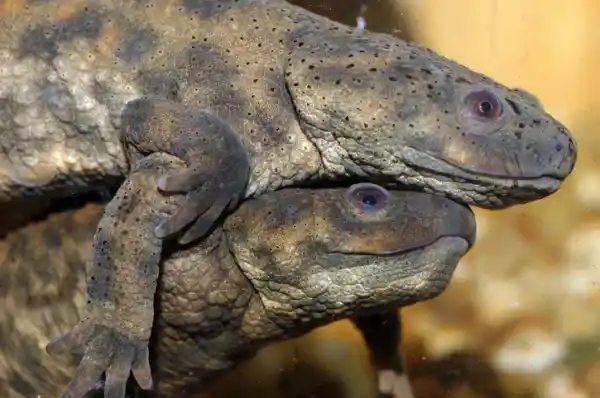
Adult Iberian newts possess lungs and primarily breathe through them, surfacing more frequently to breathe, especially during warmer seasons. They also possess some degree of skin respiration , allowing them to absorb oxygen directly from the water.
For more related content, please see:
16 Animals That Breathe Through Their Skin
105 Animals That Breathe with Lungs
Reproductive behavior
The reproductive process of the Iberian newt is quite unique:
Breeding time : Usually in early spring, after the last frost and at the beginning of the rainy season.
Mating process : The male grows a "nuptial pad" for mating and holds the female by "amplexus" for several hours to several days.
Fertilization method : The male releases multiple sperm sacs (up to 6-7), which the female absorbs through the cloaca to complete fertilization.
High egg production : Females can lay 300 to 1300 eggs, which are laid singly or in clusters in the water.
Larval development : After hatching, the larvae enter the aquatic stage, complete metamorphosis in about 3 months, and reach sexual maturity in about 1 year.
Interesting defensive mechanism: Poison rib tactic
The Iberian newt's defense mechanisms are truly a marvel of nature:
When attacked by predators, they will pierce their skin with the sharp ends of their ribs .
The puncture site is the area of the poison gland , which releases toxins, making these "rib needles" toxic.
If a predator attempts to bite, it will suffer pain or even be poisoned, thus abandoning the attack.
This unique defense mechanism, known as the " poison rib defense mechanism ," is extremely rare in nature and fully demonstrates the evolutionary wisdom of these amphibians.
Summarize
The Iberian newt is not only the largest tailed amphibian in Europe, but it has also attracted much research attention due to its diverse lifestyle and unique defense mechanisms. Its existence represents important biodiversity value in the Iberian ecosystem.
If you enjoyed this article about the Iberian newt, please continue to follow for more content, such as:
Classification, characteristics, and examples of vertebrates
Amphibian Species and Ecology
For reprint requests or to learn more about these animals, please visit our "Wildlife" section.
References
Timon Association for Repticulture. (2020). Gallipato/Ofegabous (Pleurodeles waltl). Retrieved from: https://www.timonassociation.org/species/pleurodeles-waltl/c
Alarcos, G., Ortiz, ME, Fernandez, MJ, and Avia, ML (2006). Otters preying on Gallipato (Pleurodeles waltl) in the Salaman Carlos Aribes del Duro region. Bulletin of the Spanish Society of Herpetology, 17(2), 85-87.
Salvador, A. (2002). Gallipatho–Pleurodeles waltl (Michahelles, 1830).