Ants are among the most successful insects on Earth, belonging to the family Formicidae in the order Hymenoptera. Ant colonies are built on complex social structures based on clear hierarchies and division of labor. They are found in a wide variety of environments, almost worldwide, except for Antarctica and the extremely cold Arctic regions.
Basic features
Size : Ants range in length from a few millimeters to a few centimeters.
Structure : Their bodies are divided into three parts: head, thorax, and abdomen. They have six legs, each of which is divided into multiple segments.
Head : The head is equipped with a pair of strong tentacles and large mandibles used to crush food.
Communication : Ants communicate using chemical substances called pheromones, which can guide other ants to food sources or warn of danger.
Lifestyle
Social structure : Ant colonies typically have one or more queens responsible for reproduction. Worker ants share tasks such as nest construction, food searching, and larval care. There are also male ants, whose primary role is to mate with the queen.
Nests : Ants have built rich and complex nest structures for themselves, some of which can even regulate the internal temperature and humidity.
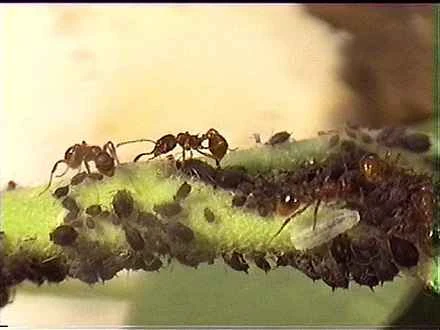
Food : Ants are omnivorous insects, preying on both animals and plants. Some species feed on sweet dew aphids to obtain their honeydew, while others are predators or scavengers.
Migration : When the environment is no longer suitable for habitation or the colony becomes too crowded, ants will migrate and establish new nests.
Reproduction : Most ant colonies will swarm once or several times a year. After the new queen and male ants fly to mate, the wingless queen will look for a suitable place to build a nest.
Ecological role
Decomposers : Ants play the role of decomposers in the ecosystem by consuming leaves, animal carcasses and other organic matter.
Seed dispersal : Some ant species collect seeds and carry them back to their nests, where sometimes these seeds germinate into new plants near the nest.
Soil aeration : The act of building nests helps with soil aeration and nutrient cycling.
Current situation and protection
Resilience : Ants can adapt to diverse environments and respond quickly to environmental changes.
Invasive species : Some ants, such as fire ants and yellow ants, are considered invasive species, which can cause serious damage to agriculture and ecosystems.
Human-ant interaction
Control : Ants can be pests in agricultural and urban environments, so people have invented a variety of methods to control their populations.
Research subject : Ants are a valuable subject of scientific research due to their social behavior and complex network construction.
Although ants are small, the complexity of their social organization is similar to that of human society, providing a wealth of models for research in biology, sociology, and even robotics.