Pigeons are often seen as ordinary urban birds, foraging in city parks. However, the world of ornamental pigeons is a completely different story. These domesticated pigeons, bred for their unique characteristics and magnificent appearance, showcase some of the most exotic and amazing traits in the animal kingdom.
From their curly feathers and bulging necks to their magnificent crests and enormous leg feathers, these pigeons are veritable "living works of art." Let's explore 12 of the most unique and extraordinary breeds of ornamental pigeons, each with stunning physical characteristics and a rich history.
1. Dalmatian Pigeon: A Miracle of Curly Feathers
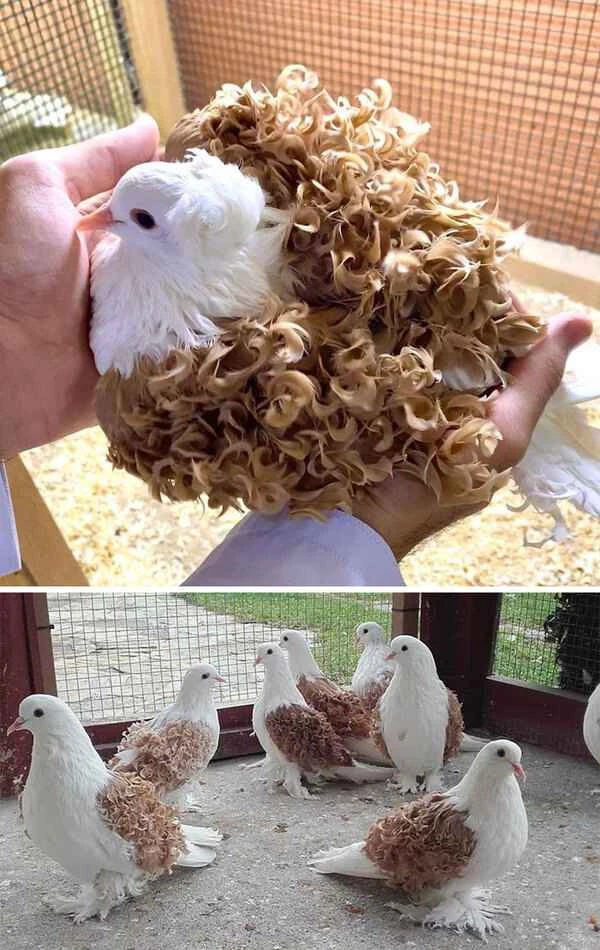
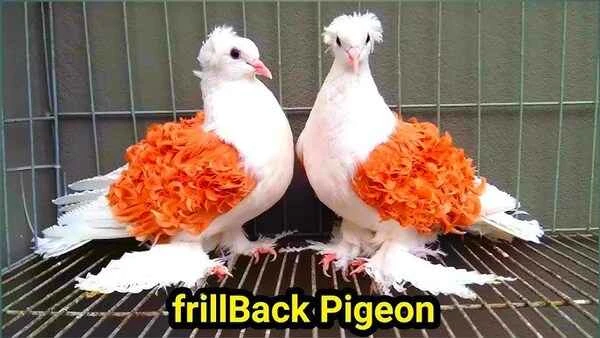
What makes it so special? Its naturally curly feathers give it an elegant, wavy appearance.
Dalmatian pigeons look as if they've just stepped out of a beauty salon. Their wing shields, and sometimes even the feathers on their legs, curl outwards, creating a delicate, wavy effect. This rare feather mutation is highly sought after at pigeon shows.
Origin : Middle East and Europe
Special feature : The degree of feather curl accounts for 50% of the competition score.
Common colors : red, white, blue, black
What makes it so unique? Its feathers are curled so perfectly, almost as if they've been ironed!
2. Babu Pigeon: A peculiar face covered in fleshy growths.
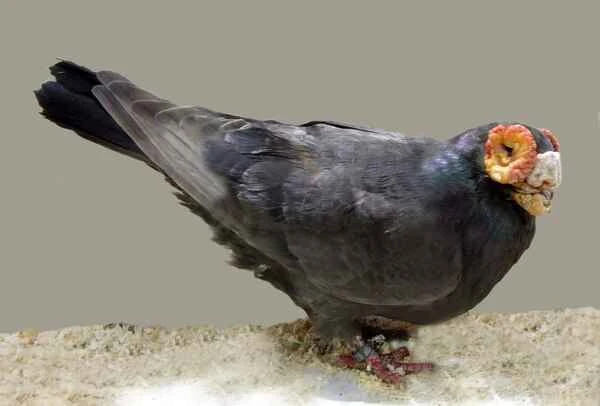
What makes it so peculiar? Thick growths surround the eyes and beak, gradually developing over two years.
The Barber pigeon (also known as the English Barber pigeon) is a breed of ornamental pigeon developed through long-term selective breeding. Like other domesticated pigeons, they originated from the wild rock pigeon (Columba livia). The Barber pigeon possesses some of the most unusual facial features in the pigeon world, with thick, orange-red caruncle surrounding its eyes and beak, making it look almost prehistoric. Despite its unusual appearance, this breed has been popular since the 1600s.
Shakespeare mentioned this breed of pigeon, and Charles Darwin illustrated it in his book *The Variation of Plants and Animals*. Due to its short beak, this breed is considered inhumane by many animal welfare organizations because it faces difficulties feeding its young and ensuring their survival.
Origin : Britain, but with connections to North Africa.
Special characteristic : Sarcomas tend to grow larger with age.
Size : Small to medium
What makes it stand out? It looks like a pigeon wearing fleshy goggles!
3. Ice Pigeon: Resembling an ice and snow sprite covered in frost.
What makes it so special? The surface of its feathers is covered with a natural powdery substance, giving it a frosty effect.
The ice pigeon (Polish: Lazurek; German: Eistaube) originated in Germany after years of selective breeding. Its unique plumage color gives it a dreamy ice-blue appearance; this sheen is produced by a powdery substance on the feathers, making it look as if it is covered with a layer of mysterious frost.
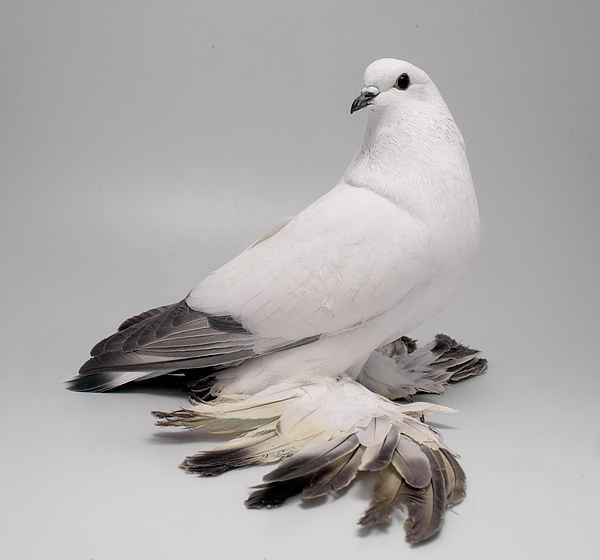
In 1846, Charles Darwin conducted hybridization experiments with ice pigeons to study color patterns, a study that was only three years before his 1859 publication of "On the Origin of Species".
Origin : Germany
Color effect : Silver-blue "frost" feathers
What makes it so unique? It looks like a winter elf straight out of a fairy tale!
4. Inflatable Pigeon: The star performer with a balloon neck.
Why is it peculiar? It has an abnormally inflated throat sac that looks like a balloon.
Pouters (or Croppers) are a domesticated breed of rock pigeon (Columba livia), characterized by their exceptionally large, inflatable crop. They are typically kept as ornamental birds and are highly valued for their striking appearance. While there are many varieties of pouters that vary considerably, they all possess an oversized, inflatable crop. The exact origin of this breed is unknown, but it has been kept in Europe for at least 400 years.
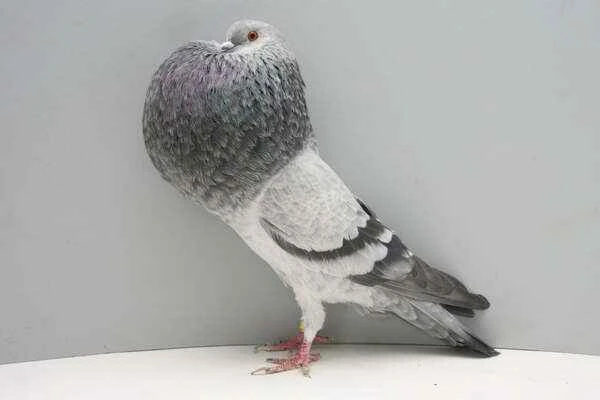
Imagine a pigeon whose neck is bigger than its head—that's an inflatable pigeon! They can inflate their throat pouches to extreme sizes, creating a top-heavy, even somewhat comical, appearance.
Breeds : English blooper (largest), Brenner blooper, dwarf blooper
Special feature : Attracts the opposite sex and showcases advantages through inflation.
What makes it different? It looks like a pigeon that has swallowed a basketball!
5. British Short-faced Tumbling Pigeon: A Master of Small-Head Somersaults
What makes it so peculiar? Its head is extremely small, almost invisible.
The English Short-Faced Tumbler is an ornamental pigeon breed developed through long-term selective breeding. Like all domesticated pigeons, they are descendants of the Columba livia. This breed has been bred to extremes, possessing an extremely small head that contrasts sharply with its broad, round body, almost creating a visual illusion.
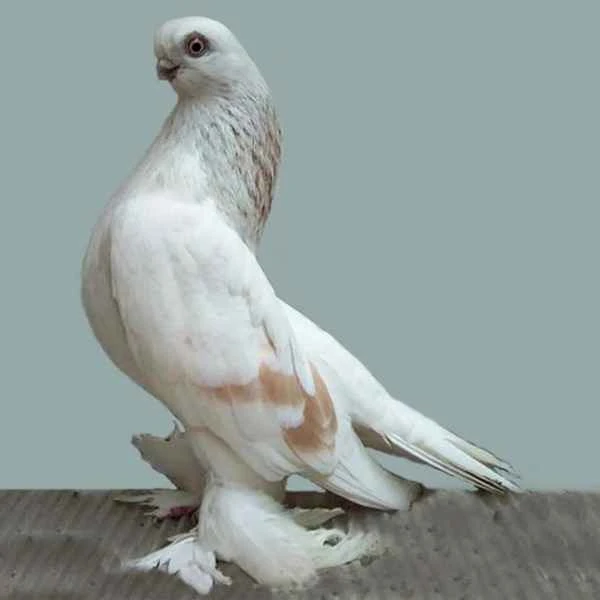
Historically, this breed was not only known for its unique appearance but also for its ability to tumble in the air. Since 1886, there has been a club in Britain dedicated to the study and promotion of this breed of pigeon.
Origin : Britain
Unique features : a tiny head paired with a large, round body
What makes it unique? It looks like a headless pigeon!
6. English trumpeter pigeon: A nobleman with feathered slippers
What makes it so peculiar? Its enormous, decorative feathers on its feet, sometimes even larger than its wings!
The English Trumpeter is a breed of ornamental pigeon developed through generations of selective breeding. Like all domesticated pigeons, they are descendants of the Columba livia. It is one of the most popular ornamental pigeons in the United States.
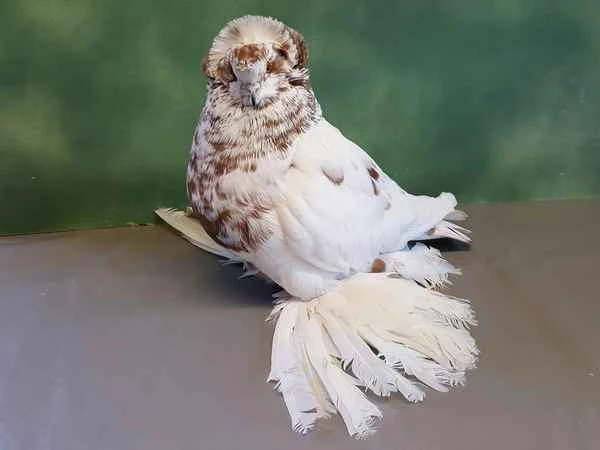
The most distinctive feature of this breed is its foot feathers ("slippers"), which are almost as long as its flight feathers. In addition, they possess an exquisite crest, making their overall appearance even more magnificent. However, these extreme plumage characteristics also make their breeding extremely challenging.
Feather characteristics : Extremely long, dense leg feathers
Origin : Britain, further cultivated and improved in the United States.
What makes them different? The enormous feathers on their feet pose a challenge when they walk!
7. German Moderna Pigeon: Miniature Chicken Pigeon
What's so strange about it? A pigeon that looks like a little hen.
The German Modena (German: Deutsche Modeneser) is an ornamental pigeon breed developed through long-term selective breeding. Like all domesticated pigeons, they are descendants of the rock pigeon (Columba livia).
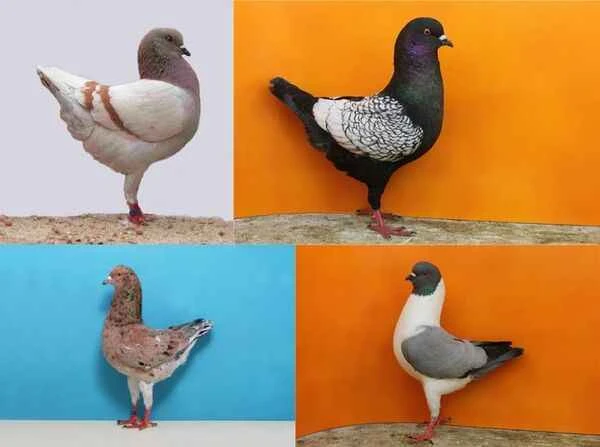
This breed has a short, rounded body and an upright posture, making it look very much like a miniature hen. This unique body shape is extremely rare among pigeons.
Origin : Modena, Italy; later further developed in Germany.
What makes it different? It looks more like a farm chick than a pigeon!
8. Hooded Pigeon: A pigeon wearing a monk's cloak.
What makes it so peculiar? It has a completely encircling hood of feathers around its head.
The Old Dutch Capuchine is an ornamental pigeon breed developed through long-term selective breeding. Like all domesticated pigeons, they are descendants of the Columba livia.
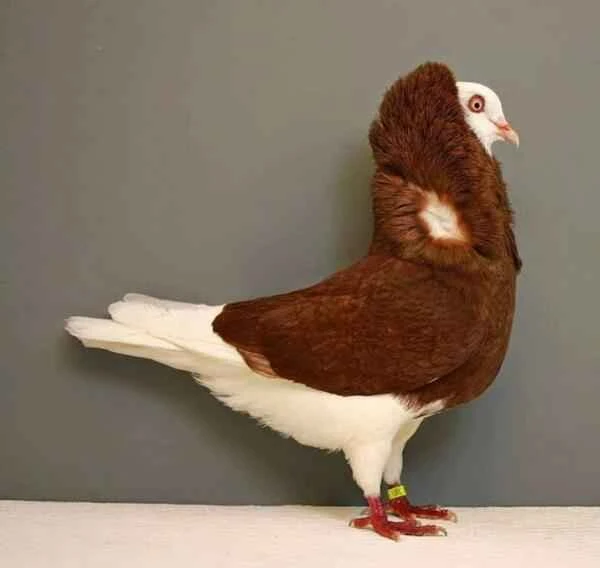
The hooded pigeon possesses an elegant plumage that completely covers its head, making it resemble a monk wearing a cloak. This feature endows it with a unique noble air. This breed is extremely popular in the Netherlands, Malaysia, and Singapore.
Origin : India, introduced to the Netherlands in the 16th century
What makes it stand out? It looks like it's wearing a feathered hood!
9. Saxon Fairy Swallow: The Miracle of the "Boots" with Three Layers of Feathers
What makes it so unique? It has three layers of dense leg feathers and striking color patterns.
The Saxon Fairy Swallow is an ornamental pigeon breed developed through years of selective breeding. Like all domesticated pigeons, they are descendants of the Columba livia. Saxon Fairy Swallows and winged pigeons possess a variety of different plumage markings (such as spots, cap-like markings, etc.). Among them, the Saxon Fairy Swallow is one of the most exquisite breeds, with exceptionally dense leg feathers and striking contrasts in color between its body, wings, and head, making it highly prized for its appearance.
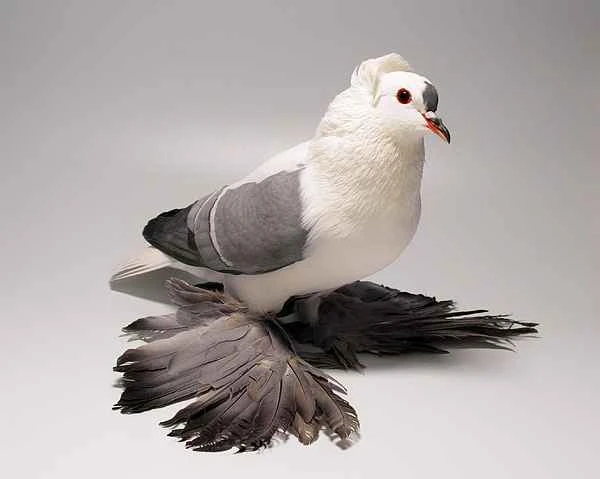
What makes it stand out? It looks like a pigeon wearing stylish feathered boots!
10. African Owl Pigeon: A Miracle of a Round Face and Short Beak
What makes it so peculiar? It has a round head and an extremely short beak, resembling a little owl.
The African Owl Pigeon is an ornamental pigeon breed developed through selective breeding. Like all domesticated pigeons, they are descendants of the Columba livia. This breed originated in Tunisia, Africa, and was introduced to Britain in the late 19th century. Initially called the "Foreign Owl," it was distinguished from the existing English Owl breed in Britain. Compared to the English Owl, the African Owl is significantly smaller.
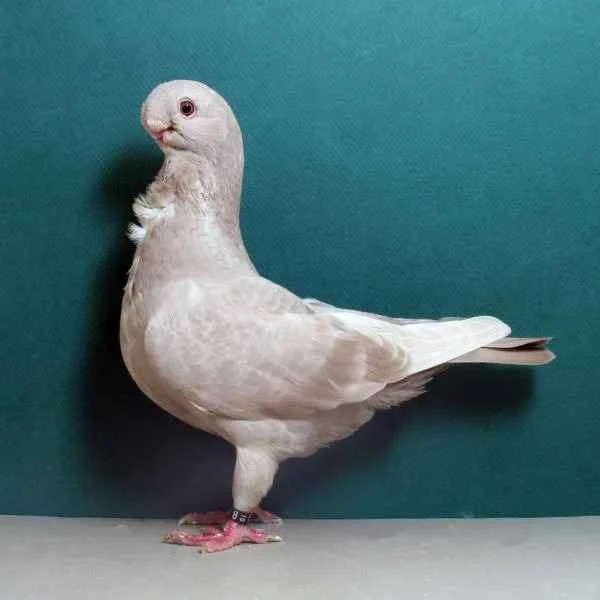
The most distinctive features of this pigeon are its extremely round face and very short beak, making it resemble a miniature owl. In addition, it has a special tuft of feathers on its chest called a "jabot," sometimes also referred to as a "tie" or "scarf." Its body is short and plump, its head feathers are smooth, and its beak is short and thick, giving it a very unique overall appearance.
Origin : Tunisia
What makes it unique? It looks like an owl-shaped pigeon!
11. Nun Pigeon: A "monk" with a feathered hood.
What makes it so peculiar? Its pure white body is contrasted by a striking feathered cap and a neat crest.
The Nun Pigeon is an ornamental pigeon developed through years of selective breeding. In continental Europe, it was once known as the "Dutch Shell Pigeon." The name comes from the pattern of its plumage, which makes it resemble a nun in her robes. Its body is mostly white, with striking color contrasts on its head, tail, and flight feathers. Examples include the Black-Headed Nun Pigeon and the Yellow-Headed Nun Pigeon.
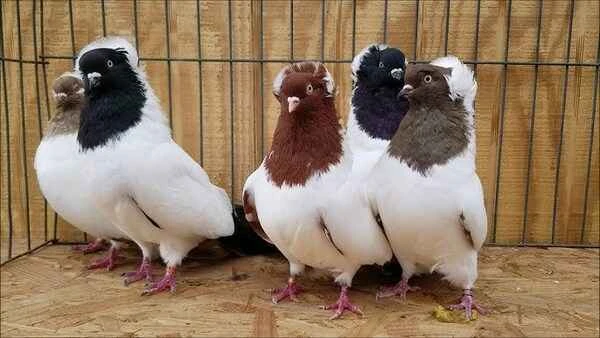
Besides their unique appearance, the Nun Pigeon is also a high-flying pigeon, like the Tumbler and Magpie Pigeon, capable of flying at high altitudes.
According to the British Nun Club standards, an adult male Nun pigeon should be approximately 23 cm (9 inches) long from head to toe and approximately 25 cm (10 inches) long from the front of the breast to the tail. Females and young pigeons should be similar in size. Their beaks should be short and straight, and their eyes should be pearly white.
What makes it different? It looks like a dove dressed in a religious robe, ready to pray!
12. Helmeted Pigeon: A bird that comes with its own "little hat".
What makes it so peculiar? It has a pure white body, with only its head and tail displaying different colors.
The Helmet Pigeon is an ornamental pigeon breed developed through years of selective breeding. Like all domesticated pigeons, they are descendants of the Columba livia. The breed has four main types: medium-faced, short-faced, plain-headed, and crested.
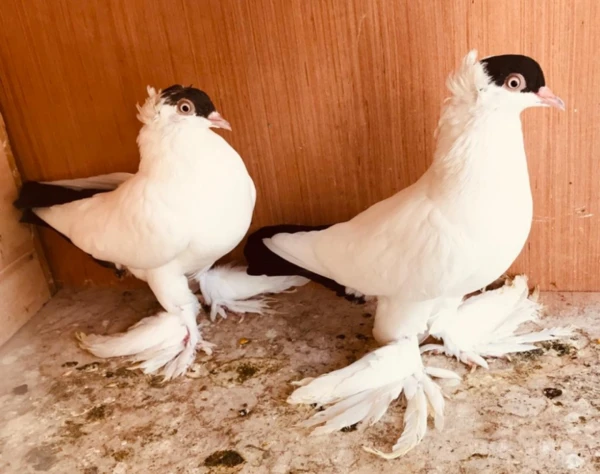
Historical records of the Helmet Pigeon date back to the early 15th century. The breed is believed to have originated in Germany and was further refined in the late 20th century. The Helmet Pigeon's main characteristic is its distinctive plumage pattern, which makes it appear as if it is wearing a miniature helmet. Its brightly colored head and tail contrast sharply with its pure white body.
What makes it unique? It looks like a pigeon wearing a miniature motorcycle helmet!
Summary: The Wonderful World of Ornamental Pigeons
Ornamental pigeons are a marvel of selective breeding, possessing not only stunning appearances but also unique characteristics not found in nature. From inflatable pigeons to Saxon Fairy Swallows with their feathered boots, and African Owl Pigeons that resemble owls, each breed is uniquely captivating.
Which kind of unique pigeon do you like best? Feel free to share your thoughts!