In Europe, the Asian giant hornet (Vespa velutina), also known as the Asian hornet , yellow-legged hornet , or simply longhorn beetle , has become one of the most worrying invasive alien insects. This large hornet has spread rapidly over the past two decades, invading many coastal and humid urban areas, especially in places with frequent rainfall and mild temperatures. Due to its large numbers, aggressiveness, and serious threat to bee colonies, it is considered a triple threat to ecosystems, agriculture, and human health.
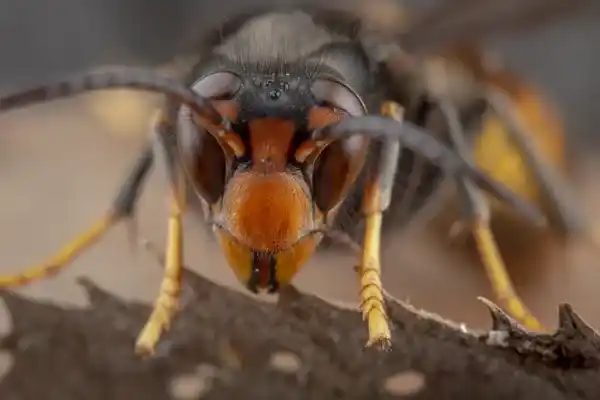
I. Physical Characteristics – How to Identify the Asian Hornet
Compared to common wasps and honeybees, the Asian giant hornet has several significant differences:
Large
Worker bees are about 30–35 mm (3–3.5 cm) long, significantly larger than common wasps (about 20 mm) and honeybees (about 15 mm).
Body color characteristics
Head : Black or dark brown with an orange-yellow tinge on the forehead.
Chest : velvety dark brown to black.
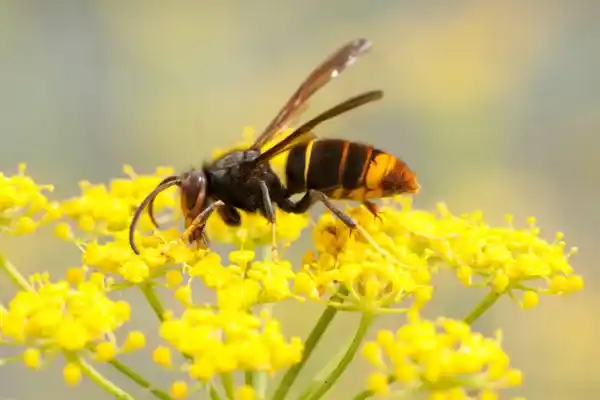
Abdomen : The first segment has a thin yellow line, the fourth segment is bright yellow, and the rest of the parts are mostly dark.
Feet : The ends are yellow, making them easy to spot in flight.
Wings : Smoky brown and translucent, with a "smoky" feel.
Habits
They are extremely aggressive and will launch a collective attack when the hive is threatened.
Primarily preying on bees, each worker bee can kill 25-50 bees per day, causing devastating damage to the beekeeping industry.
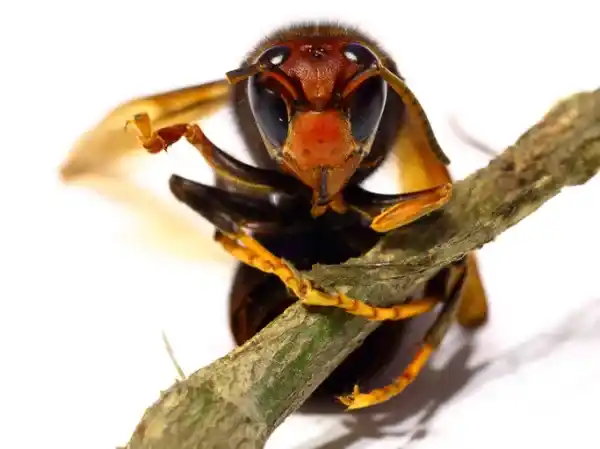
II. Honeycomb Structure and Location
Asian giant hornets typically build their nests high in the tree canopy , but in invasive areas, they will also choose some unexpected places to build their nests, such as:
bushes close to the ground
Under the eaves of the house
Hollow walls
Even in discarded tires, warehouses, or carports
Characteristics of a honeycomb:
Dimensions : Diameter up to 0.8 meters , height approximately 1 meter
Material : "Pulp" made from a mixture of wood fibers and saliva.
Shape : Usually spherical, but may also be pear-shaped.
Internal structure : It has an air gap to help maintain temperature stability.
Highly defensive : The area around the hive is their high-alert zone; any creature that approaches (including humans) may face a swarm attack.

III. Hazards and Toxicity of Stings
The venom of the Asian giant hornet is similar to that of the common hornet, but it is riskier due to its larger size, thicker stinger, and greater venom volume .
People at risk of death :
People allergic to bee venom account for approximately 3% of the population.
elderly
Patients with underlying conditions such as heart disease or respiratory diseases
A person stung by multiple hornets at the same time
Severe reactions :
It may trigger anaphylaxis .
Symptoms that threaten life include difficulty breathing, laryngeal edema, and sudden cardiac arrest.
Emergency medical assistance must be received within minutes.
Typical reaction :
Severe pain, redness, swelling, burning sensation
The swelling is extensive and lasts for a longer period of time.
The symptoms are more intense compared to a regular wasp sting.
IV. How to deal with being stung
High-risk groups (allergies, the elderly, those with chronic diseases)
Call emergency services immediately and get the patient to the hospital as soon as possible.
Hospitals typically administer adrenaline, antihistamines, or corticosteroids.
ordinary people
Immediately move away from the hive area to avoid a second attack.
Rinse the wound thoroughly with plenty of water and keep it clean.
Apply cold compresses to reduce swelling and pain.
Do not apply unsterilized substances such as soil or herbs to prevent infection.
V. Protection and Capture
Currently, there are no effective repellents specifically designed to prevent Asian giant hornets from approaching. A safer approach is to set traps :
Add sugar water, honey water , or a mixture of sugar, beer, and yeast to the bottom of the container.
Add a small amount of alcohol to prevent bees from being accidentally caught.
Place traps near beehives or in crop areas where bees frequently roam.
Natural enemies include:
Honeybee (Pernis apivorus)
Bee-eater (Merops apiaster)
Badger (Meles meles)
These natural enemies can help control populations to some extent, but human intervention remains necessary in human-inhabited areas.
VI. Conclusion
The invasion of the Asian giant hornet not only threatens bee populations and agricultural production but also poses a threat to human safety. Understanding its characteristics, habits, and protection methods is the first step in reducing conflict and harm. Faced with this invasive species, we need both scientific prevention and control measures , and we must also protect the local ecological balance .
References
Zafra, A. (July 24, 2018) Indigenous research and development is key to combating the Asian giant hornet infestation. EFE News Agency: Biodiversity.
Gamarra, L. (2016) Regulation of the Asian giant hornet within the framework of invasive alien species. Monfragüe Scientific Journal: Resilient Development. Volume 7(2), pp. 178-186.
EFE Verde Editorial Team (March 6, 2019): The European honey eagle, a natural barrier against the Asian giant hornet. EFE News Agency: Biodiversity.
EFE Verde Editorial Team (July 13, 2016): The Asian giant hornet has been added to the EU's list of invasive species. EFE News Agency: Biodiversity.