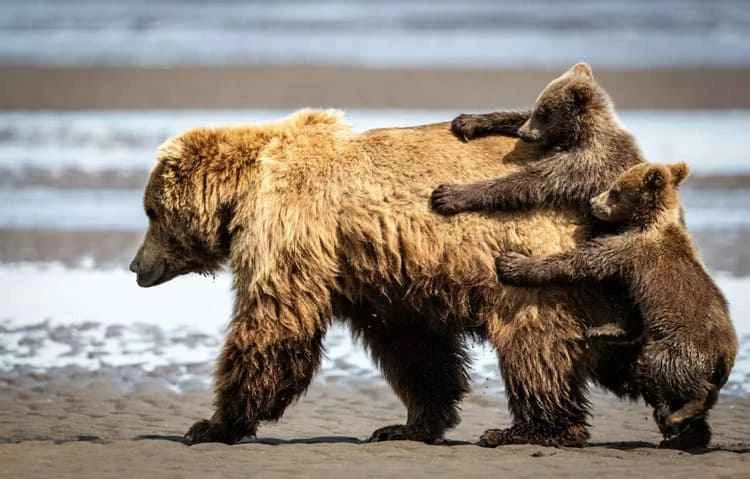
If I asked you, "What's the first animal that comes to mind?", you'd likely think of some kind of mammal. Although mammals don't represent the largest number of species in the animal kingdom, they are the group of animals that receive the most attention and research from humans. This is not only because of their diverse behaviors and important ecological roles, but also because we humans are ourselves mammals.
In this article, we will delve into the definition of mammals, the main characteristics of their three major groups, and provide representative examples to help you gain a more comprehensive understanding of this animal phylum.
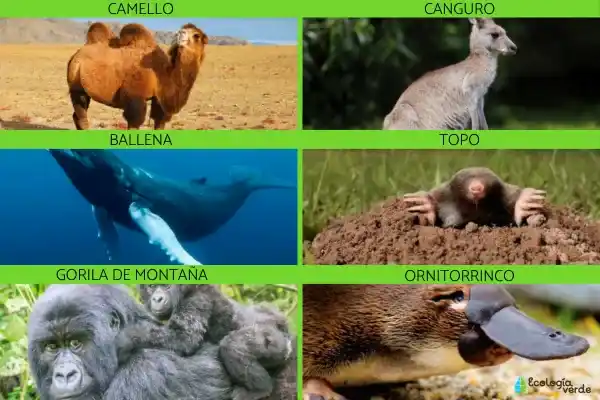
What are mammals? What are their main characteristics?
Mammals are a group of vertebrates whose main characteristic is the presence of mammary glands, which allow them to nurse their offspring with milk. In addition, most mammals possess the following characteristics:
Warm-blooded animals (also known as homeothermic animals): can regulate their body temperature autonomously and adapt to different climates.
Body covered in hair: The body or parts of the body are covered in hair, which is a typical characteristic of mammals.
Viviparous: Most mammals deliver nutrients to the embryo through the placenta until birth.
The skeletal system is well-developed, including a unified structure of seven cervical vertebrae and three auditory ossicles (malleus, incus, and stapes).
Lung respiration: Well-developed lungs adapted to breathing on land or in water.
Behavioral complexity: Many species possess learning abilities, social structures, and emotional expressions.
There are approximately 5,486 known species of mammals on Earth, distributed in almost all ecosystems, including oceans, forests, deserts, and polar regions.
The three major groups of mammals
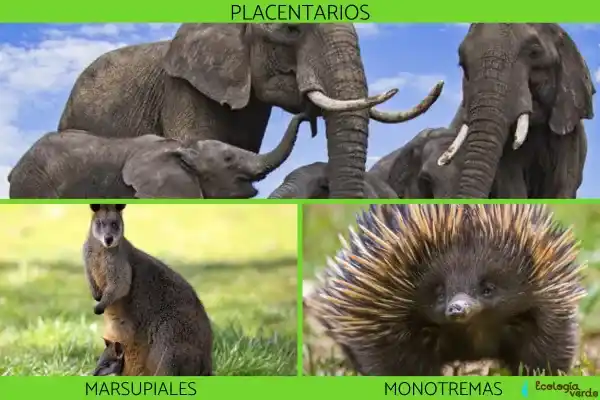
Based on their reproductive methods, mammals can be divided into three main categories: placental mammals, marsupials, and monotremes.
1. Placental mammals (Placentarios)
Placental mammals are the most numerous group. They transport nutrients to the embryo within the mother's uterus via the placenta until it is fully developed and born. This group is highly adaptable and inhabits various ecosystems worldwide.
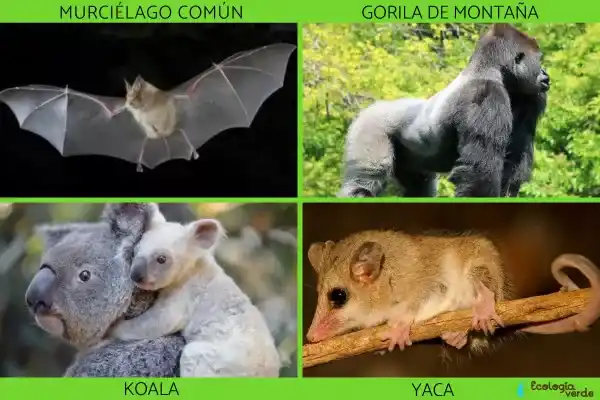
Typical examples include: humans, whales, tigers, elephants, and bats.
2. Marsupials
These animals have short embryonic development time inside the mother's body, and continue to grow and develop in the mother's pouch after birth. They are mainly distributed in Australia and South America.
Typical examples: kangaroos, koalas, wombats, etc.
3. Monotremes
This is the most primitive group of mammals, with very few extant species (only 5). They are oviparous mammals. Although they lay eggs, they also nurse their young with milk.
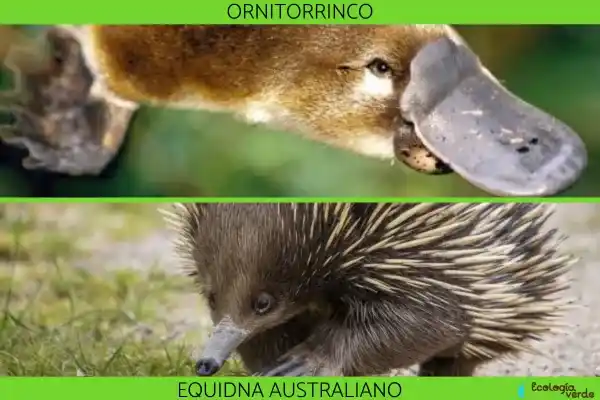
Typical examples include the platypus and echidna, which are found only in Australia and its surrounding areas.
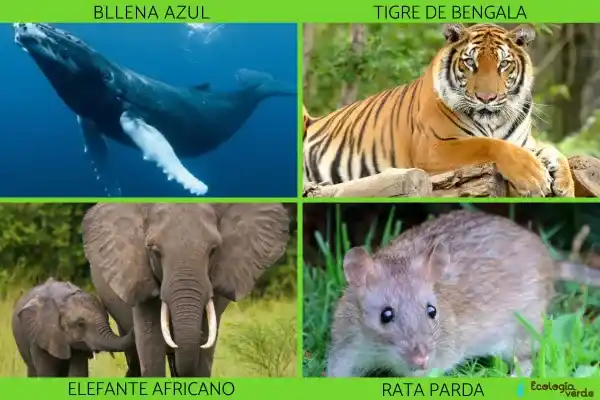
Examples of representative mammal species
Here are some common and representative mammal species:
Blue whale (Balaenoptera musculus)
The largest living animal on Earth, it can reach 30 meters in length and weigh up to 170 tons.
They are marine mammals that primarily feed on krill.
Bengal tiger (Panthera tigris tigris)
It is a large cat species found in South Asia, including India and Bangladesh.
It is a top predator, feeding on deer, wild boar, and monkeys.
African elephant (Loxodonta africana)
The largest living land mammal, weighing up to 10 tons.
They are distributed across the African continent and possess high intelligence and complex social behaviors.
Brown rat (Rattus norvegicus)
One of the most common mammals in the world.
They are highly adaptable, have a high reproductive capacity, and are omnivorous rodents.
Bat (Pipistrellus pipistrellus)
The only mammal with true flight capabilities.
They primarily prey on insects at night and are widely distributed.
Mountain gorilla (Gorilla beringei beringei)
An endangered primate native to Africa, with fewer than 900 individuals remaining in the wild.
They possess a high degree of social and emotional communication skills.
Koala (Phascolarctos cinereus)
A marsupial native to Australia.
Their staple food is eucalyptus leaves, and they sleep an average of about 20 hours a day.
Platypus (Ornithorhynchus anatinus)
Monotremes, with a duck-like beak and a beaver tail.
It inhabits eastern Australia and is one of the very few mammals with venom glands.
Echidna (Tachyglossus aculeatus)
It belongs to the monotremes, the same group as the platypus, and its back is covered with spines.
It feeds on ants and termites and lives in Australia and New Guinea.
Conclusion
While mammals may not be as numerous as insects or fish on Earth, their ecological diversity is extremely high. From blue whales to bats, from koalas to humans, these animals demonstrate astonishing evolutionary capabilities and adaptive strategies. Understanding them is also understanding ourselves.